
Search results: 1466
- Teacher: Padmapriya R
Category: ODD
Course objectives:
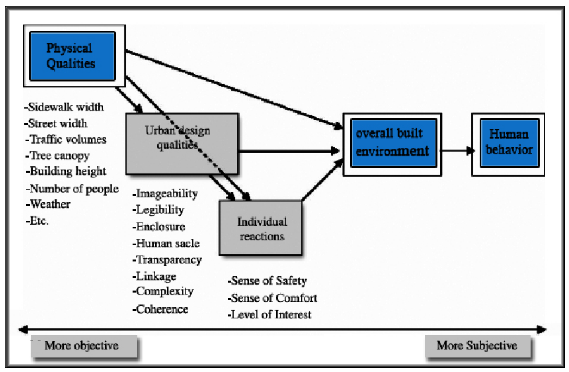
To introduce the basic concepts / theories of psychology relevant to architecture and the relationship between man and the environment.
To construct knowledge on the fundamentals of designing public areas, theories, solutions and policies related to urban design.
To familiarize the students with housing policies, need, demand and issues related to health and
environment.
Category: SCHOOL OF BUILDING AND ENVIRONMENT
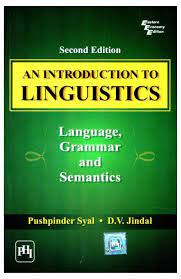
- Differentiate between a descriptive and a prescriptive view on linguistic phenomena and between fundamental concepts and distinctions in linguistics
- discuss some basic concepts within diachronic variations in language with examples
- describe and illustrate basic concepts like Varieties of dialect, Register, within morphology, such as: defining word, illustrating word formation
- define and analyse linguistic material with regards to the basic Sentence Patterns: Intransitive Predicate Pattern, Transitive Predicate Pattern
- recall definitions of Transformational Generative Grammar. Supra- Sentential Grammar.
- Semantic roles account for basic concepts within semantics and pragmatics with a focus on lexical
- semantics (e.g synonymy, antonymy, hyponymy, homophony)
Category: EVEN SEMESTER
- Teacher: Director Admin
Category: Circulars and Notifications
- Teacher: Director Admin
Category: Circulars and Notifications
COURSE OBJECTIVES
Ø To understand importance of bioethics and biosafety. To understand legal social and economic impacts of biotechnology. To understand regulatory guidelines and their importance. To understand importance of patent.
Ø To understand procedure to apply for patent.
Ø To understand procedure of assessment of biosafety for biotech foods. To understand ethical implications of biotechnology.
UNIT 1 INTRODUCTION TO BIOSAFETY
Definition of ethics and Bioethics, Ethics in Biotechnology(positive and negative effects with classical examples – Rice with Vitamin A, No-till Agriculture, cotton without insecticide, reduced need for fertilizer, biological pest control , slow ripening fruits and controlled ripening, fast growing trees and fishes.
UNIT 2 GMO
Guidelines for research with transgenic organisms. Environmental impact of genetically modified organisms (beneficial and hazardous impact), Field trials with GMO, Containment levels. Biosafety protocol, Cartagena Biosafety protocol, Mechanism of implementation of biosafety guidelines. Biosafety and politics. Biosafety database.
UNIT 3 IMPLICATIONS OF BIOSAFETY
Awareness education on genetically engineered organism.-Transgene instability, gene flow, resistance/ tolerance of target organism, increase weedlessness, risks and uncertainty associated with Biotechnology. Containment levels and their impact on Environment- Containment- definition, types of containment, summary of recommended Biosafety levels for infectious agents, detail checklist–premises and lab equipment, Animal facilities, environment.
UNIT 4 GLP AND PATENTS
Gene technology laboratory. GLP and Bioethics- introduction, national Good Laboratory Practices (GLP), the GLP authority functions, Good Laboratory Practices- necessity, aspiration and responsibility. Procedure to apply patent, other intellectual properties viz copy rights, Rights, Plant breeder’s rights, trade secrets/ trade symbol etc. WTO, TRIPS, PCT and GATT. IPR problems and its hindrance.
UNIT 5 ETHICS.
Ethics in clinical trials and Good Clinical Practices (GCP) – Definition of clinical trials and GCP, general information about clinical trials, need to conduct clinical trials, faces ofclinical trials, institutional set ups for conducting clinical trials, ethics in clinical Biotechnology
TEXT / REFERENCE BOOKS
1. Safety Assessment by Thomas, J.A., Fuch, R.L. (2002), Academic Press.
2. Biological safety Principles and practices) by Fleming, D.A., Hunt, D.L., (2000). ASMPress.
3. Biotechnology - A comprehensive treatise. Legal economic and ethical dimensions VCH.Bioethics by Ben Mepham, Oxford University Press, 2005.
4. Bioethics & Biosafety by R Rallapalli & Geetha Bali, APH Publication, 2007
5. Bioethics & Biosaftey By Sateesh Mk (2008), Ik Publishers
6. Biosafety And Bioethics Rajmohan Joshi Publishers
Category: ODD SEMESTER
- To provide the opportunity to gain knowledge on the formal and technical elements of literature
- To help the students to analyze and interpret the literary texts.
- To enhance the learners into the study of various literary forms.
- To make learners aware of the forms and content of language.

- Teacher: SUFINA K
- Teacher: Swarnamughi K
Category: ODD
- Teacher: Director Admin
Category: Circulars and Notifications
- Teacher: Prince Mary S
Category: ODD SEMESTER
- Teacher: Padmapriya R
Category: EVEN

COURSE OBJECTIVES
- This course introduces fundamental physical principles of both classical and modern optics as well as principles of optical design used in the engineering of optical systems.
- It also provides exposure to practical aspects of optical materials and devices.
- Its intention is to provide a foundation of basic principles, design methodology, and practical considerations needed to design nor use optical instruments in the biomedical engineering practice

- Teacher: Sabarivani A
- Teacher: Dr. P Grace Kanmani Prince
Category: B.Tech - BioMedical Engineering
COURSE OBJECTIVES
- To familiarize students through an
effective blend of theory and practice in translation
- To focus the key concepts of the translation studies through various texts.
- To implement
the diverse approaches and strategies of translation.
- To compare a variety of issues in relation to translation.

- Teacher: LIZY BOSCO
Category: EVEN SEMESTER
Objective of the Course: The ability to identify, reflect upon,
evaluate and apply different types of information and knowledge to form
independent judgments. Analytical, logical thinking and conclusions based on
quantitative information will be the main objective of learning this subject
Category: EVEN SEMESTER
Category: SCHOOL OF MANAGEMENT STUDIES