
Search results: 1466
To impart knowledge on the classification of food groups, composition and nutritive value of different food ingredients. To understand the role of each food group in cookery.
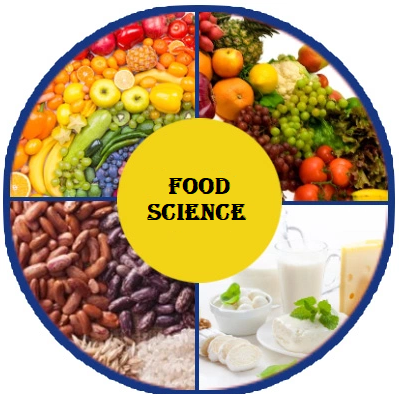
- Teacher: Priya S
Category: Allied Health Sciences

To understand the refining process of petroleum.
To develop understanding about various types of fuels, lubricants and their properties
To understand the importance of Alternate fuels available.

- Teacher: Dr. Ashwin Jacob
Category: ODD SEMESTER
- The lab course is designed to train the students in basic techniques of Biochemistry.

Category: SCHOOL OF BIO AND CHEMICAL
To suggest synthetic route for simple organic
compounds with stereochemistry
To make the students understand and appreciate the concept
of stereochemistry and reaction mechanism
To know the nature of addition in pericyclic
reactions
To learn the alpha cleavage and gamma hydrogen
transfer reactions
To understand the photochemical organic reactions
and rearrangement reactions
- Teacher: K CHENNAKESAVULU
Category: School of Science and Humanities
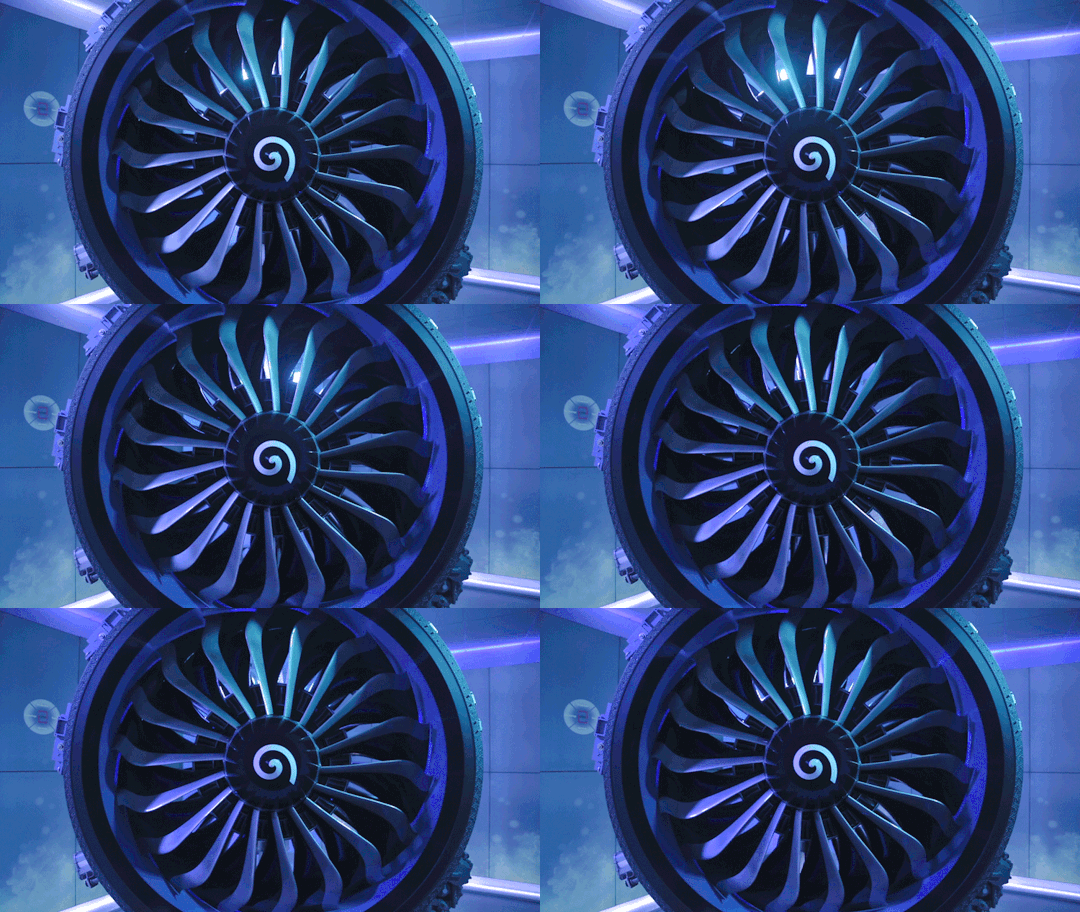
SMEA1602 GAS DYNAMICS AND JET PROPULSION
(Use of approved gas tables is permitted)
COURSE OBJECTIVES
To discuss the concepts of compressible and Incompressible fluids.
To understand Mach number variation on area ratio.
To impart in depth knowledge on the flow characteristics through constant area duct.
UNIT 1 FUNDAMENTALS OF COMPRESSIBLE FLUID FLOW 9 Hrs.
Concept of compressible flow, Energy and momentum equations, various regions of flow, fluid velocity, stagnation state, velocity of sound, critical states, Mach number, critical mach number, Crocco number, types of waves, mach cone, mach angle, effect of mach number on compressibility.
UNIT 2 FLOW THROUGH VARIABLE AREA DUCTS 9 Hrs.
Isentropic flow through variable area duct, T-S and h-s diagrams for nozzle and diffuser flows, area ratio as a function of Mach number, Mass flow rate through nozzles and diffusers, effect of friction in flow through nozzles.
UNIT 3 FANNO FLOW AND RAYLEIGH FLOW 9 Hrs.
Flow in constant area duct with friction - Fanno curves, and Fanno Flow equations, variation of flow properties, variation of Mach number with duct length. Flow in constant area duct with heat transfer, Rayleigh line and Rayleigh flow equations, variation of flow properties, maximum heat transfer.
UNIT 4 NORMAL SHOCK AND OBLIQUE SHOCKS 9 Hrs.
Governing equations, variation of flow parameters, static pressure, static temperature, density, stagnation pressure, entropy across normal shock and oblique shocks. Normal shocks - stationary and moving, applications. Prandtl Meyer equation, impossibility of shock in sub-sonic flows, flow in convergent and divergent nozzles with shock, Flows with oblique shock.
UNIT 5 JET AND SPACE PROPULSION 9 Hrs.
Aircraft propulsion, types and working of jet engines - energy transfer in jet engines, thrust, thrust power, propulsive and overall efficiencies, thrust augmentations in turbo jet engines, ram jet and pulse jet engines. Rocket propulsion, types of rocket engines, Liquid and solid fuel rocket engines, Introduction to Electrical and Nuclear rockets-Space Flights, Orbital and escape velocity.
Max. 45 Hrs.
COURSE OUTCOMES
On completion of the course, students will be able to
CO1 - Recall the fundamental concepts of compressible fluid flow.
CO2 - Demonstrate the significance of mach number on compressibility.
CO3 - Differentiate isothermal flow and isentropic flow.
CO4 - Apply the concept of normal shocks to different turbo machines.
CO5 - Estimate the heat transfer in flow through constant area ducts.
CO6 - Calculate the propulsive power in jet engines.
TEXT / REFERENCE BOOKS
1. Yahya S.M., ”Fundamental of Compressible flow”, New Age International Pvt. Ltd., New Delhi, 2003.
2. Cohen H., Rogers R.E.C. and Sravanamutoo, “Gas Turbine Theory”, Addison Wesley Ltd., 2001.
3. Hill D. and Peterson C., “Mechanics & Thermodynamics of Propulsion “, Addison Wesley, 1992.
4. Ganesan V., “Gas Turbines”, Tata McGraw Hill Publishing Company, New Delhi, 1999.
5. Sutton G.P., “Rocket Propulsion Elements”, John Wiley, New York, 1975.
6. J.D. Anderson, "Modern compressible flow", McGraw Hill Education, 3rd Edition, 2002.
- Teacher: Madhan Kumar G
- Teacher: SENTHILKUMAR G
Category: ODD SEMESTER
The course provides opportunities for students to read and respond to representations of current issues through texts that present themes and topics that are familiar, insightful and informative. The thrust is on preparing students to effectively communicate by applying reflective thinking practices. Students will have an opportunity to improve their vocabulary related to immediate environment, practice speaking skills by discussing about issues based on reading texts, read texts that include everyday problems that provide opportunities to develop problem solving skills in cooperative learning situations, develop writing skills through writing paragraphs and letters based on prompts, by summarizing poems, writing email/ letters and composition of dialogues/paragraphs.

- Teacher: Sowmiya L.M.
- Teacher: Amutha Monica
- Teacher: Senthil Kumar Sivamathiah
Category: ODD
COURSE OBJECTIVES:
• To develop the four basic skills of listening, reading, speaking, and writing, through an integrated approach.
• To improve comprehension and critical thinking skills.

- Teacher: Prasanna Lakshmi S
Category: Allied Health Sciences
- Teacher: Jayashree S
Category: SCHOOL OF BIO AND CHEMICAL
Category: ODD SEMESTER
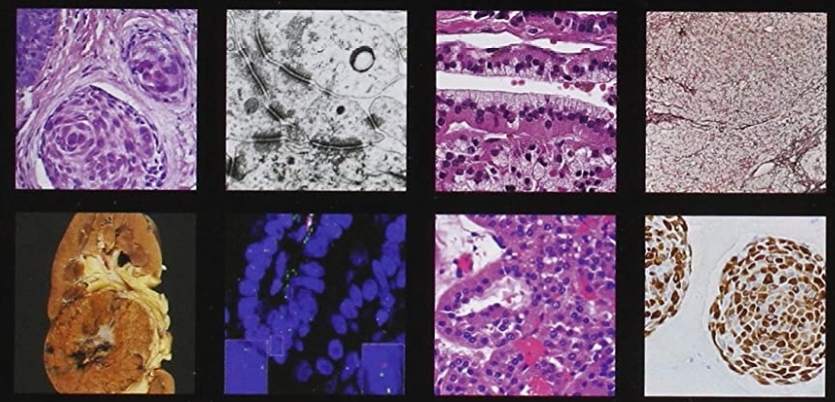
Pathology is the study (logos) of disease (pathos). More specifically, it is devoted to the study of the structural, biochemical, and functional changes in cells, tissues, and organs that underlie disease. By the use of molecular, microbiologic, immunologic, and morphologic techniques, pathology attempts to explain the whys and wherefores of the signs and symptoms manifested by patients while providing a rational basis for clinical care and therapy. It thus serves as the bridge between the basic sciences and clinical medicine, and is the scientific foundation for all of medicine
For II BDS
Category: SCHOOL OF DENTAL SCIENCES
- Teacher: oviya R.P
Category: ODD SEMESTER
Category: SCHOOL OF BIO AND CHEMICAL
|
SPYA1401 |
Professional Core 5– Gerontology |
L |
T |
P |
Credits |
Total Marks |
|
3 |
1 |
0 |
4 |
100 |
Unit I INTRODUCTION (15 Hours)
Gerontology- Definition, concept, History, importance and scope, Old Age- Definition, meaning and concept, Demographics of Aging, Characteristics of old age. Myths and stereotypes about aging.
Unit II PHYSIOLOGICAL AND PSYCHOLOGICAL PROBLEMS OF ELDERLY (15 hours)
Changes and Developmental tasks of Old age- Cognitive, physical, psychological and social. Symptoms of mental illness in old age-Stress- Different forms of stressors in old age, Depression, Alzheimer’s and dementia, confusions due to multiple medications, loneliness, panic disorder, fear of death, anxiety. Reduced mental and cognitive ability, Insomnia, substance abuse, suicidal tendency, Falls.
Unit III POLICIES AND PROGRAMMES FOR AGED (15 hours)
Help Age International- Evolution, objectives, programmes, health and Nutrition, protection of elderly consumers, Housing and environment, Family, Social Welfare, income security and employment, education, recommendations for implementation. International Federation on Aging, WHO and old age.
Unit IV OLD AGE CARE (15 hours)
Crisis Intervention-medical (skilled care) versus non-medical (social care), Promoting independence in old age and improving mobility. Assessing and planning health care surgery, communicable diseases.
- Teacher: Dr.Parveen Banu R
Category: EVEN SEMESTER
- Teacher: MEGALAN LEO L
- Teacher: Vijaya Baskar V
Category: ODD SEMESTER
VHDL DESIGN, SIMULATION, SYNTHESIS & FGPA IMPLEMENTATION OF
- Logic gates
- Adders and Subtractors
- 4-bit multiplier
- ALU
- Flip Flops
- Logic gates
- Adders and Subtractors
- 4-bit multiplier
- Flip Flops
- Shift registers
- Synchronous and Asynchronous Counters
- Moore and Mealy FSM
- RAM and ROM memories
- 4-bit RISC CPU
- Teacher: Balamurugan Velan
Category: EVEN SEMESTER
- Teacher: Yazhini Kuppusamy
- Teacher: ANANTHAGOMA M
Category: SCHOOL OF LAW