
Search results: 1467
Unit 1: Properties of Nuclei
Introduction, Classification of Nuclei, Properties of Nuclei - Nuclear size, charge, mass, density, spin, magnetic dipole moment, electric quadrupole moment, binding energy, packing fraction, Nuclear Stability. Nuclear models - Liquid Drop Model (Weizacker Semi Empirical mass formula), Shell Model and magic numbers.
Unit 2: Detectors of Nuclear Radiations
Introduction, Interaction between energetic particles and matter, Ionization Chamber, Solid-State Detectors, Proportional Counter, Geiger-Muller Counter, Photo Multiplier Tube, Scintillation Counter.
Unit 3: Particle Accelerators
Introduction, Van de Graaff Generator, Linear Accelerator, Cyclotron, Synchrocyclotron, Betatron, Electron Synchrotron, Proton Synchrotron (Bevatron).
Unit 4: Radioactivity
Introduction, Natural radioactivity, Alpha Particle – Properties, e/m ratio, charge, range, Geiger-Nuttal law.Measurement of Range of Alpha particle by Bragg - Kleeman method, Geiger - Nuttal method.Beta Particle – Properties, e/m ratio, Pauli’s Neutrino Hypothesis, Neutrino theory of Beta decay, Detection of Neutrino. Gamma Particle – Origin, determination of wavelength by Du Mond Curved Crystal Spectrometer, Nuclear Isomerism, Internal Conversion, Mossbauer effect with experiment.
Unit 5: Elementary Particles
Introduction, Classification of elementary particles (Baryon and Leptons), Particles and Anti-Particles, Antimatter, Fundamental Interactions, Elementary Particle Quantum numbers – Baryon, Leptons, strangeness, Hypercharge and Isospin. Conservation Laws – Parity, Charge Conjugation
- Teacher: Jayalakshmi D.S
Category: EVEN SEMESTER
This course deals with cell structure and its organelles and their composition. The students will get an insight into the biomolecules responsible for the various biochemical reaction taking place inside the cell. Also will get knowledge about various metabolic disorders related to it.
- Teacher: Dr.Premjanu N
Category: SCHOOL OF NURSING
- Teacher: Preetha Wilma Dawson
Category: Semester 3
Research Content: The Dissertation is an individual research project that is a major piece of work undertaken by the students.The aim is to prepare state of art report on the chosen topic and develop hypothesis to be tested through the research methodology designed for the purpose. Students are required to test their outcome proposals through various methods, including questionnaire surveys and case studies. It is encouraged that students identify topics for the Dissertation work which can be further developed into a Thesis Project with research in the next semester for more in-depth research. Alternatively, this Dissertation Project can be an independent research topic. Students must create an innovative insight on the specific issues.
Research Process: Dissertation work includes processes such as: Research area identification; hypothesis of research
topic; literature sourcing and search; aim and objective definition; formulation of methodology; field study planning; survey
data collection, analysis and result presentation; literature study; conceptual an empirical :compilation and inference drawing;
research study validation through case studies, field application and simulation models; discussion of findings of research
findings; study conclusion and recommendation formulations
Area of Research: Some of the area for Dissertation are land use and planning, financial management, lean construction,
quality control and safety procedures, real estate regulations and laws, advanced technologies, project management
knowledge areas, PPP projects and business environment.
Category: SCHOOL OF BUILDING AND ENVIRONMENT
UNIT 1 INTRODUCTION
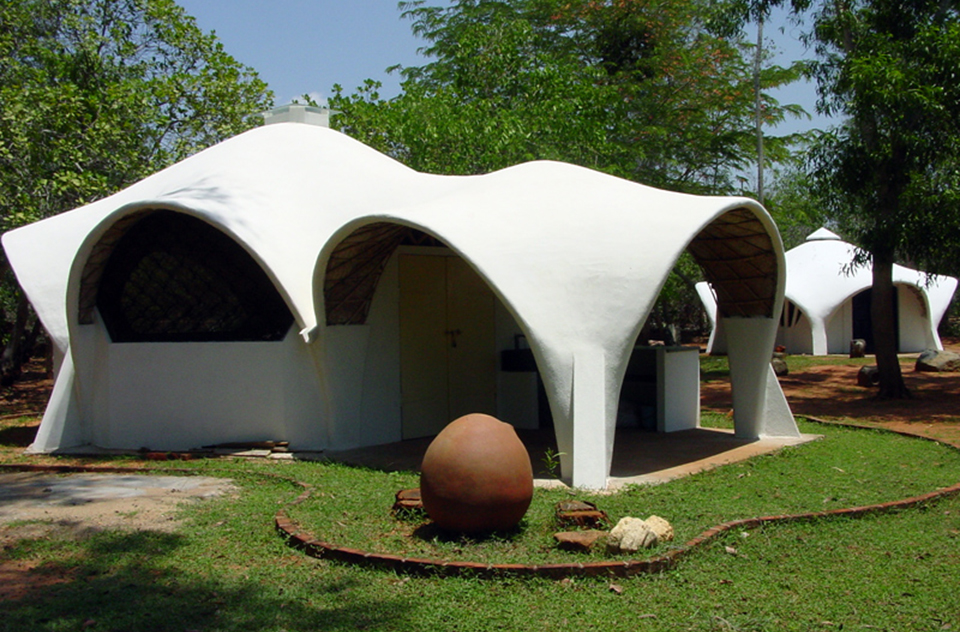
. Understanding the essence of ‘alternative building materials and technology’, ‘rematerial oriented design’, ‘super use’ ‘opportunistic architecture’ need for alternative building materials and building technology, alternative natural building materials - building materials with recycled content
UNIT 2 ALTERNATIVE BUILDING MATERIALS. Locally available building materials and their usability – applications of bamboo in building construction – flooring – roofingceiling – trusses Mud as building and building materials - field tests for identification of suitable soil for mud construction – techniques of mud stabilization –techniques of mud construction – finishes and protective treatments – production of mud blocks Innovative techniques for walls – lato blocks- cellular concrete blocks – hollow concrete blocks – hollow clay blocks – stone masonry blocks – sand lime bricks Use of industrial, agricultural, construction wastes and post-consumer wastes - Survey of such materials development by research organizations like CBRI, SERC etc.
UNIT 3 ALTERNATIVE BUILDING TECHNOLOGY Innovative techniques for roofing/flooring - Filler slabs, Composite beam panel roofs, Masonry vaults and domes – funicular shells – precast reinforced concrete channel units – pre stressed concrete hollow cored units- precast RCC joints – ferro cement ribbed slabs – folded plates, Foundations - Use of arches in foundation, alternatives for walls constructions – composite masonry, confined masonry, cavity walls, rammed earth, rat trap bond - Ferro cement and ferro-concrete building components Materials and specifications, Properties. Top down construction, Fast track construction methods - building examples Alternative practices - windows and door - panels and frames, flooring, handrails, partitions, staircases - Staircase - Methods of construction of staircases (timber, steel, glass, composite materials) - basic principles, finishes for staircases
UNIT 4 EMERGING MATERIALS .
Current developments in the use of Nano materials in construction industry – various types of nano fibers like nano silica, nanoTitania, carbon nano tubes, carbon nano fibers - applications - advantages and disadvantages
UNIT 5 SUGGESTIVE ASSIGNMENT
Case studies of buildings constructed with alternative building materials and technology for substructure and superstructure
in Indian context
Category: SCHOOL OF BUILDING AND ENVIRONMENT
Research Content: The intent of pre thesis is to initiate the selection of Thesis topic in the beginning of the third semester itself. The students shall work three alternative topics by studying and analysing the published research papers of their interest area and give justification for the selection of the topics which will be assigned to him / her to proceed to the next phase.
Research Process: Each student will prepare the Pre-Thesis with regular reviews by the faculty of the department. . It is encouraged that students identify topics for the Pre Thesis work which can be further developed into a Thesis Project with research in the next semester for more in-depth research. . The Pre Thesis will be presented in the accepted form of a Pre-thesis report duly supported by copious references, sketches, graphs, proposed statistical data, proposed details of survey, tools and techniques and methodology to be adopted and detailed account of experimental analytical procedures to be adopted. Each student is required to defend his/her Pre-Thesis at a Viva Voce Examination by jury. The Pre-Thesis shall consist of literature, survey on the topic chosen in the relevant field, theoretical and or experimental work based on the literature and discussion.
Area of Research:
The subject for special study may be conceptual or practical but should pertain to building design and construction
management like BIM, construction management procedures, land use and planning, financial management, lean
construction, quality control, value engineering and safety procedures and construction Laws
Category: SCHOOL OF BUILDING AND ENVIRONMENT
UNIT 1 TRADITIONAL APPROACH AND NETWORK ANALYSIS
. Traditional Management System - Gantt’s approach - load, progress and bar charts - limitations & overcoming - Project programming - work breakdown structure. Introduction to PERT & CPM -Introduction to network concepts, network elements and inter-relationships-Network techniques -Network logic - activity interrelationships - development of CPM network - Identification of critical path - Different float computations - Early start, early finish, late start, and late finish- worked out examples-Network control (updating): Introduction, process of updating, data required for updating, when to update, method of updating, examples.
UNIT 2 PROBABILITY ANALYSIS
PERT Network - Introduction to theory of probability and statistics - Probabilistic time estimates of activities - Analysis of PERT network.
UNIT 3 PROJECT COST & RESOURCE ALLOCATION
. Introduction to two-dimensional network analysis - activity cost information - cost time relationship - crashed estimates for activities - compression potential-cost slope - Project direct cost and indirect cost- crashed program, Network compression - least cost, least time, optimum solutions. Resource allocation - Resource levelling and smoothing - Simple examples.
UNIT 4 SOFTWARE APPLICATIONS .
Introduction to Project Management software’s - Applications - Detailed planning of a simple project - Scheduling using
M.S. project and Primavera.
Category: SCHOOL OF BUILDING AND ENVIRONMENT

Course Objectives:
● To introduce the students to the body of literary writings that stands evergreen in the regions of Kenya, Africa,
Australia, Canada, New Zealand and Pakistan.
● To acquaint the students the various genres.
● To acquaint the students with different authors relating to different regions and literature.
● To make the students approach selected texts for their literary value and cultural importance.

- Teacher: Sowmiya L.M.
Category: M.A-ENGLISH ONLINE
|
Develop a C++ program to implement a class, object creation, member function invocation concept. |
|
Develop a C++ program to implement the various constructors |
|
Develop a C++ program to implement a friend function, |
|
Develop a C++ program to implement an operator overloading concept. |
|
Develop a C++ program to implement a function overloading concept. |
|
Develop a C++ program to implement the inheritance Single ,multiple |
|
Develop a C++ program to implement the inheritance multilevel & hierarchy |
|
Develop a C++ program to implement the Abstract class |
|
Develop a C++ program to implement a Virtual function. |
- Teacher: Ravi Kumar D N S
Category: M.SC - MATHS ONLINE
- To introduce the students to the body of literary writings that stands evergreen in the regions of Kenya, Africa, Australia, Canada, New Zealand and Pakistan.
● To acquaint the students the various genres.
● To acquaint the students with different authors relating to different regions and literature.
● To make the students approach selected texts for their literary value and cultural importance.

- Teacher: Sowmiya L.M.
Category: M.A-ENGLISH ONLINE

- Teacher: DR. GANANATH KHILLA
Category: SCHOOL OF MANAGEMENT STUDIES
COURSE OBJECTIVES
To provide an understanding of the concepts, functions and techniques of managing people.
To understand the HRM practices, in terms of HRP, Training and Development, Compensation, etc
To understand enterprise issues and the changing role of Human Resource and Industrial Relations.
- Teacher: JOHN BRITTO M
Category: SCHOOL OF MANAGEMENT STUDIES

Objective:
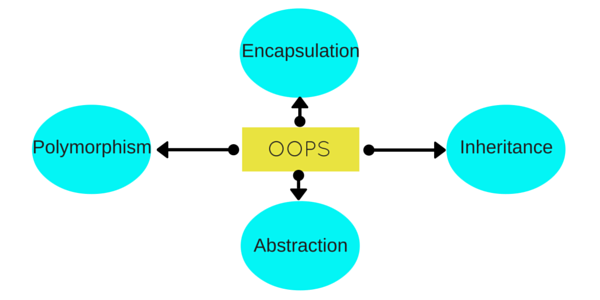
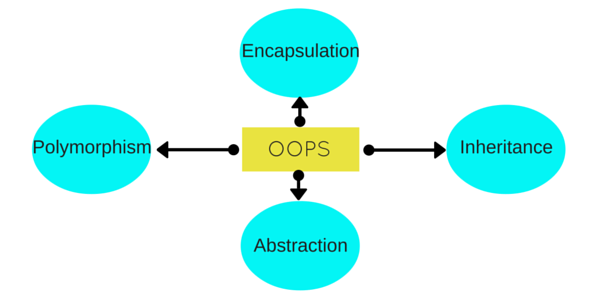
• To understand the fundamental concepts of object oriented programming.
• Be familiar with concepts like abstraction, inheritance, polymorphism.
• To understand the concept of Classes
- Teacher: Ravi Kumar D N S
Category: M.SC - MATHS ONLINE


COURSE OBJECTIVES
To understand data, analyze trends, forecast, and plan to drive accurate insight.
To help the organization find new opportunities, improve efficiency, and minimize risk.
To make smarter decisions and to deliver business results.

- Teacher: SHETTY DEEPA THANGAM GEETA
Category: SCHOOL OF MANAGEMENT STUDIES
- To understand the basic statistical tools for analysis & interpretation of qualitative & quantitative data
- To introduce basic concepts of Statistics and to provide statistical techniques for business data analysis.

- Teacher: PRIYADARSHINI E
- Teacher: Subhashini N
- Teacher: SHETTY DEEPA THANGAM GEETA
Category: MBA ONLINE