Search results: 1467
COURSE OBJECTIVES
Ø To know the different sources and methods of data collection and different methods of data presentation
Ø To understand the significance of advanced concepts of Statistics
Ø To understand methods of correlation and regression

- Teacher: Reegan Jebadass J
Category: BCOM&BBA ONLINE
*To understand the concept of Marketing
*To impart knowledge on the marketing frame work
*To familiarize with marketing strategy formulation and implementation
- Teacher: Dr Sasirekha K
- Teacher: Kaavya K
Category: SCHOOL OF MANAGEMENT STUDIES
An Office Management course is designed to equip individuals with the skills and knowledge required to efficiently manage the operations of an office environment. It typically covers a range of administrative, organizational, and managerial responsibilities. Here’s an overview of what such a course might include:
Key Topics in an Office Management Course:
1. Administrative Skills:
• Time management
• Filing and record-keeping systems
• Scheduling and calendar management
• Correspondence and communication handling (emails, phone calls)
2. Organizational Skills:
• Office layout and design
• Workflow optimization
• Inventory and supply management
• Event planning and coordination
3. Technology Proficiency:
• Office software (e.g., Microsoft Office, Google Workspace)
• Database management
• Basic IT troubleshooting
• Use of office equipment (printers, scanners, etc.)
4. Leadership and Interpersonal Skills:
• Team coordination and collaboration
• Conflict resolution
• Staff supervision and motivation
• Communication skills (written and verbal)
5. Financial and Budgeting Skills:
• Managing office budgets
• Expense tracking
• Procurement and vendor management
6. Legal and Ethical Practices:
• Workplace ethics
• Compliance with office and employment laws

- Teacher: SANDHYA V
Category: ODD
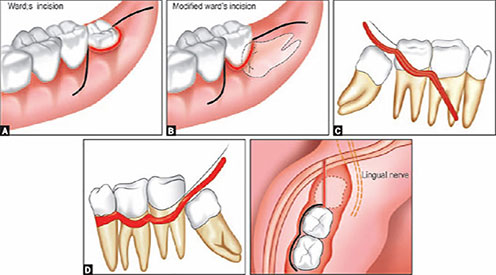
Local Anesthesia - Mode of action and Clinical action of individual agents.
Inferior alveolar nerve block
ENDOCRINE EMERGENCIES IN DENTAL OFFICE
Category: SCHOOL OF DENTAL SCIENCES
MEDICAL EMERGENCIES- RESPIRATORY SYSTEM
STERILISATION AND DISINFECTION
MAXILLARY NERVE BLOCKS
Category: SCHOOL OF DENTAL SCIENCES
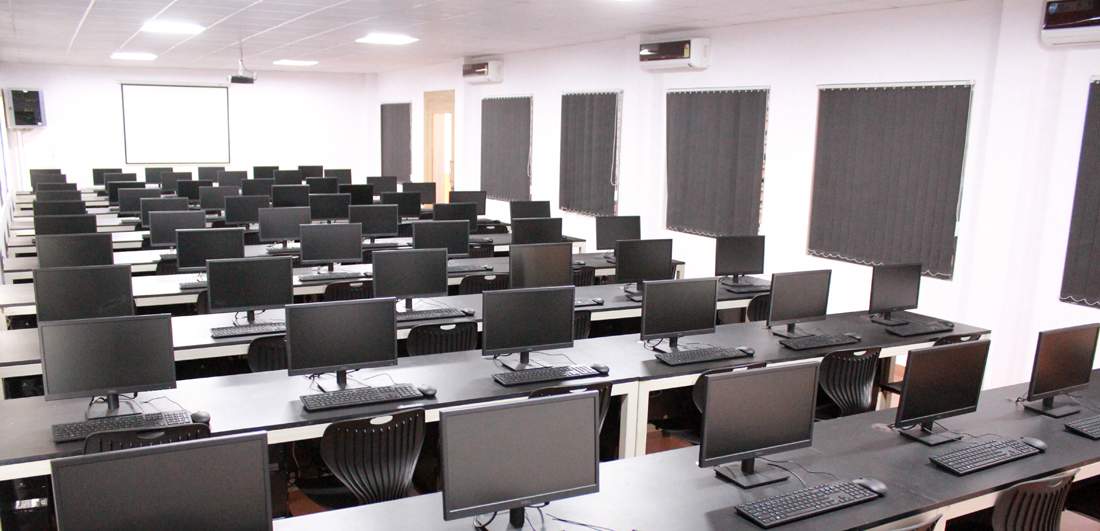
List of Experiments 1. Develop a C++ program to implement a class, object creation, member function invocation concept.
2. Develop a C++ program to implement the various constructors and destructor concept.
3. Develop a C++ program to implement a friend function, Inline function.
4. Develop a C++ program to implement an operator (Unary & Binary) overloading concept.
5. Develop a C++ program to implement a function overloading concept.
6. Develop a C++ program to implement a run time polymorphism.
7. Develop a C++ program to implement the following inheritance types. a. Single b. Multiple c. Multilevel d. Hierarchical e. Hybrid
8. Develop a C++ program to implement an Abstract class concept.
9. Develop a C++ program to implement a Virtual function.
- Teacher: Ravi Kumar D N S
Category: ODD
Course Objectives
- To introduce the principles of light propagation through optical fibers.
- To understand signal distortion mechanisms in the fiber.
- To introduce optical transmitters and receivers for fiber /free space links and the fiber optic couplers, connectors involved.
- To introduce optical network concepts and components involved and its applications.
Course Outcomes
On completion of the course, the student should be able to
CO1-Apply the mathematical concepts to compare different types of optical fibers, modes and configuration
CO2-Analyze the transmission characteristics of optical fibers
CO3-Examine the optical sources and detectors for use in optical communication system
CO4-Construct launching and coupling of optical fibers
CO5-Design high speed optical communication networks
CO6-Design wireless communication system using Li-Fi

- Teacher: Vijayakumar V
Category: ODD SEMESTER
Optics lab
LIST OF EXPERIMENTS 1. To determine the refractive index of the given liquid forming liquid lens by parallax method 2. To determine the focal length and radius of curvatures of a convex lens. 3. To draw i-d curve and to determine the angle of minimum deviation and the angle of the prism from it and hence to calculate the refractive index of the material of the prism. 4. To determine the focal length and radius of curvatures of a concave lens by displacement method. 5. To standardize the diffraction grating and hence to determine the wavelength of mercury spectral lines by normal incidence method using spectrometer. 6. To determine the radius of curvature of a lenst by Newton‟s rings method. 7. To determine the refractive index of the prominent spectral lines of mercury by spectrometer. 8. To determine the refractive index of a liquid using hollow prism. 9. To determine the dispersive power of the material of the prism by finding the refractive indices of different pairs of mercury spectral lines. 10. To determine the Cauchy‟s Constant of a prism using spectrometer.
- Teacher: VIJAI ANAND K
Category: School of Science and Humanities
COURSE OBJECTIVE
To learn the fundamental principles of optics.
To learn the mathematical techniques employed in optics.
To use these principles and techniques to solve problems in optics
To be able to identify and illustrate physical concepts and terminology used in optics.
To be able to make approximate judgements about optical and other wave phenomena when necessary.
Unit I - Geometrical Optics
9 Hrs
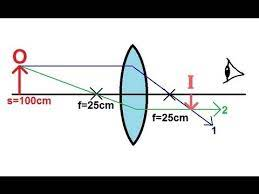
Thin lens equation - compound thin lenses - Thick lens formula - Power of a thick lens – Lens combination -
Refracting surfaces- Spherical aperture and stops - Single lens magnifier – Single lens camera – Two lens optical
systems –The Microscope – The Telescope – Telephoto Lens.
Unit II Lens Aberrations
9 Hrs
Spherical aberration and lenses - Methods of minimizing spherical aberration - Condition for minimum
spherical aberration in the case of two lenses separated by a distance - Chromatic aberration in lenses - Condition
for achromatism of two thin lenses (in contact and out of contact) - coma - astigmatism - Curvature of the field -
Huygen's and Ramsden's eye pieces.
Unit III - Light waves
9 Hrs
Maxwell‟s equation – The wave equation-plane wave solution- spherical and cylindrical wave solutions –
Homogeneous and Inhomogeneous waves – energy density and Poynting vector - Dispersion produced by a thin
prism - Angular dispersion - Dispersive power - Cauchy's formula.
Unit IV – Interference
9 Hrs
Colours of thin films - Air wedge - Determination of diameter of a thin wire by air wedge - Test for optical
flatness - Haidinger's fringes - Michelson's Interferometer - Theory - Applications - thickness of thin transparent
material and resolution of spectral lines - Brewster's fringes - Refractive index of gases - Jamin's& Rayleigh's
Interferometers - Stationary waves in light - Colour photography (principle only), Holography (principle only).
Unit V - Polarization and Diffraction
9 Hrs
Double refraction - Nicol prism - polarizer and analyzer - Huygen's explanation of double refraction in
uniaxial crystals - Dichroism - Polaroids and their uses - Double image polarizing prisms - Fresnel diffraction -
Diffraction at Circular aperture, Opaque circular disc, Straight edge and Narrow wire - Fraunhoffer diffraction - single
slit - Double slit - Plane diffraction grating - theory and experiment to determine wave length.
- Teacher: Kanimozhi D
- Teacher: Jayalakshmi D.S
- Teacher: VIJAI ANAND K
Category: School of Science and Humanities
- Teacher: Jemmy Christy H
Category: EVEN SEMESTER
Broad outline of theoretical, clinical and practical courses. 1, Study of special and applied pathology of oral tissues as well as relation of local pathologic and clinical findings to systemic conditions. 2. Oral microbiology and their relationship to various branches of dentistry. 3. Oral microbiology affecting hard and soft tissues. Study of clinical changes and their significance to dental and oral diseases as related to oral pathology. 4. Forensic odontology. 5. Maintenance of records of all activities.

Category: SCHOOL OF DENTAL SCIENCES
In this course participants will learn
Functional group and its significance.
IUPAC nomenclature of different functional groups.
Mechanism for substitution, elimination and addition reactions.
Synhthesis and properties of alkyl halides, alcohols, carbonyl and carbohydrate compounds.

- Teacher: K CHENNAKESAVULU
Category: ODD
To discuss the concept of organo-nitrogen compounds.
To understand the chemistry of heterocyclic compounds containing O, N, S.
To understand the synthesis, properties and reactivity of carboxylic acids.
To develop the practice of learning molecular rearrangements along with their mechanism.
To discuss the importance of active methylene groups in organic synthesis.
- Teacher: K CHENNAKESAVULU
Category: EVEN SEMESTER
In this course participants will learn the
Concepts of aromaticity, reactivity and stability of organic compounds.
The preparation and properties of reactive intermediates i.e. Carbocations, Carbanions and Carbenes.
To appreciate the concept of substitution, addition
and elimination reactions and their reaction mechanism
- Teacher: K CHENNAKESAVULU
Category: ODD
- Teacher: Anita Lett J
- Teacher: PAPIYA SAHA
Category: ODD

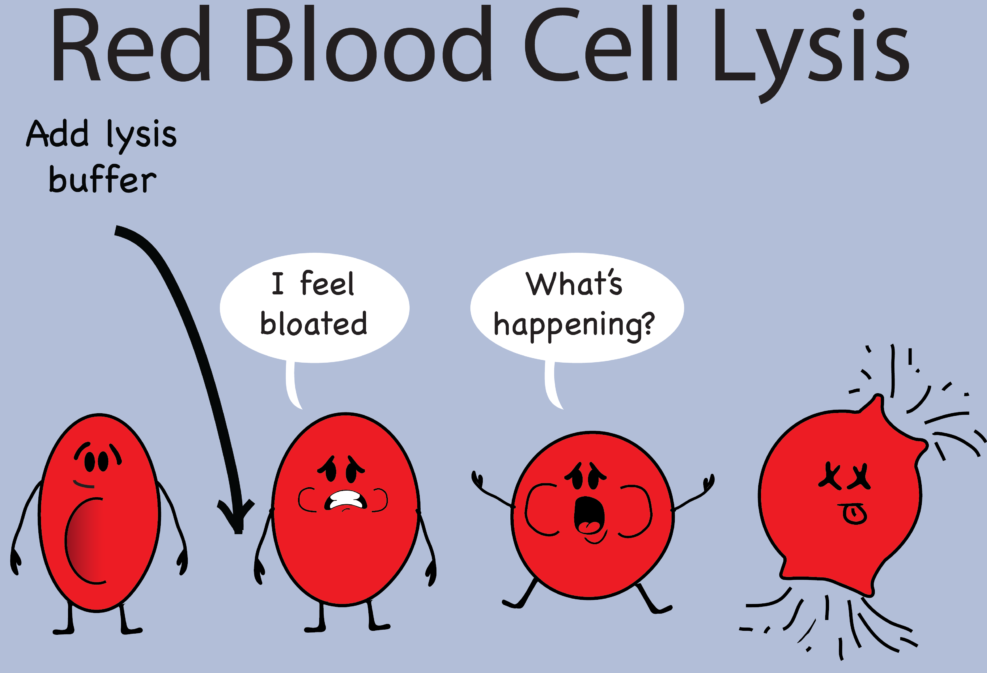
Pathophysiology is the study of causes of diseases and reactions of the body to such disease producing causes.This course is designed to impart a thorough knowledge of the relevant aspects of pathology of various conditions with reference to its pharmacological applications, and understanding of basic pathophysiological mechanisms. Hence it will not only help to study the syllabus of pathology, but also to get baseline knowledge required to practice medicine safely, confidently, rationally and effectively
- Teacher: Vigneshwaran P
- Teacher: Amudha S
Category: SCHOOL OF PHARMACY