Search results: 1467
Periodontology is the specialty of Dentistry that studies supporting structures of teeth, as well as diseases and conditions that affect them. The supporting tissues are known as the Periodontium, which includes the Gingiva, Periodontal Ligament, Alveolar Bone, and Cementum. A branch of dentistry which deals with Gingival, Periodontal and Peri Implant diseases, Diagnosis and Treatment Planning.

- Teacher: Krithika Krithika
- Teacher: Yamini R
- Teacher: Dr. Sumathi H Rao
- Teacher: Chella Priya RM
- Teacher: Dr Gayathri S
- Teacher: Shifa Fathima Shajahan
- Teacher: Geetha T
Category: SCHOOL OF DENTAL SCIENCES
Periodontics is a speciality branch of Dental sciences which deals with the study of health and diseaes of Periodontium. Which Involes Gingiva, Periodontal ligament, Cementum and Alveolar Bone. Placement of Dental Implants, Laser dentistry , periimplant diseases, Regenerative periodontics and Periodontal microsurgery and involved in this specialed branch of Periodontics.

- Teacher: Krithika Krithika
- Teacher: Yamini R
- Teacher: Dr. Sumathi H Rao
- Teacher: Chella Priya RM
- Teacher: Dr Gayathri S
- Teacher: Shifa Fathima Shajahan
- Teacher: Geetha T
Category: SCHOOL OF DENTAL SCIENCES
- Teacher: VIJAYA KUMAR VOLETI
Category: Pharm.D - Doctor of Pharmacy
Enlightens about the methods and other practical aspects of pharmaceutical formulations.

Category: SCHOOL OF PHARMACY
Pharmaceutics-II is a study of different type of Dosage forms and Cosmetics available in Pharmacy.

- Teacher: ARUN SUNDAR M
Category: SCHOOL OF PHARMACY
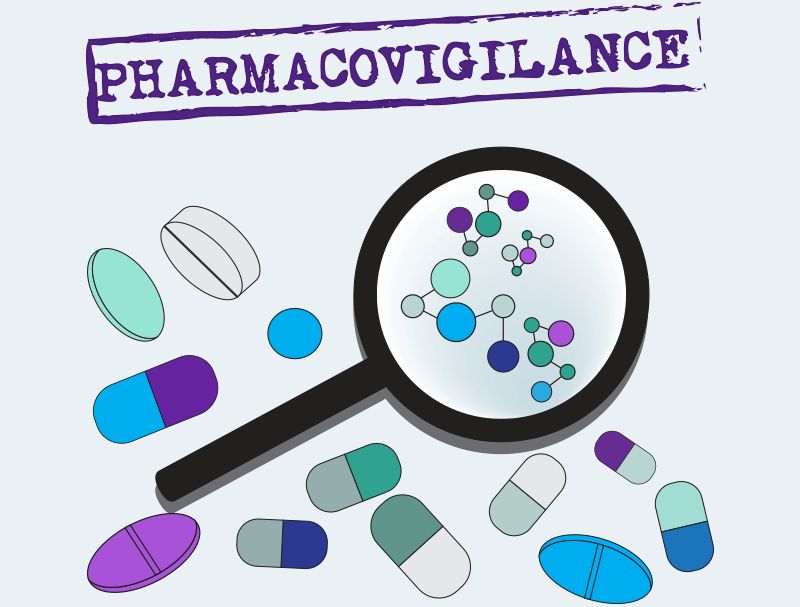
This course will provide a knowledge on various types of Pharmaco-vigilance and Safety monitoring techniques and their analysis.
- Teacher: Madan Kumar Arumugam
Category: EVEN SEMESTER
This course provides basic knowledge about different classes of drugs
available for the pharmacotherapy of common diseases. The indications for use,
dosage regimen, routes of administration, pharmacokinetics, pharmacodynamics,
and contraindications of the drugs discussed in this course are vital for successful
professional practice.
- Teacher: Muralikrishna .
- Teacher: SAI HARINI S
Category: SCHOOL OF PHARMACY
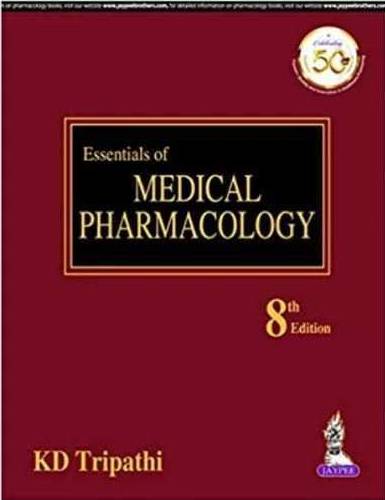
The main purpose of the subject is to understand what drugs do to the living organisms and how their effects can be applied to therapeutics. The subject covers the information about the drugs like, mechanism of action, physiological and biochemical effects (pharmacodynamics) as well as absorption, distribution, metabolism and excretion (pharmacokinetics) along with the adverse effects, clinical uses, interactions, doses, contraindications and routes of administration of different classes of drugs
- Teacher: Vigneshwaran P
- Teacher: Monisha S
Category: SCHOOL OF PHARMACY
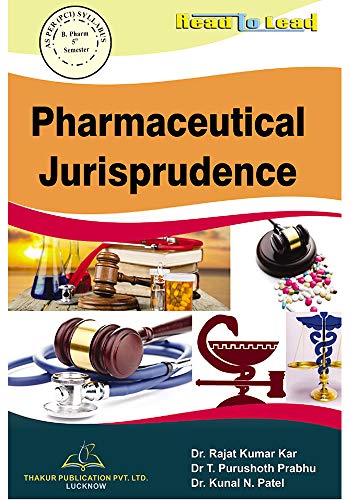
PHARACEUTICAL LAW -It has been related to the act, rules, regulation and functions for decades of year.
Deals with the following act such as pharmacy act, Drug and Cosmetic act, medicinal toilet preparation, narcotic act, drug magic remedies act, Prevention of cruelty to animal act etc. Which help the public to know about the drugs and new drug formulation that brings the public awareness in the society.
- Teacher: PADMAPRIYA V
Category: SCHOOL OF PHARMACY
- Monitor drug therapy of patient through medication chart review and clinical review
- Obtain medication history interview and counsel the patients
- Identify drug related problems detect and assess adverse drug reactions
- Interpret selected laboratory results (as monitoring parameters in therapeutics) of specific disease states
- Know pharmaceutical care services
Category: SCHOOL OF PHARMACY
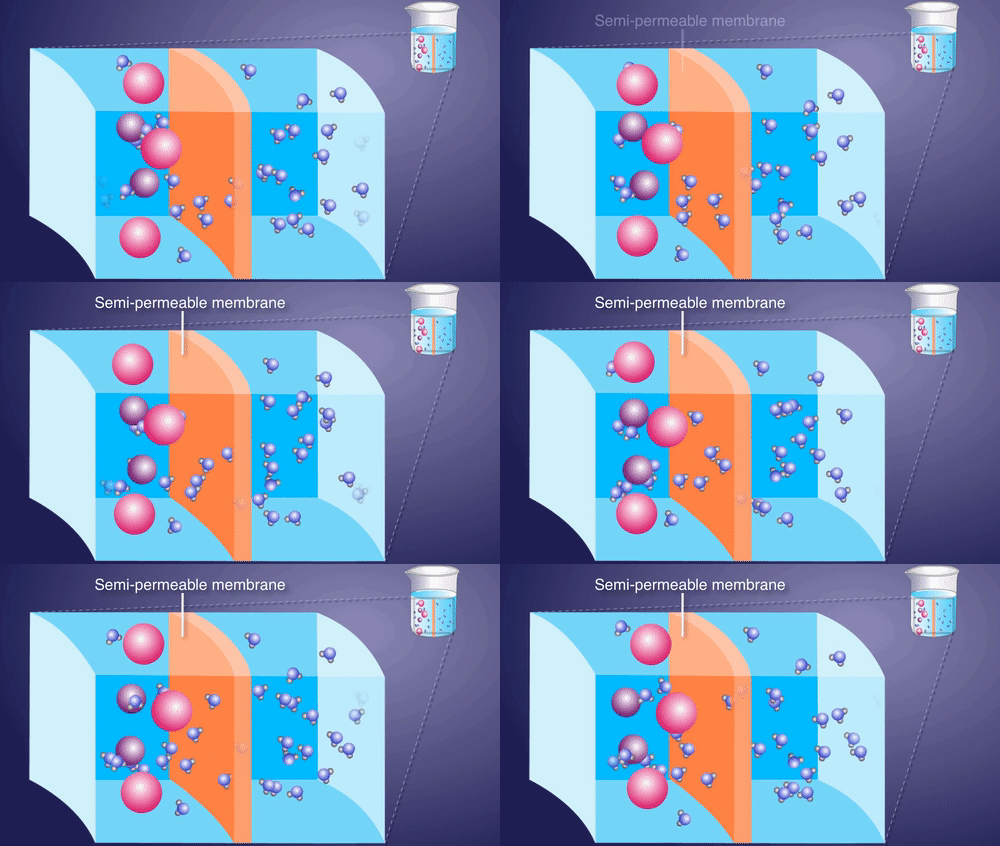
Physical Pharmaceutics deals with the physico-chemical principles involved in the practice of pharmacy. The principles are essential for the preparation of stable and efficacious pharmaceutical formulations.
Category: SCHOOL OF PHARMACY
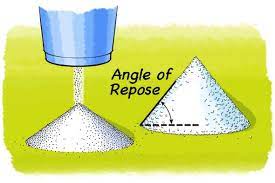
The course deals with the various physica and physicochemical properties, and
principles involved in dosage forms/formulations. Theory and practical
components of the subject help the student to get a better insight into various
areas of formulation research and development, and stability studies of
pharmaceutical dosage
- Teacher: Dr. Joan Vijetha R
Category: SCHOOL OF PHARMACY
Apply laws of mechanics to determine efficiency of simple machines with consideration of friction.
Understand interference of sound waves and longitudinal standing waves
Describe basic definition and conception of materials and physical properties of materials
Understand the nature of thermodynamic properties of matter like internal energy, enthalpy, entropy,
temperature, pressure and specific volume
Understand the properties of light like reflection, refraction, interference, diffraction etc

- Teacher: Malliga P
Category: EVEN SEMESTER
Unit-I: 9 hours
Introduction to Robots-Laws of Robotics-Zeroth law- Law 1-Law 2-Law 3-History of Robotics-First industrial robots-mechanism-Five Basic Principles of Developmental Robotics-The Principle of Embodiment-The Principle of Subjectivity-The Principle of Grounding-The Principle of Gradual Exploration-Medical and Industrial Applications of Robots.
Unit-II: 9 hours
Applications of Quantum Physics: photoelectric effect, Compton scattering, photons, De Broglie waves and the wave-particle duality of matter and light. Introduction to wave mechanics: Schrödinger's equation, wave functions, wave packets, Heisenberg uncertainty principle and zero-point energies. Solutions to Schrödinger's equation in one dimension: Energy Eigen values and eigen functions, Schrödinger's equation in three dimensions: central potentials and introduction to hydrogenic systems. Particle in a 1-D box, Tunneling Effect (Qualitative), Scanning Tunneling Microscope (STM)
Unit-III: 9 hours
Sensors: Introduction-measurement of sensor, Basic concepts, Types, mechanism-working principle- classification of sensor-internal sensors: position and velocity sensors:-Types of Robot Sensors: Light sensor-Touch sensor, vision sensor, radar, sonar, ultrasonic sensors-sound sensor-Temperature sensor
Unit-IV: 9 hours
Smart materials for soft Robots: Classification of building materials for Robots: Wood, metal: Aluminum, steel, bronze, brass and copper: Synthetic materials: PVC, Glass, composite materials: Manufacturing-compression molding method-Polymer composite materials-Aluminum alloys, Piezo materials, Shape memory alloys.
Unit-V: 9 hours
Nanophysics of Nono-Robotics: Nanorobotics theory – The origins of nano technology- Manufacturing of nanorobots using chips and nubots- working of nanobots, Types of nano robots, Medical Applications of Nanorobotics (nanobots),Fractal robots-features, self repair in fractal robots, applications of fractal robots.

- Teacher: Malliga P
Category: School of Science and Humanities
- Teacher: Ravichandran S
Category: ODD
COURSE OBJECTIVE
The objective of the course is to provide knowledge on fundamentals, structures, photosynthesis, metabolism of
nitrogen compounds and about molecular mechanisms of signalization and regulation in plants.

- Teacher: Theboral J
- Teacher: Inbathamizh L
Category: SCHOOL OF BIO AND CHEMICAL