Search results: 1466
- Teacher: Malliga P
Category: EVEN SEMESTER
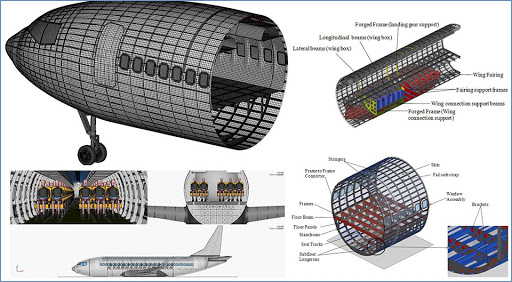
AIRCRAFT COMPOSITE MATERIALS AND STRUCTURES
L T P Credits Total Marks
3 0 0 3 100
COURSE OBJECTIVES
To study the mechanics of composites in micro level and macro level.
To study the plate, shell and sandwich theories of composites for various applications.
To understand the fabrication methods and design of composite structures.
UNIT 1 MICROMECHANICS 9 Hrs.
Introduction - advantages and application of composite materials – types of reinforcements and matrices - micro mechanics
– mechanics of materials approach, elasticity approach- bounding techniques – fiber volume ratio – mass fraction – density
of composites. Effect of voids in composites
UNIT 2 MACROMECHANICS 9 Hrs.
Generalized Hooke’s Law - elastic constants for anisotropic, orthotropic and isotropic materials - macro mechanics stressstrain relations with respect to natural axis, arbitrary axis – determination of in plane strengths of a lamina - experimental
characterization of lamina. Failure theories of a lamina. Hygrothermal effects on lamina.
UNIT 3 LAMINATED PLATE THEORY 9 Hrs.
Governing differential equation for a laminate. Stress – strain relations for a laminate. Different types of laminates. in plane
and flexural constants of a laminate. Hygrothermal stresses and strains in a laminate. failure analysis of a laminate. Impact
resistance and interlaminar stresses. netting analysis.
UNIT 4 SANDWICH CONSTRUCTIONS 9 Hrs.
Basic design concepts of sandwich construction - materials used for sandwich construction - failure modes of sandwich
panels - bending stress and shear flow in composite beams.
UNIT 5 FABRICATION PROCESS AND REPAIR METHODS 9 Hrs.
Various open and closed mould processes, manufacture of fibers, importance of repair and different types of repair
techniques in composites – autoclave and non-autoclave methods.
Max. 45 Hrs.
COURSE OUTCOMES
On completion of the course, students will be able to
CO1 - Understand different constituent materials of composites and properties.
CO2 - Analyze the mechanical behaviour of laminated composites based on fiber direction.
CO3 - Understand the design and failure modes of sandwich composites.
CO4 - Analyse the Hygrothermal property and interlaminar shear strength of composite.
CO5 - Understand fabrication methods based on various applications .
CO6 - Understand different types of repair techniques in composites.
TEXT / REFERENCE BOOKS
1. Dam Ishai., "Mechanics of Composite Materials", 2010.
2. Autar K Kaw, ‘Mechanics of Composite Materials’, CRC Press, 2012.
3. Madhuji Mukhapadhyay, Mechanics of Composite Materials and Structures, University Press, 2012.
4. Agarwal, B.D., and Broutman, L.J., "Analysis and Performance of Fibre Composites," John Wiley and sons. Inc., New
York, 95.
5. Lubin, G., "Handbook on Advanced Plastics and Fibre Glass", Von Nostrand Reinhold Co., New York, 1989.
6. Calcote, L R. “The Analysis of laminated Composite Structures”, Von – Nostrand Reinhold Company, New York 1998.
END SEMESTER EXAMINATION QUESTION PAPER PATTERN
Max. Marks: 100 Exam Duration: 3 Hrs.
PART A: 10 Question of 2 marks each – No choice 20 Marks
PART B: 2 Questions from each unit of internal choice, each carrying 16 marks 80 Marks
Category: ODD SEMESTER
COURSE OBJECTIVES
• To classify the types of Aircrafts and its data collection.
• To estimate the weight of an Aircraft pertaining to preliminary hand calculations
• To select the appropriate airfoil, wing tail, control surface and power plant for the preliminary design Aircraft.
• To analyze the performance of the preliminary design Aircraft.
• To perform the structural analysis of the preliminary design Aircraft.
• To design the landing gear opted for the newly designed Aircraft.
SUGGESTED LIST OF EXPERIMENTS
1. Data collection.
2. Preliminary weight estimation.
3. Airfoil selection, Wing tail and control surfaces
5. Balance diagram.
6. Drag estimation.
7. Rate of climb calculations at various altitudes, Turn performance
8. Range and Endurance, Takeoff and landing distance calculation
10. V-n diagram
12. Shear force and bending moment diagrams of various aircraft structures.
13. Structural weight distribution.
14. Landing gear Design.
15. Detailed CAD drawings of wing, fuselage ,tail surfaces and control surfaces and their stress analysis using structural software
16. Detailed Design project report.
COURSE OUTCOMES
At the end of the course, student will be able to:
• CO1: Categorize the types of Aircraft and its specifications to perform the conceptual design of new Aircraft.
• CO2: Estimate the gross weight and payload weight of an Aircraft for the preliminary designed Aircraft.
• CO3: Deduct the appropriate selection of airfoil, wing-tail configuration for the preliminary Aircraft.
• CO4: Analyze the preliminary designed Aircraft’s performance and its control.
• CO5: Evaluate the structural analysis of airframe parts of the preliminary designed Aircraft.
• CO6: Design the appropriate landing gear that suits the preliminary designed Aircraft.

- Teacher: Madhan Kumar G
Category: EVEN SEMESTER
List of experiment
1. V-n diagram
2. Wing and fuselage Design.
3. Shear force and bending moment diagrams of various aircraft structures.
4. Structural weight distribution.
5. Bending stress calculation.
6. Torque diagram
7. Shear flow calculations
8. Flexural shear flow
9. 3-view diagram based on the detailed design
10. Landing gear Design.
11. Detailed CAD drawings of wing, fuselage ,tail surfaces and control surfaces and their stress analysis using structural software
12. Detailed Design project report.
SAE4060 AIRCRAFT SYSTEMS AND MAIN
Category: ODD SEMESTER
COURSE OBJECTIVES
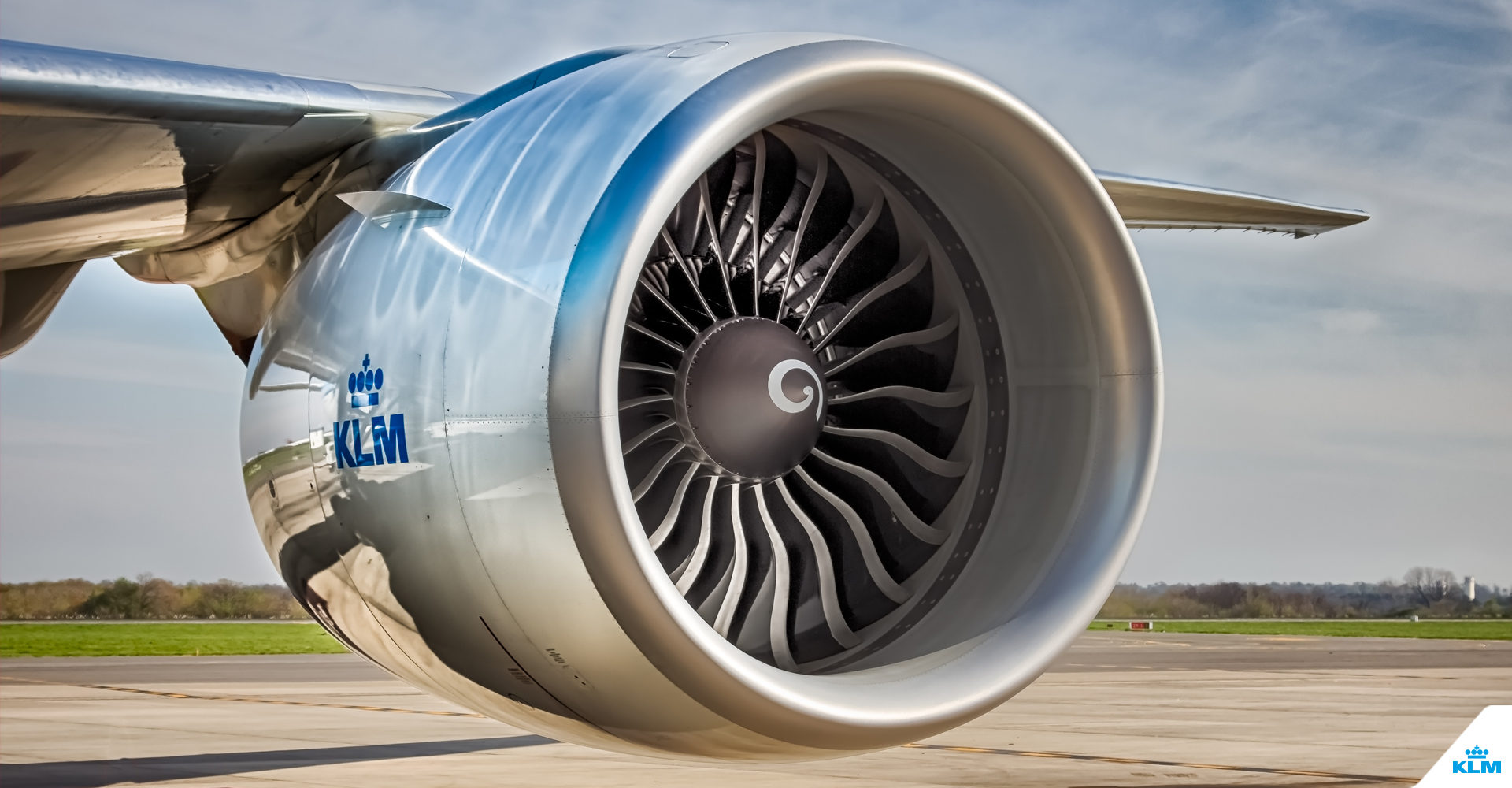
To introduce the concepts of applying Aero thermodynamics to air breathing propulsion. To familiarize the student's ability to analyze the concepts of compressor. To understand the basics of Axial Turbine. To understand the basics of Ramjet and Scramjet.
UNIT 1 THERMODYNAMICS OF AIR BREATHING PROPULSION 9 Hrs. History and classifications of Aero engines, Working of gas turbine engine – Thrust equation – Factors affecting thrust – Engine performance parameters – Efficiency, Specific fuel consumption, Methods of thrust augmentation – The propeller, turboprop, turbofan and turbojet engines characteristics.
UNIT 2 INLETS, COMBUSTION CHAMBER AND NOZZLES 9 Hrs. Introduction-Subsonic inlets-Supersonic inlets-Modes of Inlet operation- Gas turbine combustors-Types of combustion chamber-Fuel injector- Flame Tube cooling-Flame Stabilization-Flame holders- Theory of flow in isentropic nozzles – Losses in nozzles –Nozzle efficiency––nozzle choking –Over expanded and under expanded nozzles – Ejector and variable area nozzles.
UNIT 3 AIR COMPRESSOR 9 Hrs. Compressor and its classification- Centrifugal compressor - Work and compression ratio -Performance characteristicsCentrifugal compressor staging- Axial compressor-Work and compression ratio- Degree of reaction- Characteristic performance of a single stage axial compressor- Characteristic performance of a multistage axial compressor- Cascading of axial compressor-Compressor efficiency.
UNIT 4 AXIAL TURBINES 9 Hrs. Axial turbine stage -Velocity triangles and Power output - Elementary theory - Vortex theory- Limiting Factors of gas turbine design-Turbine performance- Turbine Blade cooling- Axial flow Turbine and compressor matching.
UNIT 5 RAMJET AND SCRAMJET 9 Hrs. Operating principle of RAMJET engine- RAMJET with afterburner- RAMJET performance- SCRAMJET working principleProblems faced in supersonic combustion.
Max 45 Hrs.
COURSE OUTCOME On completion of the course, student will be able to CO1 - Understand the working principles of gas turbine. CO2 - Comprehend the sound foundation in the design principles of inlets, combustion chambers, nozzles used in aircraft engines. CO3 - Learn the operation of compressors in aircraft engines. CO4 - Understand the concept of turbines in gas turbine propulsion systems. CO5 - Understand the principle and performance of ramjet and scramjet propulsion. CO6 - Applying the importance of Propulsion to Aircraft system.
TEXT / REFERENCE BOOKS
1. Philip Hill and Carl Peterson, “Mechanics and thermodynamics of propulsion”, Pearson India, second edition 2010.
2. V.Ganesan., “Gas Turbines”, Tata McGraw-Hill Education, third edition, 2010.
3. Cohen.H, Rogers.G.F.C. and Saravanamuttoo.H.I.H, “Gas turbine theory”. Pearson education, fifth edition,2001.
4. Rathakrishnan E., “Fundamentals of Engineering Thermodynamics”, Prentice-Hall India, 2012.
5. Saeed Farokhi, “Aircraft Propulsion”, John Wiley & Sons, Inc ., 2009.
6. Rolls Royce Jet Engine – 5thEdition – 1996.
- Teacher: MATHIYARASI M
Category: EVEN SEMESTER
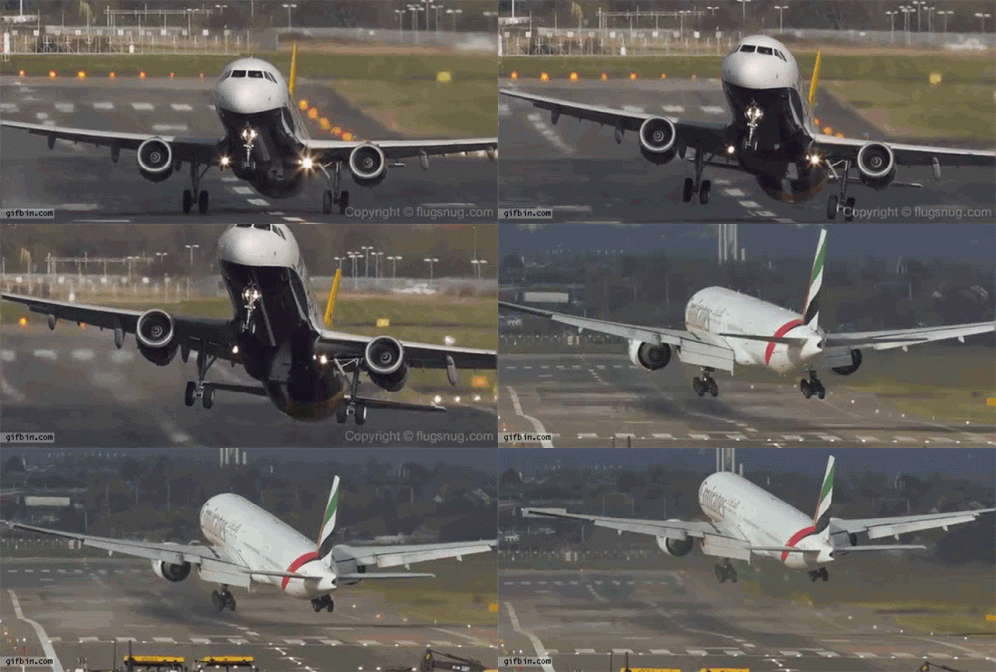
COURSE OBJECTIVES To get clear cut idea about the stability of aircraft at various flight conditions.
UNIT 1 BASIC CONCEPTS 11 Hrs.
Aircraft Axis System, Coordinate Transformation, Aircraft Force Equations, Moment Equations, Basic Concept Of Stability And Control, Longitudinal And Lateral- Directional Equations, Kinematic Equation
UNIT 2 LONGITUDINAL DYNAMIC STABILITY AND CONTROL 12 Hrs.
Stick - fixed stability, control effectiveness, hinge moment, tabs, aerodynamic balancing, effects of freeing the stick. Control forces and force gradients. Critical conditions for stability and control.
UNIT 3 MANEUVERABILITY 11 Hrs.
Effect of maneuvers. Longitudinal dynamic stability, equations of motion of a disturbed aircraft, stability derivatives, characteristic equation for stick fixed case, modes and stability criterion, effect of freeing the stick.
UNIT 4 DYNAMIC STABILITY 11 Hrs.
Brief description of lateral and directional dynamic stability- spiral, divergence and Dutch roll. Response, automatic control, autorotation and spin. Determination Of Neutral Points And Maneuver Points In Flight Tests
UNIT5 MODERN CONTROL THEORY 15 Hrs.
Classical Vs modern control theory, introduction – state-space modeling, canonical transformation, controllability and observability, state-feedback design, application of modern control theory to aircraft autopilot design- stability augmentation, autopilot design, state observer, optimal control, problems . Introduction to aircraft autopilot design using classic control theory. Introduction to nonlinear problems in aircraft flight dynamics - Inertia coupling. - High angle of attack phenomena - Flexibility effects -Divergence.
Max.60 Hours
TEXT / REFERENCE BOOKS
1. Thomas R. Yechout, ‘An introduction to Aircraft Flight Mechanics’, AIAA educational Series; 2003.
2. Bernard Etkin, Lloyd Duff Reid, Dynamics of Flight, Stability & Control, 3rd ed, John Wiley & Sons, 1995
3. Malcom J Abzug, E E. Larrabee, Airplane Stability & Control , 2nd ed, Cambridge University Press,, 2002
4. Nelson. R.C., Flight Stability and Automatic Control, McGraw Hill, 1989.
5. Perkins, C, D.,and Hage, R,E., Airplane Performance, Stability and Control, Wiley Toppan, 1974.
(Computational problems can be given as assignments)
Category: ODD SEMESTER
This course deals and integrates with the following concepts
- Differentiate baseband and passband transmissions & realize the needs for modulation.
- Explain the Functional blocks of a communication system & Classification of communications based on the type of modulation techniques and channels used.
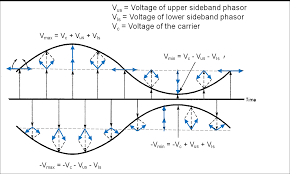
- Analyze Amplitude modulation and their types (DSB-SC, SSB-SC and VSB) using mathematical equations, Frequency Spectrum, Band Width, and Power relations.
- Demonstrate the generation of AM at the transmitter side and de-modulation process using appropriate circuits.
- Compare FM with AM. Analyze single tone and multi-tone FM using mathematical equations, Frequency Spectrum, and Band Width. Differentiate WBFM from NBFM.
- Relate FM (as Indirect PM) and PM (as indirect FM) using mathematical proof with a functional block diagram set-up.
- Demonstrate the FM modulator (direct and indirect methods) at the transmitter side and demodulator process with suitable circuits.
- Various noise sources and types
- Analyze, AM, PM, PAM, PDM, PPM, and PCM using mathematical equations and demonstrate their modulation and demodulation /techniques.
- Understand the importance of the sampling process in pulse modulation systems and explain various multiplexing techniques with many message inputs.
- Demonstrate the working of AM and FM transmitters, Receivers, and Communication Systems.
- Performance evaluation and selection of appropriate modulation techniques for real-time applications.
- Working with Analog Communication Receivers and Telephone and Television Systems.
- Teacher: JEGAN G
Category: ODD SEMESTER
Unit 1 explains the basic analytical principles, instrumentation behind the working of Atomic Absorption Spectroscopy and Flame photometry.
Unit 2 discusses the working principle and analysis of compounds based on different separation techniques such as chromatography, HPLC and Electrophoresis
Unit 3 deals with different thermal methods of analysis such as TGA, DTA, DSC and their applications. The unit helps in understanding the basic concepts of the thermal methods.
Unit 4 helps to know the basic principles involved in electroanalytical techniques and estimation of elements by different methods.
Unit 5 deals with the study of concepts of various spectrometric analytical techniques such as spectrophotometry, turbidimetry and fluorimetry.

- Teacher: Supriya S
Category: ODD
COURSE OBJECTIVES:
Introduce students to the concepts of dynamics.
The students are expected to develop working skills in the dynamic analysis of both particles and rigid bodies.
Master the basics of dynamics, including free body diagrams and kinematics.
Learn the mathematical formulations of dynamics problems

- Teacher: TWISHA SAIN
Category: School of Science and Humanities

Category: ODD
- Teacher: Vanitha S
Category: SCHOOL OF BUILDING AND ENVIRONMENT

- Teacher: Prakash P
Category: ODD SEMESTER
- Teacher: Venkatesh S
Category: EVEN SEMESTER