
Search results: 1467
COURSE OBJECTIVES:
Ø To comprehend the need, role and importance of research in Architecture.
Ø To understand and synthesize process of research.
Ø To give an insight to report writing and publishing research work in journals.

- Teacher: Dr. Devyani Gangopadhyay
- Teacher: Arulmalar Ramaraj
Category: ODD
|
SPYA1303 |
Research Methodology – I |
L |
T |
P |
Credits |
Total Marks |
|
3 |
1 |
|
4 |
100 |
COURSE OBJECTIVES:
· To understand the basic principles that governs psychological research.
· To understand the variables, sample, and various methods in research
· To be familiar in writing research report
Unit I: Introduction (15 hours)
Meaning of research - Objectives of research- Various steps in research - Types of research - Significance of research - Research methods versus methodology - Review of literature - Problems encountered by researchers in India - Ethical consideration in psychological research.
Unit II: Measurement and Scaling Techniques (15 hours)
Measurement in research - Measurement scales - Source of errors in measurement – Scaling -meaning of scaling - Scale construction techniques - Test development and standardization - Reliability - Validity.
Unit III: Variables and Methods of data collection (15 hours)
Meaning of variable – Various types of variables - Observation methods - Survey method - Questionnaire methods - Interview method –types of interview – Checklist - Rating scales.
Unit IV: Sampling fundamentals and Methods of Psychological Research (15 hours)
Sample - Sample size and its determination – types of sampling - Estimation and estimating population proportion - Testing of hypothesis - Experimental - Quasi-experimental - Case studies.
Unit V: Interpretation and Report Writing (15 hours)
Meaning of interpretation - Precaution in interpretation - Mechanics for writing a research report steps involved in writing research report - Precaution in writing research reports.
COURSE OUTCOMES:
1. Understand the fundamentals of research including research problem, literature review, and hypothesis and so on.
2. Understand the different types of research design used in psychological research and be aware of the strengths and weaknesses of different designs.
3. Apply knowledge of statistics and methodology to undertake various key steps (e.g., design, data collection, screening, preparation, analysis of data, and write-up of research results) to create research of a high quality in an area of psychology.
4. Apply knowledge of research methodology in further study and professional practice.
References:
1. Michael Smithson, (2000), Statistics with Confidence: An Introduction for Psychologists, sage publications.
2. David C. Howell (2012), Statistical Methods for Psychology Cengage Learning.
3. Guilford, J.P. (1973), Fundamental Statistics in Psychology and Education,.McGraw Hill Kogakusha.
4. Ferguson, George, A. (1976), Statistical Analysis in Psychology & Education, McGraw Hill, Kogakusha.
5. Mangal, S. K. (2004), Statistics in Psychology and Education. 2nd Edition, Prentice Hall, Delhi
6.Kothari, C. R. (2007). Research Methodology: Methods and Techniques. 2nd ed. New Age International Publishers.
- Teacher: Dr.Parveen Banu R
Category: ODD



COURSE OBJECTIVES
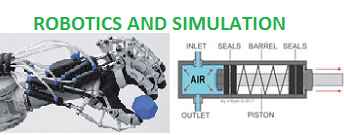
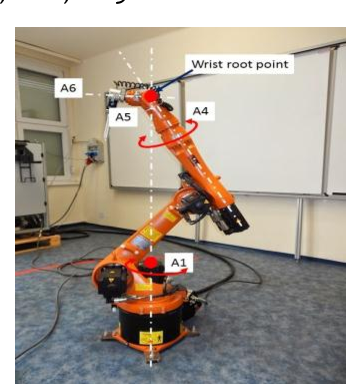
➢ To learn the fundamental concepts of Robotics automation process
➢ To introduce basic concepts of various dynamics processes
➢ To understand the effect of various power sources and sensors.
➢ To impart knowledge on the manipulators, grippers and robot dynamics
➢ To implement a real time Robot with the support of available programming languages
- Teacher: Ravi Kumar D N S
Category: SCHOOL OF COMPUTING
Category: ODD SEMESTER
Course Objective:
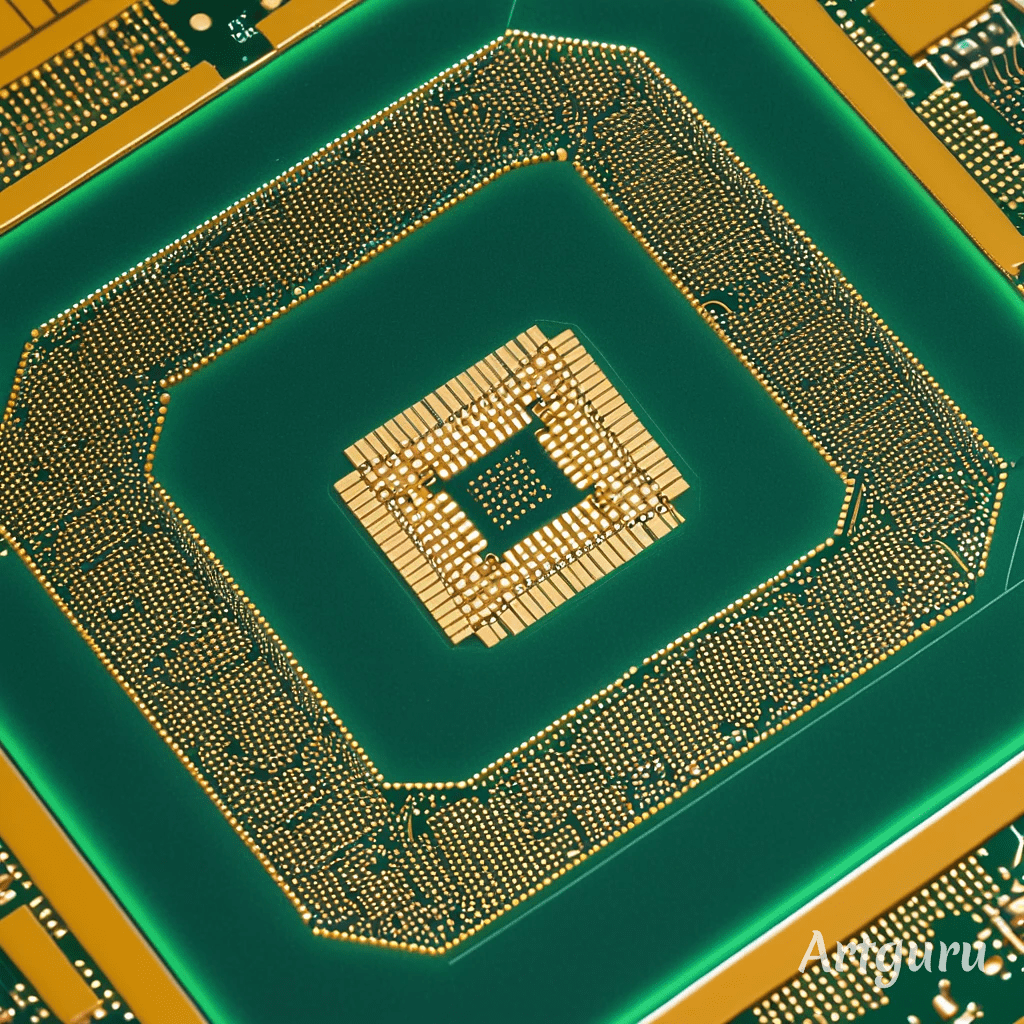
• Introduce principles and techniques of VLSI design.
• Teach the use of hardware descriptive languages for VLSI.
• Provide knowledge on VLSI fabrication processes.
• Explore the impact of Al on VLSI design.
• Examine Al applications in VLSI technology.
• Introduce optimization strategies for 3D ICs.
• Teach predictive analysis using machine learning in VLSI.
• Focus on Al-based routing algorithms for VLSI circuits.
Course Outcome
Ability to design and implement VLSI systems.
- Proficiency in using hardware descriptive languages for VLSI circuits
- Understanding of the VLSI fabrication process.
- Ability to evaluate Al's impact on VLSI design.
- Capability to implement Al applications in VLSI.
- Skills in applying optimization techniques for 3D ICs.
- Competence in using machine learning for predictive analysis in VLSI.
- Skills in designing Al-based routing algorithms for VLSI.
- Teacher: Shamini G I
- Teacher: MUTHIAH M. A
- Teacher: MATHAN N
Category: ODD SEMESTER
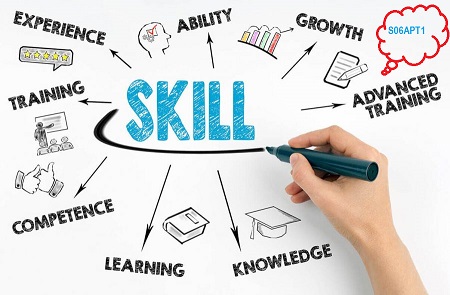
An aptitude is a component of a competence to do a certain kind of work at a certain level. Aptitude tells about the mental stability and analytical skills of an individual.
In this Skill Enhancement course, students are trained on
- Quantitative Aptitude Skills
- Reasoning Ability
- Logical Reasoning
- Visual Reasoning
- Verbal Reasoning
- Verbal Abilities & Language Comprehension
- General Awareness & General Knowledge
- Teacher: IMMANUEL Y
Category: ODD
- Quantitative aptitude is a measure of an individual’s numeric ability and problem-solving skills. This sort of aptitude is highly valued in fields like computer science, engineering, and mathematics because it usually correlates with success in those fields. However, there is a push to further this understanding in qualitative fields like journalism and the digital arts too.

Category: ODD
COURSE OBJECTIVES:
- To give the opportunity to the design student to come out with a minimum of 5 ensembles. The project will be the culmination of various inputs imbibed by the students over the previous semesters ranging from creative exposure and sensitization to technical expertise.
- While upholding the standards of both national and international benchmarking in fashion design each student is required to design an individual collection reflecting originality creative flair with in-depth conceptualization and implementation of the design process combined with impeccable technical strength and quality.
- The focus is on global design with an Indian flavor that is an ideal blend of creativity with function and marketability.
- The Fashion Design Project will have to be carried out by each student in the eighth semester. The project will give ample opportunity to the design student to come out with a minimum of 5 ensembles. The project will be the culmination of various inputs imbibed by the students over the previous semesters ranging from creative exposure and sensitization to technical expertise.
The guidelines for reference to develop design collection:
- The Fabric: Development and exploration of traditional resources (materials and techniques) towards contemporary expressions.
- The Image: Kaleidoscopic images encapsulated in time or space (History) to more globalized aspirations.
- The Attitude: From rejuvenation to revivalism- from transformation to transmutation- from the concrete to the sublime.
- The students may choose to specialize in any of the areas focusing on either women’s wear- menswear or children's clothing. Textiles may be combined with knits leather or any other suitable material while ensuring that the focus is on the extensive and prime usage of woven fabric.
The collection could fall in any one of the categories:
- . Sportswear
- Eveningwear
- Ethnic collection or Fusion
- Kids Wear
- Avant-Garde
- Theatre costume
- Institutional clothing or
- Any other category approved by the mentor

Category: Semester 6
- COURSE OBJECTIVES
- Understand control structures, functions and Arrays in C.
- Construct modules for real time applications using Functions in C.
- Comprehend pointers and file handling mechanisms
CO2 - Build simple solution for any given problem statement using various components of problem solving techniques and measure its efficiency in terms of time and space.
CO3 - Infer and examine the roots and foundation of C programming‘s key concepts like data types, operators.
CO4 - Devise and correlate the use of different core concepts such as arrays and functions in C language.
CO5 - Formulate real time solutions through programs using structure and union in C language.
CO6 - Design and develop various application oriented program for solving real time societal problems.
- Teacher: Kavitha M
- Teacher: Pushpavalli M
Category: ODD SEMESTER
COURSE OBJECTIVES
Ø To understand the basic concepts of C/C++ programming.
Ø To demonstrate the techniques for implementing engineering applications using computer programs.
Ø To equip students with sound skills in C/C++ programming language.
Ø To Identify, formulate and solve problems by using computer programming Language.
Ø To write diversified solutions using C language.
COURSE OUTCOMES
On completion of the course, the students will be able to
CO1 - Apply good programming design methods for program development.
CO2 - Construct programs that demonstrate effective use of C features including arrays, structures, pointers and files.
CO3 - Develop Recursive Programs.
CO4 - Write programs that perform explicit memory management.
CO5 - Develop programs in object oriented programming.
CO6 - Apply generic programming techniques to solve practical engineering problems.
- Teacher: Pushpavalli M
- Teacher: Sivagami P
- Teacher: Abitha Memala W
Category: EVEN SEMESTER
COURSE OBJECTIVES
• To study the concept of data types
• To study basics of python programing
• To study GUI programing
COURSE OUTCOMES
On completion of the course, student will be able to
CO1 Apply the concept of Data types, conditional statements and looping in Python programming
CO2 Apply functions in Python for real time problems.
CO3 Analyze the use of List, Tuples and Dictionaries in Python programming
CO4 Develop python programming for web applications using regular expression
CO5 Design GUI in Python for various applications
CO6 Develop solution in Python for any specific real time problem

- Teacher: Bharathi R
Category: Semester 4
COURSE OBJECTIVES
• To study the concept of data types
• To study basics of python programing
• To study GUI programing
COURSE OUTCOMES
On completion of the course, student will be able to
CO1 Apply the concept of Data types, conditional statements and looping in Python programming
CO2 Apply functions in Python for real time problems.
CO3 Analyze the use of List, Tuples and Dictionaries in Python programming
CO4 Develop python programming for web applications using regular expression
CO5 Design GUI in Python for various applications
CO6 Develop solution in Python for any specific real time problem

- Teacher: LAKSHNA A
- Teacher: Gracelydiaphoebe M
Category: Semester 2
COURSE OBJECTIVES
• To study the concept of data types
• To study basics of python programing
• To study GUI programing
COURSE OUTCOMES
On completion of the course, student will be able to
CO1 Apply the concept of Data types, conditional statements and looping in Python programming
CO2 Apply functions in Python for real time problems.
CO3 Analyze the use of List, Tuples and Dictionaries in Python programming
CO4 Develop python programming for web applications using regular expression
CO5 Design GUI in Python for various applications
CO6 Develop solution in Python for any specific real time problem

- Teacher: M Subramoniam .
- Teacher: Allan Dino J
- Teacher: BAVYA L
- Teacher: Somasekar M
- Teacher: EBENEZAR JEBARANI M R
- Teacher: MUTHIAH M. A
- Teacher: Nandhitha N M
- Teacher: Krishnamoorthy N R
- Teacher: CHITRA P
- Teacher: KAVIPRIYA P
- Teacher: PARUTHI ILAM VAZHUTHI P
- Teacher: Bharathi R
- Teacher: Krishnaprasanna R
- Teacher: Surender R
- Teacher: Barani S
- Teacher: LAKSHMI S
- Teacher: POORNAPUSHPAKALA S
- Teacher: PURUSHOTHAMAN S
- Teacher: REVATHY V
- Teacher: Vedanarayanan V
Category: Semester 2
COURSE
OBJECTIVES
➢ To understand the mechanisms of current flow in semi-conductors.
➢ To familiarize on the principle of operation, capabilities and limitation of various advanced semiconductor devices and its practical application.
➢ To design practical circuits with alternate electronic devices.
➢ To study Nano devices.

- Teacher: annieangelinepreethi .
- Teacher: Rajasekar B
- Teacher: Dr. SUMATHI M
- Teacher: SUGADEV M
- Teacher: MUTHIAH M. A
- Teacher: Kalaipriya O
- Teacher: CHITRA P
- Teacher: Indhu R
- Teacher: LAKSHMI S
- Teacher: Mary Sajin Sanju
- Teacher: Vijaya Baskar V
Category: ODD SEMESTER
COURSE OBJECTIVES
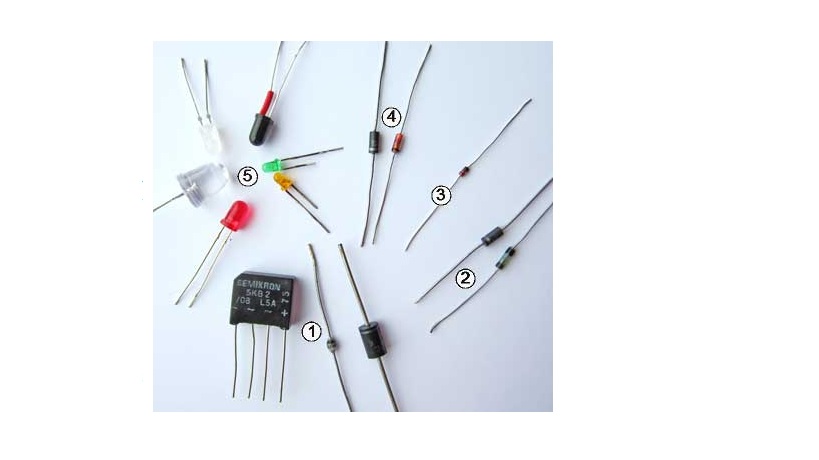
* To acquaint the students with the construction, theory, and operation of the basic electronic devices such as PN junction diode, Bipolar and Field-effect Transistors, Power control devices, LED, LCD, and other Optoelectronic devices.
*To understand the mechanisms of current flow in semiconductors.
* To familiarize on the principle of operation, capabilities, and limitations of various advanced semiconductor devices and its practical application.
* To design practical circuits with alternate electronic devices.
* To study about the display devices and power semiconductors.
COURSE OUTCOMES
On completion of the course, student will be able to
CO1 - Apply the knowledge of basic semiconductor materials and understand fabrication processes.
CO2 - Analyse the characteristics of various electronic devices like diode, transistor etc.
CO3 - Classify and analyse the various circuit configurations of Transistor and MOSFETs.
CO4 - Illustrate the qualitative knowledge of Power electronic Devices.
CO5 - Become Aware of the latest technological changes in Display Devices.
CO6 - Apply the knowledge of basic semiconductor materials and understand fabrication processes.
- Teacher: Bhuvana B P
- Teacher: MUTHIAH M. A
- Teacher: YOKESH V
Category: ODD SEMESTER
On completion of the course, student will be able to
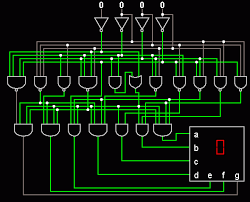
CO1- Minimize Boolean functions for computationally less complex implementations
CO2- Apply K map and tabulation method for minimization of Boolean functions
CO3 - Implement combinational logic circuits for Real World Problems
CO4 - Implement sequential logic circuits for Real World Problems
CO5 - Analyze the performance of various logic families
CO6 - Implement memory units with Programmable logic devices
- Teacher: Dr.Divya A
- Teacher: Bhuvana B P
- Teacher: Sharanya C
- Teacher: JEGAN G
- Teacher: SOWMIYA G
- Teacher: ANBARASI K
- Teacher: Karthikeyan K.V
- Teacher: BAVYA L
- Teacher: JEGAN ANTONY MARCILIN L
- Teacher: MEGALAN LEO L
- Teacher: Kanimozhi M
- Teacher: MUTHIAH M. A
- Teacher: Bhavani R
- Teacher: VINO T
- Teacher: ANU SUDHA T.A
- Teacher: Vijayakumar V
Category: Semester 2