
Search results: 1467
- Teacher: D. JASMINE PRIYA
- Teacher: Dr. Mohmmad Ashaq Sofi
Category: Year 1
- Teacher: Dr. Gayathri P
Category: Allied Health Sciences
- Teacher: D. JASMINE PRIYA
Category: ODD SEMESTER

- Teacher: Dr. Gayathri P
Category: Year 2
- Teacher: Dr. Mohmmad Ashaq Sofi
Category: ODD SEMESTER
- Teacher: James John
Category: B.Sc. - Medical Lab Technology
SATHAYBAMA INSTITUTE OF SCIENCE AND TECHNOLOGY SCHOOL OF ALLIED HEALTH SCIENCES
DEPARTMENT OF MEDICAL LABORATORY TECHNOLOGY REGULATIONS 2023
SAMB3003
LABORATORY AUTOMATION &
QUALITY CONTROL
L T P EL Credits Total Marks
3 0 0 0 3 100
COURSE OBJECTIVES
To introduce the concept of quality management, to apply the significances of analysers in
automation.
To apply the significances of analyzers in automation and to introduce the concept of quality
management.
UNIT 1 AUTOMATION 9 Hrs.
Introduction to automation, study on the instrumental concepts and definition of batch analysis,
sequential analysis, discrete analysis etc. Detailed study on the steps in automated analysis, reagent
handling, chemical reaction phase, reaction vessels, cuvettes in discrete analyzers and measurement
using absorbance, electrochemical measurements and transmittance photometry.
UNIT 2 AUTO ANALYZERS 9 Hrs.
Continuous flow analyzers, discrete and Centrifugal analyzers auto analyzers-advantages, Dry
chemistry analyzers, Random access analyzers (RAA), Micro particle enzyme immunoassay, Immulite
automated immunoassay analyzers.
UNIT 3 CELL COUNTERS 9 Hrs.
Study on the different type of cell counters, available and their principle of operation, basic principle in
estimating each parameter. Brief study on the operation and quality control of automated laboratory
analyzers.
UNIT 4 INTRODUCTION TO QUALITY CONTROL 9 Hrs.
Demonstration of various methods of quality control, Preparation of Quality control charts, a) Levy-
Jennings and b) Cusum charts. Demonstration of various methods of quality control- Westgard Rules to
verify trends, biases, or errors in quality controls.
UNIT 5 QUALITY CONTROL PROGRAMME 9 Hrs.
External quality control, Internal Quality control, Proficiency testing, Total quality management
framework, Quality laboratory processes, Quality assurance, Quality assessment, Current trends in
laboratory accreditation, ISO certificate, Quality planning and Quality improvement.
Max. 60 Hrs.
COURSE OUTCOMES
On completion of the course, students will be able to know
CO1 - Understand the principles of automation.
CO2 - Identify role of automation in flow analyzers.
CO3 - Recognize the types of analyzers and their significance.
CO4 - Apply the theoretical understanding to practical usage.
CO5 - Recognize the latest trends and quality practices.
CO6 - Bridge the gap between clinical and industry in theory and and practice of automation.
TEXT / REFERENCE BOOKS
1. Laboratory management Quality in Laboratory diagnosis Candis A Kinkus, Demos medical
publishers, 2011.
2. Quality control in Laboratory Gaffar Sarwar Zamman, Intech open publishers, 2011.
3. Clinical Diagnosis and Management by Laboratory Methods, Henry 23rd edition, 2016.
- Teacher: James John
Category: Year 3
Course Objectives:
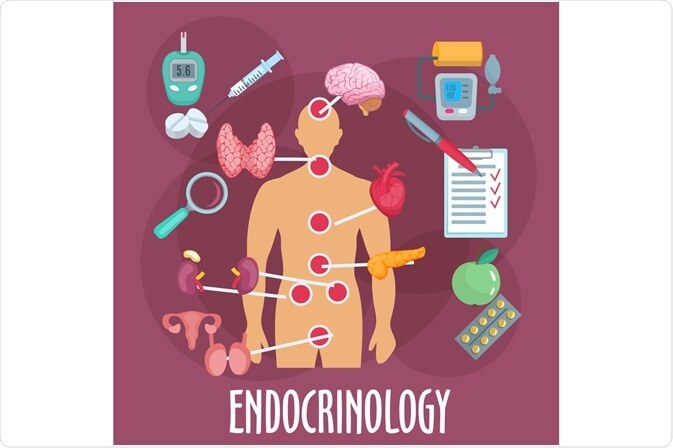
• To develop an understanding of the role of the endocrine system in maintaining homeostasis and health.
• To understand the integrative workings of the human body by studying this signaling systemsOn completion of the course, students will be able to
CO1 Explain the roles of the endocrine system in maintaining homeostasis, integrating growth and development,
responding to environmental insults and promoting successful reproduction
CO2 Investigate how the secretion of hormones is regulated, including the principles of negative and positive
feedback mechanisms
CO3 Apply endocrinological principles to determine the pathophysiological basis and consequences of specific
endocrine disorders
CO4 Understand the role of tumor markers for diagnosis, management and therapeutic selection.
CO5 Correlate the presence of a tumor marker with its associated affected organ system
CO6 Differentiate between carbohydrate-rich tumor markers, protein-rich tumor markers, enzymatic tumor markers,
and oncofetal antigens
• To develop an understanding of the role of the endocrine system in maintaining homeostasis and health.
• To understand the integrative workings of the human body by studying this signaling systemsOn completion of the course, students will be able to
CO1 Explain the roles of the endocrine system in maintaining homeostasis, integrating growth and development,
responding to environmental insults and promoting successful reproduction
CO2 Investigate how the secretion of hormones is regulated, including the principles of negative and positive
feedback mechanisms
CO3 Apply endocrinological principles to determine the pathophysiological basis and consequences of specific
endocrine disorders
CO4 Understand the role of tumor markers for diagnosis, management and therapeutic selection.
CO5 Correlate the presence of a tumor marker with its associated affected organ system
CO6 Differentiate between carbohydrate-rich tumor markers, protein-rich tumor markers, enzymatic tumor markers,
and oncofetal antigens
- Teacher: James John
Category: Allied Health Sciences
|
SAMB4002 |
DIAGNOSTIC MOLECULAR BIOLOGY |
L |
T |
P |
EL |
C |
Total Marks |
|
4 |
0 |
0 |
0 |
4 |
100 |
COURSE OBJECTIVES
Ø To provide a good foundation in molecular biology where importance is laid on the master molecule.
Ø Subject is an emerging discipline with a broad conceptual approach that transcends all sections of anatomic and clinical pathology.
UNIT 1 BASIC PRINCIPLES IN MOLECULAR DIAGNOSTICS 12 Hrs.
Organizations of molecular diagnostic laboratory-Bio-membranes and the sub-cellular organization of eukaryotic cells.
UNIT 2 MOLECULAR STRUCTURE OF GENES AND CHROMOSOMES 12 Hrs.
Organization of cellular DNA into chromosomes –morphology and functional elements of eukaryotic chromosomes –chromosomal organization of genes and non-coding DNA.
UNIT 3 STRUCTURE OF DEOXY NUCLEIC ACIDS (DNA) 12 Hrs.
ABZs of DNA Secondary Structure, Denaturation and Renaturation of DNA, Supercoils and Cruci forms: Tertiary Structure in DNA. DNA replication –repair-recombination –mutation – Regulation of the eukaryotic cell cycle-gene control in development-Cellular energetics.
UNIT 4 RIBONUCLEIC ACID 12 Hrs.
Types and function of RNA. Primary, Secondary and Tertiary Structure of RNA. The role of RNA in protein synthesis-stepwise formation of proteins on ribosome.
UNIT 5 THE SYNTHESIS OF MACROMOLECULES AND THE GENETIC CODE 12 Hrs.
synthesis of biopolymers- nucleic acid synthesiss. Molecular oncology including DNA assay for T and B-cell rearrangement- analysis for translocation, oncogene analysis -translocation gene mutation in various cancer, Molecular histocompatibility testing, forensic identity testing by DNA analysis.
Max. 60 Hrs.
COURSE OUTCOMES
On completion of the course, students will be able to
CO1 - Apply knowledge of cellular structure and function, especially DNA and RNA.
CO2 - Understand the DNA replication, repair and recombination in prokaryotes with that of eukaryotes.
CO3 - To know about RNA synthesis and processing and function of different types of RNA.
CO4 - To know about protein synthesis and inhibition factors of protein synthesis.
CO5 - Apply the knowledge of molecular testing to the most commonly performed applications in the clinical laboratory.
CO6 - To learn about molecular diagnostic procedures and their clinical uses.
TEXT / REFERENCE BOOKS
1. Albert B. Bray D and Lewis J Molecular biology of the cells, 2nd edition New York. Garland Publications 1989.Brown, T.A. (1999). Gene Cloning. 3rd edition. Chapman and Hall Publications, U.S.A.
2. Burrel, M.M. (1993). Enzymes of Molecular Biology, Humana Press.
3. Chirikjian, J.G. (1995). Biotechnology – Theory and Techniques, Vol. II, Jones and Burtlett Publishers.
4. Lewin, B. (2000). Genes VII. Oxford University Press, Oxford.
5. Antony, J.F., Griffiths, Gilbert, W.M., Lewontin, R.C. and Miller, J.H. (2002). Modern genetic analysis, Integrating Genes and Genomes, 2nd edition, WH Freeman and Company, New York.
END SEMESTER EXAMINATION QUESTION PAPER PATTERN
Max. Marks: 100 Exam Duration: 3 Hrs.
PART A : 10 Questions of 2 marks each – No choice 20 Marks
PART B : 5 Questions from each unit with internal choice, each carrying 16 marks 80 Marks
- Teacher: James John
Category: Year 2
- Teacher: Dr. Gayathri P
Category: Year 3
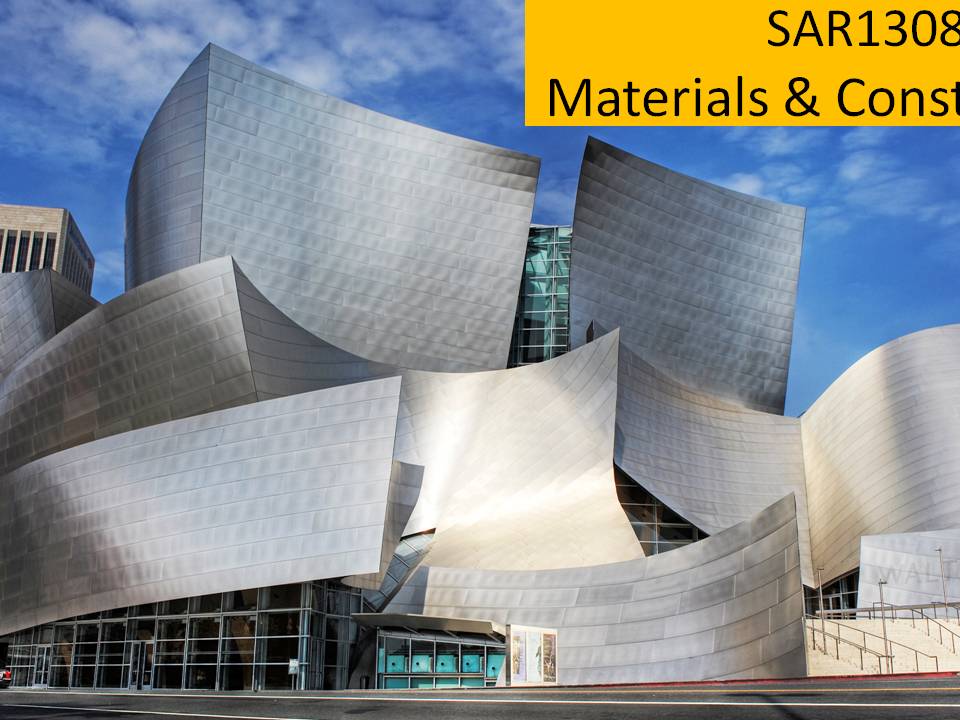
UNIT 1 MANUFACTURED BUILDING MATERIALS - STEEL 6 Hrs.
Iron: brief study on manufacture, composition, properties and uses of cast iron, wrought iron, pig iron - Steel: Composition, Properties, anticorrosive measures, mechanical and heat treatment of steel - Market forms of steel : Steel for Reinforcement - Hot rolled bars, CTD Bars, TMT bars , Welded wire fabrics; Steel for Pre stressed concrete; Structural steel; Stainless steel, steel alloys, current developments.
UNIT 2 STEEL DOORS/ WINDOWS/ VENTILATORS &TRUSSES 8 Hrs.
Different types of doors and windows (open able, sliding etc., methods of construction using steel)- Design and detailing of steel rolling shutter. Design and detailing of steel roof trusses (north-light, tubular, butterfly truss etc.,) including construction methods for roof covering using steel, FRP, polycarbonate, cement fibre sheets etc. Visit to steel structure fabrication site.
UNIT 3 LONG SPAN STRUCTURES 8 Hrs.
Long span roofs using different types and materials (stadium and auditoriums) .Methods of construction using cable structure- principle of cable stayed bridges -space frame structures. Methods of construction using Shell structures and folded plates - various forms and classification of shells and types of folded plates.
UNIT 4 ARCHITECTURAL DETAILING - LARGE GATHERING SPACES 8 Hrs.
Architectural Detailing in public spaces - Fundamentals Geometry Simple Types: Complex Types: Natural Lighting Envelope Landscaping Thermal Control Thermal Control Pressurization and Air Balance Fire Protection/Smoke Control.
- Teacher: Catherine S
- Teacher: Kavitha S
- Teacher: RAJESH KANNAN S
- Teacher: SHOBANA SUBRAMANIAN
Category: EVEN
A subject that is meant to ensure the students of 4th year Architecture, understand the meaning and purpose of Landscape, as a natural process, then Landscape Architecture, as a driving force behind and within Architectural design process and all the details of the design process and how different it is from Architectural design. Ofcourse with the strong touch of history and evolution of the field from Horticultural and Botanical field to a site management tool.
- Teacher: VIJENDRANATH R
Category: ODD

Category: EVEN
COURSE OBJECTIVE
• To introduce the fundamentals of Architectural photography.
UNIT 1 INTRODUCTION
Introduction to architectural photography, interpretation and creation, Recording mediums - film and digital, specialist hardware for image capture, black and white, colour photography, basics of composition.
UNIT 2 FUNDAMENTAL OF PHOTOGRAPHY
Fundamentals- focal length, aperture, exposure, aperture, shutter speed, recording medium, exposure meters, automatic & Techniques, film speed, contrast, Characteristics of lenses-viewing angle, Types of lenses, depth of field, resolution and distortion, multiple exposures.
UNIT 3 EXTERNAL LIGHTING
Understanding light and photography, External lighting- Direction of lighting - front, side, back, shadows, texture, and effects of clouds, light modification, psychological effects, and types of artificial lighting, combined daylight and flash.
UNIT 4 FRAMING VIEWS
Single point and two-point perspective- examples, distortions, emphasizing architectural elements, effect of the camera to subject distance, oblique angles, three-point perspective- applications in interiors and exteriors - composition, symmetric composition, applying the law of thirds - examples, image capture to publication.

- Teacher: Yusuf Chiniwala
Category: EVEN
- Teacher: Ramesh Kumar NA
Category: ODD
To expose the students on services and facilities to be provided to urban communities and train them to deal with the challenges posed in the design of multi-functional public community building in an urban setting
FOCUS
Design of simple medium rise buildings in smaller sites with exploration of form integrated with function incorporating barrier free environment principles.
METHODOLOGY PROPOSED
To expose the students to the issues involved through visits to similar typologies / special lectures / orientation on urban challenges (limitation of land / regulations). Students will be encouraged to approach the problem with a three dimensional approach using study models, 3d sketches, etc. Students will work on manual presentations only.
DESIGN INTEGRATION
Students would be exposed to deal with different projects.
SUGGESTED TYPOLOGIES:
· Shopping arcades / malls / bazaar
· Auditorium / performing centres / museums / gaming parlour / club house
· Marriage halls / community halls / memorial complexes
COURSE OUTCOMES
On completion of the course the student will be able to
CO1: Developing an inclination to identify and analyse suitable literature and live case studies appropriate to the design typology
CO2: A thorough understanding of the important local bye laws and Standards applicable to the specific typology
CO3: Developing an appropriate design intent based on notions, ideas with the three dimensional perception as part of design process.
CO4: Integration of the structural grid, parking, services and landscape in architectural design.
- Teacher: Dr. Devyani Gangopadhyay
- Teacher: Kavitha S
- Teacher: SHOBANA SUBRAMANIAN
Category: ODD
The main objective of the course is to impart and train rigorously the students for human resources and materials involved in construction projects and their planning and management.

Category: ODD
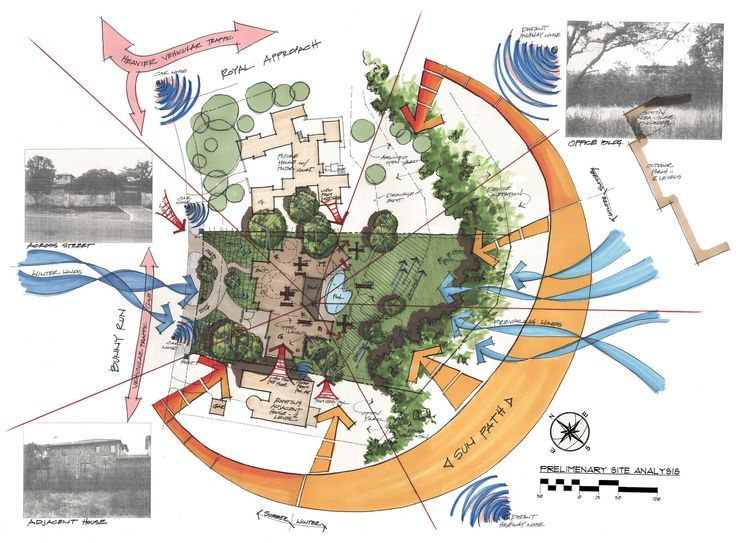
Evolving methodologies for site responsive design and integration between built and natural environment.
- Teacher: Surya Rajkumar
Category: ODD
Category: EVEN