
Search results: 1467
- Teacher: Manisha Koyimadatha
Category: ODD SEMESTER
- Teacher: Swetha Sunkar
Category: EVEN SEMESTER
- Teacher: Alex Anand D
Category: Semester 6
- Teacher: Alex Anand D
Category: Semester 4
- Teacher: Amit Kumar .
Category: Semester 6
- Teacher: Swetha Sunkar
Category: EVEN SEMESTER
To enable the student to understand the modelling methods, such as supervised classification and clustering along with the application of probabilistic graphical models for knowledge discovery, as well as deterministic and stochastic heuristics for optimization.
- Teacher: Dr. Mahalakshmi R
Category: SCHOOL OF COMPUTING
- Teacher: Swetha Sunkar
Category: Semester 4
- Teacher: Swetha Sunkar
Category: Semester 4
On completion of the course, students are able to
CO1: Understand the basics of analog and digital communication systems
CO2: Acquire knowledge to process the transmission techniques for analog and digital signals
CO3: Apply the acquired knowledge to process the bio signals on telemetry systems
CO4: Analyze the various transmission techniques using analog and digital signals
CO5: Investigate the results of various transmission techniques for the signals
CO6: Develop the system to analyze the real time bio signals for digital transmission

- Teacher: Dr. Bethanney Janney J
Category: ODD SEMESTER
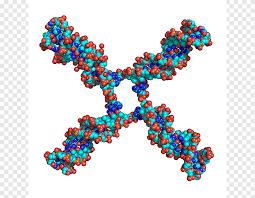
To introduce extensive knowledge in cell structure, functions, cell signaling pathways and transfer across membranes in cells.
To learn about the transmission, distribution, arrangement, and alteration of genetic information and how it
functions and is maintained in populations.
- Teacher: Krishnakumar S
Category: ODD SEMESTER
COURSE OBJECTIVES
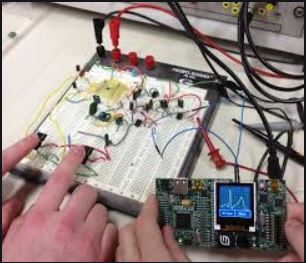
- To gain in depth knowledge of fundamentals of operational amplifier circuits and to study the various applications using operational amplifiers
- To discuss filters and circuits and introduce the application of signal conditioning in biomedical field
On completion of the course, student will be able to
- Design and implement linear and non-linear applications of operational amplifiers
- Implement waveform generation using operational amplifier
- Analyze and design bio filters and isolation circuits used in signal conditioning
- Design ADC and DAC using Operational Amplifiers
- Describe the basic concepts of Timers and voltage regulators
- Recognize various bio amplifier for Biosignal acquisitions using opamps
- Teacher: Dr. Bethanney Janney J
Category: ODD SEMESTER
Course Objectives:
1. To acquire knowledge about the various medical imaging techniques
2. To understand the fundamental principle and working of the medical imaging systems
involved in the diagnosis of health care
3. To apply different classical image processing techniques to different types of medical images
Course Outcomes:
On completion of the course, student will be able to–
1. Demonstrate Knowledge and understand the basic image processing concepts such as relationship between pixels, basic transformation and color models
2. Implement image enhancement techniques in spatial and frequency domain for accomplishing image preprocessing task.
3. Evaluate and select image filtering techniques for image restoration process
4. Illustrate the steps involved in segmentation process and Morphological operations to solve a given medical image task.
5. Analyse the performance of image compression methods.
6. Recognize and assess how image processing techniques can be applied across all medical imaging modalities and applications.
- Teacher: Dr. Bethanney Janney J
- Teacher: Dr. P Grace Kanmani Prince
Category: Semester 6
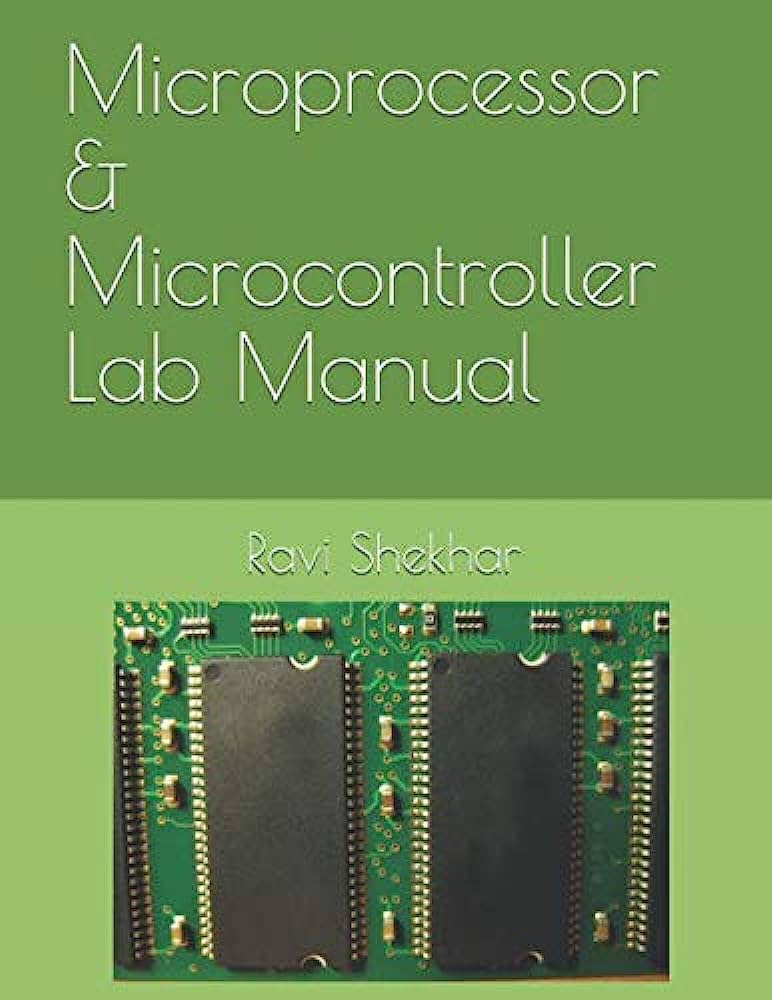
The prime objective of this course is to introduce to the students the programming skill of Microprocessor Microcontroller and Arduino.
The students will be trained with the interfacing and applications microprocessor, microcontroller and
Arduino
- Teacher: Ravi Kumar D N S
- Teacher: Senthil Nayagam V
Category: ODD SEMESTER
Course Objectives
· The course is designed to provide a brief and basic knowledge to understand musculoskeletal, neuromuscular, sensory disorders, prosthetics and orthotics and their applications
· The main aim is to provide the basic concept so that students can implement their knowledge for higher studies in developing innovative and effective rehabilitation and assistive technologies
Course Outcomes
On completion of the course, students are able to
CO1: Apply the various principles involved in rehabilitation.
CO2: Support rehab engineers in designing orthotic and prosthetic devices.
CO3: Compare the types of wheelchairs and assist disabled persons
CO4: Discover new augmentation and substitution devices for visual and hearing impaired.
CO5: Assess the merits of support aids designed for the disabled.
CO6: Develop and design rehabilitation devices cost effectively and purposefully.
- Teacher: Sindu Divakaran
- Teacher: Dr. Bethanney Janney J
Category: ODD SEMESTER
COURSE OBJECTIVES ÿ
To enable the student to develop adequate knowledge and mastery of techniques relevant to Hospital Management and hospital management discipline.
To develop awareness of the responsibilities in Hospital Management like healthcare and operational problems at a hospital attachment.
Formulate ideas and develop plan and to take a proactive and self-reflective role in working and to develop
professional expertise.

- Teacher: Premkumar J
- Teacher: Dr. P Grace Kanmani Prince
Category: ODD SEMESTER
COURSE OBJECTIVES
- This course introduces fundamental physical principles of both classical and modern optics as well as principles of optical design used in the engineering of optical systems.
- It also provides exposure to practical aspects of optical materials and devices.
- Its intention is to provide a foundation of basic principles, design methodology, and practical considerations needed to design nor use optical instruments in the biomedical engineering practice
- Teacher: Dr. Bethanney Janney J
- Teacher: Dr. P Grace Kanmani Prince
Category: EVEN SEMESTER
COURSE OBJECTIVES
1. With widespread use and required hardware components for designing of medical instruments, this course gives knowledge of the principle of operation and design of biomedical instruments.
2. It attempts to render abroad classification of converters for the biomedical instruments.
3. It provides knowledge of the principle operation and design and the background knowledge of all the hardwires such as amplifiers, filters, converters and interfacing components for designing biomedical instruments and specific applications of biomedical engineering.
- Teacher: Krishnamoorthy N R
Category: ODD SEMESTER