
Search results: 1467
COURSE OBJECTIVES
- To have adequate knowledge basics of signals and systems.
- It helps to understand the basic definition and classification of continuous time and discrete time signals.
- to study its analysis and its relevance to physiological signal
- Teacher: Dr. P Grace Kanmani Prince
Category: ODD SEMESTER
COURSE OBJECTIVES
To expose the student to gain knowledge on semi conductor devices such as diode, transistor etc.
To understand the analysis of different circuits like amplifier, oscillator etc.

- Teacher: Sindu Divakaran
- Teacher: Dr. P Grace Kanmani Prince
Category: ODD SEMESTER
- Teacher: Krishnakumar S
Category: ODD SEMESTER

To understand the engineering of genetic material and thereby utilize DNA effectively.
CONTENTS
1. Isolation of genomic DNA from leaf samples - CTAB Precipitation method
2. Estimation of DNA / RNA by UV spectrophotometry
3. Restriction digestion of DNA
4. Construction of restriction map - plasmids
5. DNA ligation
6. Polymerase Chain Reaction - Amplification of DNA of interest/ RAPD
7. Purification of PCR products
8. Southern blotting / Western blotting / northern blotting
9. Cloning of PCR products (competent cell preparation, CaCl2 transformation, blue - white screening of transformants)
- Teacher: Krishnakumar S
Category: ODD SEMESTER
- Teacher: Krishnakumar S
Category: M.Tech. Medical Instrumentation
COURSE OBJECTIVES
- To gain in depth knowledge of fundamentals of operational amplifier circuits and to study the various applications using operational amplifiers.
- To discuss filters and circuits and introduce the application of signal conditioning in biomedical field.
COURSE OUTCOMES
On completion of the course, student will be able to
CO1 - Understand the working of linear and non-linear applications of operational amplifiers.CO2 - Analyze waveform generation using operational amplifier.
CO3 - Evaluate the bio filters and isolation circuits used in signal conditioning.
CO4 - Design ADC and DAC using Operational Amplifiers.
CO5 - Examine the construction and working of CMOS and Instrumentation bio amplifiers.
CO6 - Recognize various bio amplifier for Biosignal acquisitions using opamps.
- Teacher: Dr. Bethanney Janney J
Category: ODD SEMESTER
SBS1304 - PYTHON PROGRAMMING
COURSE OBJECTIVES
- To provide Basic knowledge of Python
- To learn how to design and program Python applications.
- To learn how to use lists, tuples, and dictionaries in Python programs
Unit I (9 Hrs)
Overview of Programming : Structure of a Python Program, Elements of Python.
Unit II (9 Hrs)
Introduction to Python: Python Interpreter, Using Python as calculator, Python shell, Indentation. Atoms, Identifiers and keywords, Literals, Strings, Operators(Arithmetic operator, Relational operator, Logical or Boolean operator, Assignment, Operator, Ternary operator, Bit wise operator, Increment or Decrement operator).
Unit III (9 Hrs)
Creating Python Programs :Input and Output Statements, Control statements(Branching, Looping, Conditional Statement, Exit function, Difference between break, continue and pass.), Defining Functions, default arguments, Errors and Exceptions.
Unit IV (9 Hrs)
Iteration and Recursion: Conditional execution, Alternative execution, Nested conditionals, The return statement, Recursion, Stack diagrams for recursive functions, Multiple assignment, The while statement, Tables, Two-dimensional tables.
Unit V (9 Hrs)
Strings and Lists: String as a compound data type, Length, Traversal and the for loop, String slices, String comparison, A find function, Looping and counting, List values, Accessing elements, List length, List membership, Lists and for loops, List operations, List deletion. Cloning lists, Nested lists.
Text Books:
- Allen Downey, Jeffrey Elkner, Chris Meyers.How to think like a computer scientist learning with Python / 1st Edition,2012
Useful websites:
- http://docs.python.org/3/tutorial/index.html
- http://interactivepython.org/courselib/static/pythonds
- http://www.ibiblio.org/g2swap/byteofpython/read/
- Teacher: Nagarajan G
- Teacher: Asha P
Category: EVEN SEMESTER
COURSE OBJECTIVES :
- To provide Basic knowledge of Python
- To learn how to design and program Python applications.
- To learn how to use lists, tuples, and dictionaries in Python programs
- To learn syntax of Python language
- To create dynamic applications in Python
- To implement object oriented concepts using Python
COURSE OUTCOMES:
CO1 - To provide Basic knowledge of Python
CO2 - To learn how to design and program Python applications.
CO3 - To learn how to use lists, tuples, and dictionaries in Python programs
CO4 - To learn syntax of Python language
CO5 - To create dynamic applications in Python
CO6 - To implement object oriented concepts using Python
- Teacher: Nagarajan G
- Teacher: Saravanan M
Category: EVEN SEMESTER
Big data is a phrase(like software development or testing) which describes about capturing, storing, querying, updating and analyzing of huge data sets that are so voluminous and complex that traditional data-processing application software are inadequate to deal with them.
Course Objectives:
- To understand the basics of Hadoop, MapReduce, Pig Latin
- Gain experience looking at analytics from a strategic perspective

- Teacher: Selvi M
- Teacher: VANATHI M
- Teacher: VELVIZHI R
Category: ODD SEMESTER

Course Outcomes
1. Classify and
convert the various types
number system,
simplification of Boolean Functions.
2. Design
the combinational Circuit.
3. Demonstrate the usage of Memory Organization.
4. Describe about
the Microprocessor and Micro Controller.
addressing modes.
6. State the inter processor communication and
synchronization.

Category: ODD SEMESTER
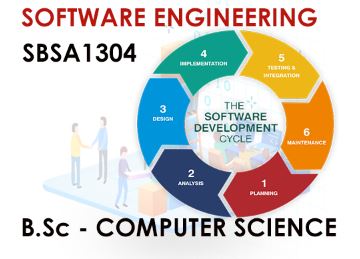
➢ Knowledge of basic SW engineering methods and practices, and their appropriate application.
➢ A general understanding of software process models, role of project management, different software architectural styles and approaches to verification and validation
Category: ODD SEMESTER
To Understand the fundamentals of Object Oriented System Development
To understand the object oriented methodologies.
To use UML in requirements elicitation and designing.
To understand concepts of relationships and aggregations.
To test the software against its requirements specification
- Teacher: Ancy A
Category: EVEN SEMESTER
- Teacher: Rajeshwary S
Category: SCHOOL OF COMPUTING
- Teacher: Dr. S. Jancy
Category: EVEN SEMESTER
SBSA3009- NETWORK SECURITY
This network security course covers advanced topics such as Public Key Encryption (with a focus on the RSA algorithm), authentication methods such as message encryption and MACs, intrusion detection techniques such as statistical anomaly and rule-based detection, password management strategies, and virus, worm, and other malware protection. Furthermore, it delves into firewall design ideas, characteristics, and configurations for optimal network security.
- Teacher: Ancy A
- Teacher: Saranya P
- Teacher: Rajeshwary S
Category: ODD SEMESTER
- Teacher: Suji Helen L
Category: EVEN SEMESTER