
Search results: 406
Course Objectives
- To introduce the principles of light propagation through optical fibers.
- To understand signal distortion mechanisms in the fiber.
- To introduce optical transmitters and receivers for fiber /free space links and the fiber optic couplers, connectors involved.
- To introduce optical network concepts and components involved and its applications.
Course Outcomes
On completion of the course, the student should be able to
CO1-Apply the mathematical concepts to compare different types of optical fibers, modes and configuration
CO2-Analyze the transmission characteristics of optical fibers
CO3-Examine the optical sources and detectors for use in optical communication system
CO4-Construct launching and coupling of optical fibers
CO5-Design high speed optical communication networks
CO6-Design wireless communication system using Li-Fi

- Teacher: Vijayakumar V
Category: ODD SEMESTER
Broad outline of theoretical, clinical and practical courses. 1, Study of special and applied pathology of oral tissues as well as relation of local pathologic and clinical findings to systemic conditions. 2. Oral microbiology and their relationship to various branches of dentistry. 3. Oral microbiology affecting hard and soft tissues. Study of clinical changes and their significance to dental and oral diseases as related to oral pathology. 4. Forensic odontology. 5. Maintenance of records of all activities.

Category: SCHOOL OF DENTAL SCIENCES
In this course participants will learn
Functional group and its significance.
IUPAC nomenclature of different functional groups.
Mechanism for substitution, elimination and addition reactions.
Synhthesis and properties of alkyl halides, alcohols, carbonyl and carbohydrate compounds.

- Teacher: K CHENNAKESAVULU
Category: ODD
To discuss the concept of organo-nitrogen compounds.
To understand the chemistry of heterocyclic compounds containing O, N, S.
To understand the synthesis, properties and reactivity of carboxylic acids.
To develop the practice of learning molecular rearrangements along with their mechanism.
To discuss the importance of active methylene groups in organic synthesis.
- Teacher: K CHENNAKESAVULU
Category: EVEN SEMESTER
In this course participants will learn the
Concepts of aromaticity, reactivity and stability of organic compounds.
The preparation and properties of reactive intermediates i.e. Carbocations, Carbanions and Carbenes.
To appreciate the concept of substitution, addition
and elimination reactions and their reaction mechanism
- Teacher: K CHENNAKESAVULU
Category: ODD
Pathophysiology is the study of causes of diseases and reactions of the body to such disease producing causes.This course is designed to impart a thorough knowledge of the relevant aspects of pathology of various conditions with reference to its pharmacological applications, and understanding of basic pathophysiological mechanisms. Hence it will not only help to study the syllabus of pathology, but also to get baseline knowledge required to practice medicine safely, confidently, rationally and effectively
- Teacher: Vigneshwaran P
- Teacher: Amudha S
Category: SCHOOL OF PHARMACY
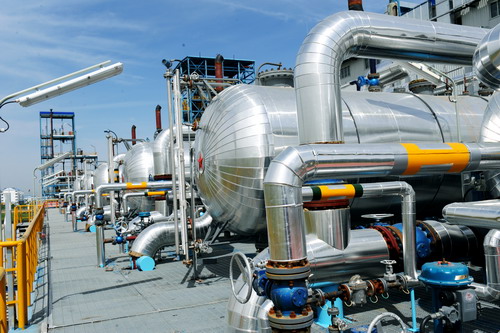
Petroleum refining operations
Introduction
Petroleum products
Treatment and separation of Petroleum based products
Applications
- Teacher: Prabu Deivasigamani
Category: SCHOOL OF BIO AND CHEMICAL
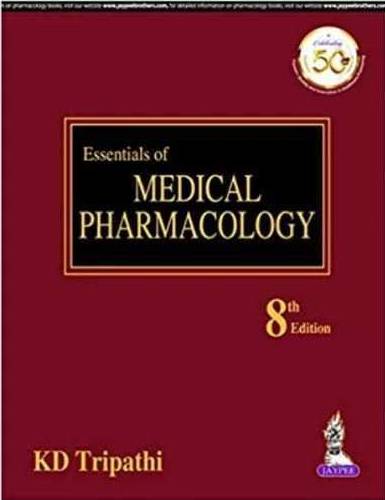
The main purpose of the subject is to understand what drugs do to the living organisms and how their effects can be applied to therapeutics. The subject covers the information about the drugs like, mechanism of action, physiological and biochemical effects (pharmacodynamics) as well as absorption, distribution, metabolism and excretion (pharmacokinetics) along with the adverse effects, clinical uses, interactions, doses, contraindications and routes of administration of different classes of drugs
- Teacher: Vigneshwaran P
- Teacher: Monisha S
Category: SCHOOL OF PHARMACY
- Monitor drug therapy of patient through medication chart review and clinical review
- Obtain medication history interview and counsel the patients
- Identify drug related problems detect and assess adverse drug reactions
- Interpret selected laboratory results (as monitoring parameters in therapeutics) of specific disease states
- Know pharmaceutical care services
Category: SCHOOL OF PHARMACY
Apply laws of mechanics to determine efficiency of simple machines with consideration of friction.
Understand interference of sound waves and longitudinal standing waves
Describe basic definition and conception of materials and physical properties of materials
Understand the nature of thermodynamic properties of matter like internal energy, enthalpy, entropy,
temperature, pressure and specific volume
Understand the properties of light like reflection, refraction, interference, diffraction etc

- Teacher: Malliga P
Category: EVEN SEMESTER
Unit-I: 9 hours
Introduction to Robots-Laws of Robotics-Zeroth law- Law 1-Law 2-Law 3-History of Robotics-First industrial robots-mechanism-Five Basic Principles of Developmental Robotics-The Principle of Embodiment-The Principle of Subjectivity-The Principle of Grounding-The Principle of Gradual Exploration-Medical and Industrial Applications of Robots.
Unit-II: 9 hours
Applications of Quantum Physics: photoelectric effect, Compton scattering, photons, De Broglie waves and the wave-particle duality of matter and light. Introduction to wave mechanics: Schrödinger's equation, wave functions, wave packets, Heisenberg uncertainty principle and zero-point energies. Solutions to Schrödinger's equation in one dimension: Energy Eigen values and eigen functions, Schrödinger's equation in three dimensions: central potentials and introduction to hydrogenic systems. Particle in a 1-D box, Tunneling Effect (Qualitative), Scanning Tunneling Microscope (STM)
Unit-III: 9 hours
Sensors: Introduction-measurement of sensor, Basic concepts, Types, mechanism-working principle- classification of sensor-internal sensors: position and velocity sensors:-Types of Robot Sensors: Light sensor-Touch sensor, vision sensor, radar, sonar, ultrasonic sensors-sound sensor-Temperature sensor
Unit-IV: 9 hours
Smart materials for soft Robots: Classification of building materials for Robots: Wood, metal: Aluminum, steel, bronze, brass and copper: Synthetic materials: PVC, Glass, composite materials: Manufacturing-compression molding method-Polymer composite materials-Aluminum alloys, Piezo materials, Shape memory alloys.
Unit-V: 9 hours
Nanophysics of Nono-Robotics: Nanorobotics theory – The origins of nano technology- Manufacturing of nanorobots using chips and nubots- working of nanobots, Types of nano robots, Medical Applications of Nanorobotics (nanobots),Fractal robots-features, self repair in fractal robots, applications of fractal robots.

- Teacher: Malliga P
Category: School of Science and Humanities
COURSE OBJECTIVE
The objective of the course is to provide knowledge on fundamentals, structures, photosynthesis, metabolism of
nitrogen compounds and about molecular mechanisms of signalization and regulation in plants.

- Teacher: Theboral J
- Teacher: Inbathamizh L
Category: SCHOOL OF BIO AND CHEMICAL
COURSE OBJECTIVES
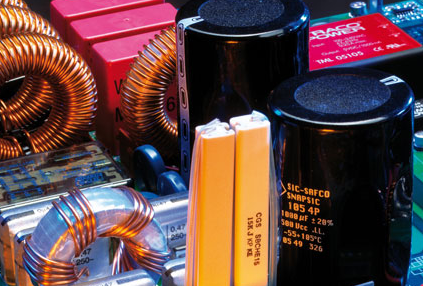
To impart knowledge on different types of power semiconductor devices and its switching characteristics.
To study the operation, characteristics and performance parameters of controlled rectifiers.
To understand the operations of choppers and inverters.
To get acquainted with the applications of power electronics converters.
- Teacher: Barnabas Paul Glady J
Category: EVEN SEMESTER

COURSE OBJECTIVES
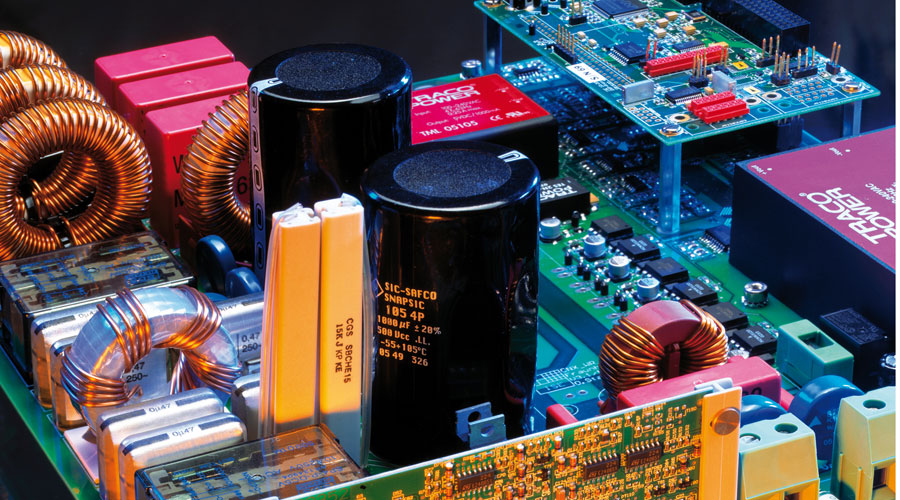
Ø To impart knowledge on different types of power semiconductor devices and its switching characteristics.
Ø To study the operation, characteristics and performance parameters of controlled rectifiers.
Ø To understand the operations of choppers and inverters.
Ø To get acquainted with the applications of power electronics converters.
- Teacher: Bhuvaneswari C
Category: ODD SEMESTER
To introduce the students to basic principles, theories and practices in ELT
To enable them to identify changes that took place over a period of time in the area
To Analyze the teaching approaches and methods
To Recall basic approaches for teaching language with four skills

Category: School of Science and Humanities
CO1 - Understand the new Characteristics of Product development based on customer need.
CO2 - Understand the Concept generation, concept selection and concept testing activity based on creative Idea
generation.
CO3 - Establish the Product Architecture and Understand System level design and contemporary issues and their
impact on provided solution.
CO4 - Understand and apply the various tools used for design, Development and Optimization.
CO5 - Apply and manage the Industrial design process for various type of products.
CO6 - Understand the components of PLM, supplier management and Sourcing.

- Teacher: Yusuf Chiniwala
- Teacher: Dr. Ashwin Jacob
Category: SCHOOL OF MECHANICAL
Learn the organization of a digital computer.
Be exposed to the number systems.
Learn to think logically and write pseudo code or draw flow charts for problems.
Be exposed to the syntax of C.
Be familiar with programming in C.
Learn to use arrays, strings, functions, pointers, structures and unions in C
- Teacher: Krishnamoorthy N R
Category: EVEN SEMESTER