
Search results: 1467
COURSE OBJECTIVE
To impart knowledge on the issues related to environment and to emphasize the importance of a clean
environment.

Category: EVEN SEMESTER
COURSE OBJECTIVES
To understand biosafety and the importance of bioethics.
To be able to distinguish the different IPR and biotechnological patent
UNIT 1 INTRODUCTION TO BIOSAFETY 9 Hrs.
Biosafety – definition, need, importance, applications, levels of biosafety and criteria for biosafety levels. NIH guidelines for
biosafety. Regulations specific to biotechnology companies and research institutions. Biosafety guidelines in India. Role of
institutional biosafety committee.
UNIT 2 IMPLICATIONS OF BIOSAFETY 9 Hrs. Guidelines for research with transgenic organisms. Environmental impact of genetically modified organisms (beneficial and hazardous impact), Field trials with GMO, Containment levels. Biosafety protocol, Cartagena Biosafety protocol, Mechanism of implementation of biosafety guidelines. Biosafety and politics. Biosafety database.
UNIT 3 INTRODUCTION TO BIOETHICS 9 Hrs.
Bioethics – need, applications. Impact of bioethics to the environment and society. Bioethical issues pertaining to various
aspects of Biotechnology. Bioengineering ethics, responsible researchers, research ethics, ethical decision making.
Biowarfare and biopiracy.
UNIT 4 INTELLECTUAL PROPERTY RIGHTS 9 Hrs. Forms of Intellectual property – patent, copyright, trademark, design, trade secret, domain name and geographical indications. WTO treaties, GATT articles, main features of TRIPS agreement, practical aspects of WIPO. IPR related legislatures in India.
UNIT 5 PATENT 9 Hrs. History of Indian patent system and law. Patenting authority. Different types of patent. Requirements and procedure for patenting. Patentable and Non-patentable things. Patent search and patent co-operation treaty (PCT). Farmer’s right and plant breeders right. Importance, social consequences and controversies on biotechnology patents. Max.45 Hrs.
COURSE OUTCOMES
On completion of course, student will able to
CO1 - Define biosafety, bioethics and intellectual property rights.
CO2 - Discuss the different regulations pertaining to biosafety.
CO3 - Categorize the various forms of IPR.
CO4 - Appraise the importance of bioethics in biotechnology.
CO5 - Elaborate the different patents and the process of patenting.
CO6 - Interpret biotechnological novelty as patents.
TEXT / REFERENCE BOOKS
1. Sateesh M.K., Bioethics and Biosafety, I.K. International Publishing House Pvt. Ltd., 2013.
2. Fleming D.O. and Hunt D.L., Biological Safety: Principles and Practices, ASM Press, 2006. 3. Goel D. and Parashar S., IPR Biosafety and Bioethics, Pearson Education India, 2013.
4. Pandey N. and Dharni K., Intellectual Property Rights, PHI Learning, 2014.
5. Singh K.K., Biotechnology and Intellectual Property Rights: Legal and Social Implications, Springer India, 2014.
6. Young T.R., Policy I. and Group G.C., Genetically Modified Organisms and Biosafety: A Background Paper for Decision-makers and Others to Assist in Consideration of GMO Issues. IUCN, 2004.
END SEMESTER EXAMINATION QUESTION PAPER PATTERN
Max. Marks: 100 Exam Duration: 3 Hrs.
Part A: 10 Questions of 2 marks each - No choice 20 Marks
Part B: 2 Questions from each unit of internal choice, each carrying 16 marks 80 Mar
|
DAY |
9-10 |
10-11 |
11.15-12.15 |
LUNCH BREAK |
1.15-2.15 |
2.15-3.15 |
|
Monday |
|
|
BBIPR |
|
|
|
|
Tuesday |
|
|
|
|
|
|
|
Wednesday |
BBIPR |
|
|
|
|
|
|
Thursday |
|
|
|
|
|
|
|
Friday |
|
|
BBIPR |
|
|
|
|
Saturday |
BBIPR |
|
|
|
BBIPR |
|
- Teacher: BALASANKAR KARAVADI
- Teacher: oviya R.P
Category: EVEN SEMESTER
- Teacher: Hartiha S
Category: ODD SEMESTER

- Teacher: Jayshree Nellore
Category: ODD SEMESTER
COURSE OBJECTIVE
To know the marine organisms of interest in biotechnology, their basic functions and role in the marine
ecosystems; to understand the essential elements related to aquaculture and fish genetics and to acquire
knowledge on marine natural products and fishery by-products; and also, to apply biotechnological methods
for the conservation and protection of marine environment
COURSE OUTCOMES
On completion of course, student will able to
CO1 - Learn the importance of marine ecosystems and microbial biodiversity
CO2 - Develop the aquaculture practices of marine fish, shrimp, crab, lobster, edible oyster, pearl oyster and seaweeds
CO3 - Device the various fish genetic techniques involved in aquaculture
CO4 - Formulate the production methodologies for economically and pharmaceutically important products from marine
organisms
CO5 - Generate the production strategy of various seaweed and fishery by-products and its applications
CO6 - Evaluate the human impacted pollution in the marine environment and the usage of marine microbes to ameliorate
environmental deterioration
- Teacher: RoselinJenifer D
Category: EVEN SEMESTER
Food processing Technology- explaining the food processing technique by industrial-level methodologies are explained
- Teacher: Jayshree Nellore
- Teacher: Usha Nandhini S
Category: Semester 6
COURSE OBJECTIVES
To apply bioinformatics tools in designing novel drugs
COURSE OUTCOMES
On completion of course, student will able to
CO1 - Provide an overview of the basic concepts of molecular modelling and analyse on the different types of input provided to generate 3D models along with the stability of a model based on the energy of the system
CO2 - Enumerate on the various force fields responsible for the energy of a system and assess the significance of energy minimisation for the stability of a system
CO3 - List out the different aspects of drugs like soft drugs and pro drugs and comprehend the various parameters involved in the solubility of the drugs
CO4 - Summarise the steps involved in the development of drugs and ponder on the important aspects of pharmacophore analysis and lead molecule identification in the process of drug design
CO5 - Describe the docking mechanism and analyse its importance in the development of drugs and thereby understand the nuances involved in the development of drugs
CO6 - Look into the various databases of molecules and analyse them by giving the appropriate input system like
SMILES notation and analyse the three dimensional structures of molecules
- Teacher: Inbathamizh L
Category: EVEN SEMESTER
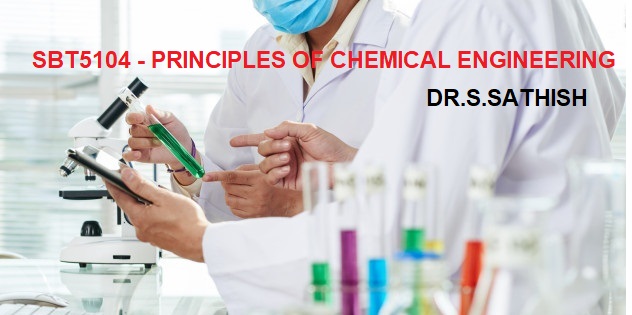
Introduces the basic principles and calculation techniques used in the field of bio-chemical engineering
- Teacher: Sathish S
Category: ODD SEMESTER

COURSE OBJECTIVES
The course provided a deep insight on to the various techniques involved in manipulation of DNA for its
exhaustive use in the field of gene characterization, modification, cloning and transgenesis.
COURSE OUTCOMES
On completion of the course, student will be able to CO1 - Review the methods for analyses of gene expression at different levels CO2 - Evaluate the pros and cons of the different gene mapping techniques CO3 - Describe the methods for silencing the gene expression CO4 - Summarize the application of genetic engineering techniques in the field of medicine and transgenesis CO5 - Comment on the controversies on the use of GMO in Bioremediation, medicine, agriculture etc. CO6 - Examine and evaluate the biosafety regulations and legal issues on the use of GMO
Category: EVEN SEMESTER
- Teacher: Bavani latha Muthiah
Category: SCHOOL OF BIO AND CHEMICAL
Culturing and maintenance of Plant and Animal tissue culture and its applications are discussed.
- Teacher: Kavi Prabha A
- Teacher: Bavani latha Muthiah
Category: ODD SEMESTER

- Teacher: Bavani latha Muthiah
Category: ODD SEMESTER
TOPIC: 1 Introduction to Marine ecosystem and Microbial Diversity
Physical and chemical parameter of sea
zonation of sea
Marine ecosystem and biodiversity
Marine microbial diversity
Marine microbial habitat
Factors that Impact Marine microbial diversity
Interaction between marine microbes and other organisms
Assignment
Quiz
TOPIC: 2 AQUACULTURE
Definition, site selection and construction of aquaculture pond
criteria for selecting the candidate species
Types of aquaculture methods: Extensive, Semi-intensive
Intensive culture, Raft culture, Pond culture.
Culture practices of marine fish: Shrimp, Crab,
Culture practices of marine fish: Lobster, Oyster,
Culture practices of Seaweed
Assignment
Quiz
Topic: 3 Economic Importance Of Marine Organisms
Live feed for marine organisms: Culture of microalgae, rotifers,
Culture of Artermia, Biofuel production
Marine enzymes
Production of omega 3 fatty acid acids from marine organisms
Marine Pharmacology: New and novel antibiotics from marine organisms
Secondary Metabolites from marine bacteria
Secondary Metabolites from marine actinomycetes
Secondary Metabolites from marine endophytic fungi
Prebiotics and Probiotics for aquaculture
Assignment
Quiz
Topic: 4 Fish Genetics and Marine Organisms
Andorgenesis, Gynogenesis,Polyploidy
Artificial Insemination, Eye stalk ablation
Cryopreservation of fish gametes
Marine algal by products: Chitin, Chitosan
Marine algal by products: Agar, Alginates
Marine algal by products: Carrageenan and Heparin
Fishery by products: Fish oil, Isinglass, fish glue
Fishery by products : Fish silage, Fin rays
Assignment
Quiz
Topic: 5 Marine Environment Protection
Human Impacts of Marine Microbial diversity
Usage of marine microbes to ameliorate environmental deterioration
Control of oil spills and bioremediation
Effect of bio-fouling and bio-deterioration on marine structures.
Protection methods against corrosion and fouling
Red tides
Causative factors and effects on the organisms of marine environment
Treatment of Aquaculture effluents
Assignment
Quiz
Category: ODD SEMESTER
COURSE OBJECTIVES
To discuss the ethical and safety concerns in the Biotechnology field with respect to Global and Indian standards.
To highlight the current trends and issues of intellectual property rights.
COURSE OUTCOMES
On completion of the course, student will be able to
CO1 - Realize the responsibility and follow ethics in handling experimental animals and biological samples.
CO2 - Understand the need and gain knowledge on biosafety levels and biosafety labs.
CO3 - Analyze the impact of Biosafety regulations and committees on Biotechnology work at National and International levels.
CO4 - Explore the basic principles of Intellectual Property Rights and practices followed.
CO5 - Update knowledge on the legal framework of patents.
CO6 - Demonstrate safe and standard operating procedures for Biotechnology research

- Teacher: Inbathamizh L
Category: ODD SEMESTER