
Search results: 1467
Plant Design
Economics Introduction
Time value of money
Depreciation
Balance sheet and income statements

- Teacher: Prabu Deivasigamani
- Teacher: Michael Rahul Soosai
Category: ODD SEMESTER
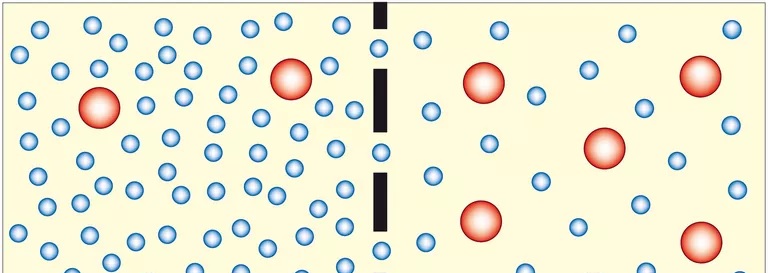
The subject deals with transport processes involved in fluid flow acquiring momentum, heat and mass flux. The subject also involves the Kinetics for microbial growth and measurement of the associated parameters through various kinetic models. Also the kinetic diffusion strategies is demonstrated using various equations and measurement techniques. Momentum, heat and mass transport share a very similar mathematical framework for fluid flow processes and the similarities between them are exploited to provide a deep understanding in microbial kinetic evaluations through different model equations.
- Teacher: Venkatesan D
- Teacher: Michael Rahul Soosai
Category: ODD SEMESTER
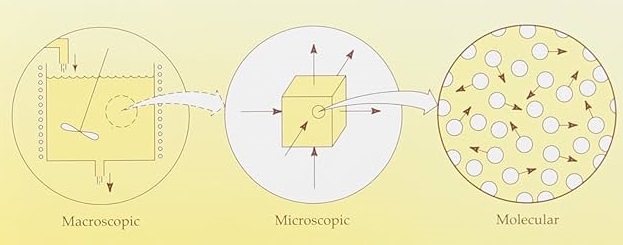
The study of transport phenomena concerns the exchange of mass, energy, charge, momentum and angular momentum between observed and studied systems.
- Teacher: Sathish S
- Teacher: Michael Rahul Soosai
Category: ODD SEMESTER
Category: EVEN SEMESTER
- Teacher: Krishnamoorthy N R
Category: SCHOOL OF BIO AND CHEMICAL
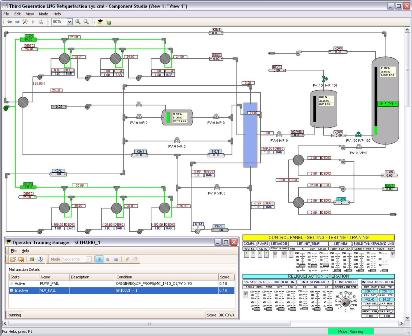
Energy engineering or Energy Systems Engineering is a broad field of engineering dealing with energy efficiency, energy services, facility management, plant engineering, environmental compliance, sustainable energy and renewable energy technologies.

- Teacher: Prabu Deivasigamani
- Teacher: GokulNath R
Category: EVEN SEMESTER
Energy engineering is a broad field of engineering dealing with energy efficiency, energy services, facility management, plant engineering, environmental compliance, sustainable energy and renewable energy technologies. Energy engineering is one of the more recent engineering disciplines to emerge.

- Teacher: Prabu Deivasigamani
- Teacher: Karthikeyan M
Category: ODD SEMESTER
- Teacher: Karthikeyan M
- Teacher: Michael Rahul Soosai
Category: ODD SEMESTER
To acquire basic understanding of concepts and laws of thermodynamics, volumetric properties of fluids and
thermodynamic properties of fluids
- Teacher: Annam Renita A
- Teacher: Michael Rahul Soosai
Category: ODD SEMESTER
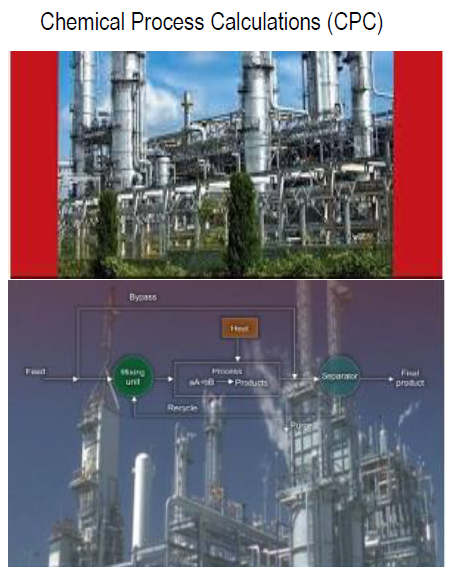
Fundamental concepts, Units and Dimensions,gas relationship, molarity, molality, normality, partial pressure, pure volume and the related calculations. fundamental concepts of material balance. Material balance in various unit processes and unit operations. Material balance with chemical reactions Energy balance related to various process equipment. Calculation of standard heat of reaction from the heat of formation and heat of combustion, thermochemistry, energy balance in various unit operations, the heat of solutions, the heat of neutralization etc. Fuels and combustion calculation, proximate and ultimate analysis, adiabatic reaction temperature, air to fuel ratio, complex processes calculation.
- Teacher: Venkatesan D
Category: ODD SEMESTER
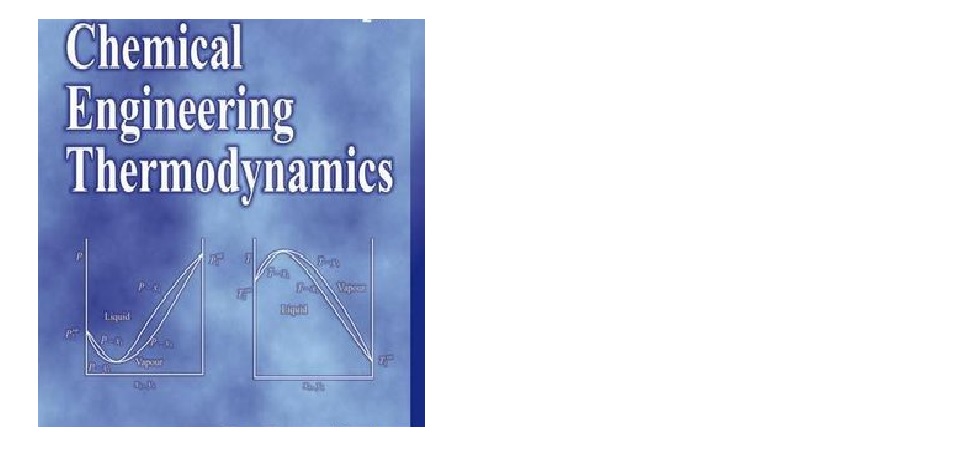
The science of thermodynamics deals with energy and its transformation. It tells us about the direction in which changes take place in nature. It also determines the conditions under which a proposed change attains a state of equilibrium.
We have seen that the thermodynamic properties of homogeneous pure substances depend only on the state of the system. The relationships developed for pure fluids are not applicable to solutions and need modification. The thermodynamic properties of solutions and heterogeneous systems consisting of more than one phase are influenced by the addition and removal of matter. The term solution includes homogeneous mixtures of two or more components in the gas, liquid or solid phase. The pressure, temperature and the amount of various constituent’s present determine the extensive state of a solution; and pressure, temperature and composition determine the intensive state. We discuss how the thermodynamic properties of a solution are determined and introduce certain concepts that are essential to the study of phase equilibria and chemical reaction equilibria.
- Teacher: Venkatesan D
Category: ODD SEMESTER
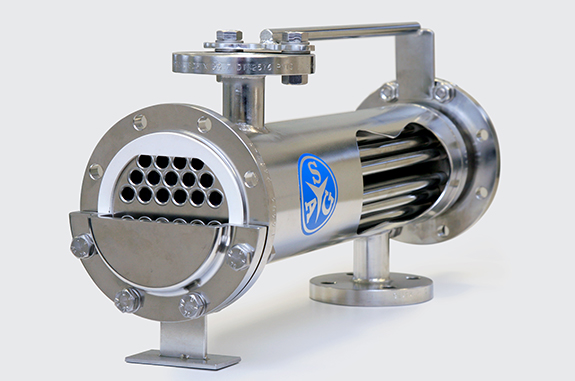
Heat transfer is a discipline of thermal engineering that concerns the generation, use, conversion, and exchange of thermal energy (heat) between physical systems. Heat transfer is classified into various mechanisms, such as thermal conduction, thermal convection, thermal radiation, and transfer of energy by phase changes.
Mass transfer is the net movement of mass from one location, usually meaning stream, phase, fraction or component, to another. Mass transfer occurs in many processes, such as absorption, evaporation, drying, precipitation, membrane filtration, and distillation.

- Teacher: Prabu Deivasigamani
Category: Semester 4
In a scientific sense, a chemical process is a method or means of somehow changing one or more chemicals or chemical compounds. Such a chemical process can occur by itself or be caused by an outside force, and involves a chemical reaction of some sort. In an "engineering" sense, a chemical process is a method intended to be used in manufacturing or on an industrial scale (see Industrial process) to change the composition of chemical(s) or material(s), usually using technology similar or related to that used in chemical plants or the chemical industry.
- Teacher: Prabu Deivasigamani
Category: ODD SEMESTER
- Teacher: Eshanthini P
Category: EVEN
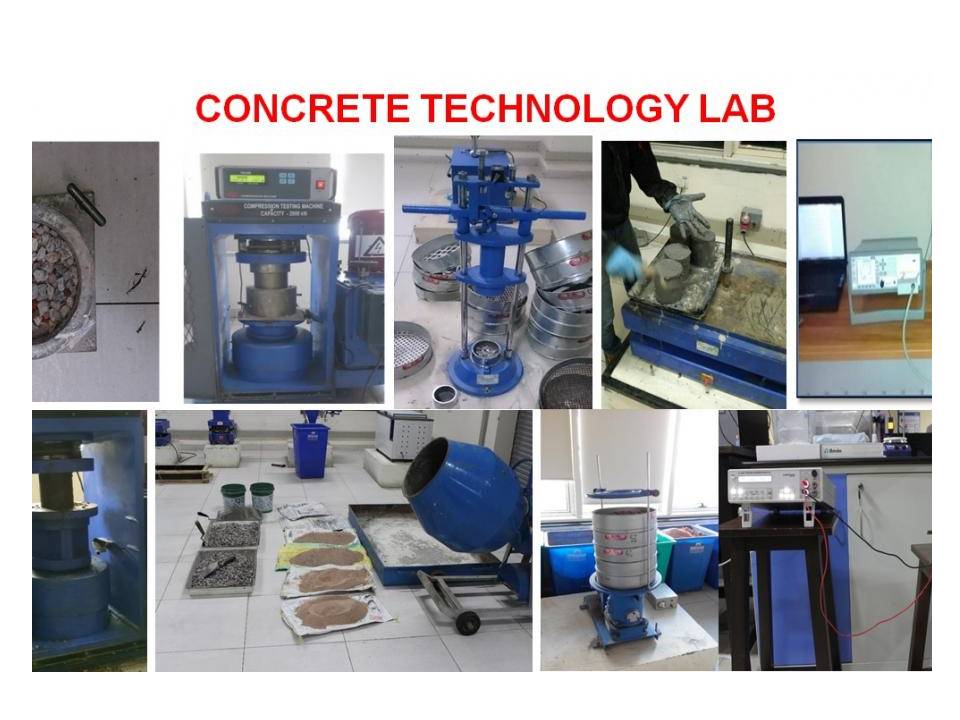
HIGHWAY DEVELOPMENT, PLANNING AND ALIGNMENT
GEOMETRIC
DESIGN ELEMENTS
MATERIALS AND CONSTRUCTION PRACTICE
PAVEMENT DESIGN
PAVEMENT EVALUATION AND MANAGEMENT

- Teacher: Dr.V.Sampathkumar .
Category: ODD

Category: ODD