Search results: 1467
COURSE OBJECTIVES
- To gain an understanding of how managers use business analytics to formulate and solve business problems and to support managerial decision making.
- To understand the different basic concept / fundamentals of business statistics.
- To become familiar with the processes needed to develop, report, and analyze business data.

- Teacher: Rajeswari G
Category: Semester 7
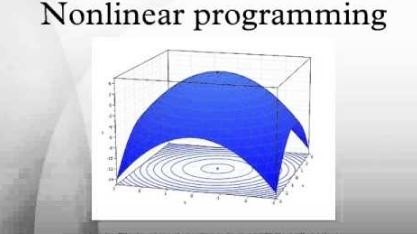
To learn linear and non linear programming problem.
To understand the concept of queuing model, simulation and decision theory
- Teacher: MOHAMED ISMAIL A
Category: ME - CSE
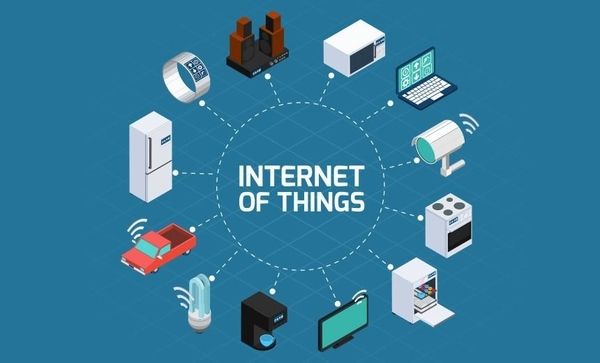
Ø To understand the concept of Internet of Things.
Ø To identify the various elements of an IoT System.
Ø To understand the various means of communication from Node / Gateway to Cloud Platforms.
Ø To understand Cloud Computing & its relevance in IoT.
Ø To identify types of data analytics and data visualization tools.
Ø To make students aware of security concerns and challenges while implementing IoT solutions.
- Teacher: Subhashini R
Category: ME - CSE
Greetings of the Day !!!
Green computing, also called green technology, is the environmentally responsible use of computers and related resources.
The goals of Green computing is to manage the power and energy efficiency, choice of eco friendly hardware and software, and recycling the material to increase the product's life. The term Green computing came into existence with the launch of Energy Star program in 1992 by U.S environmental protection agency.
This means that the main benefits of green computing are: reduced environmental impact lower energy costs. longer lasting computing devices. Reduced health risk for computer workers and recyclers.
Join Together Virtually !! We will Learn More !!!
"Stay Home ; Stay safe ;Learn more"" Nothing is Impossible"

Category: ME - CSE
COURSE OBJECTIVES
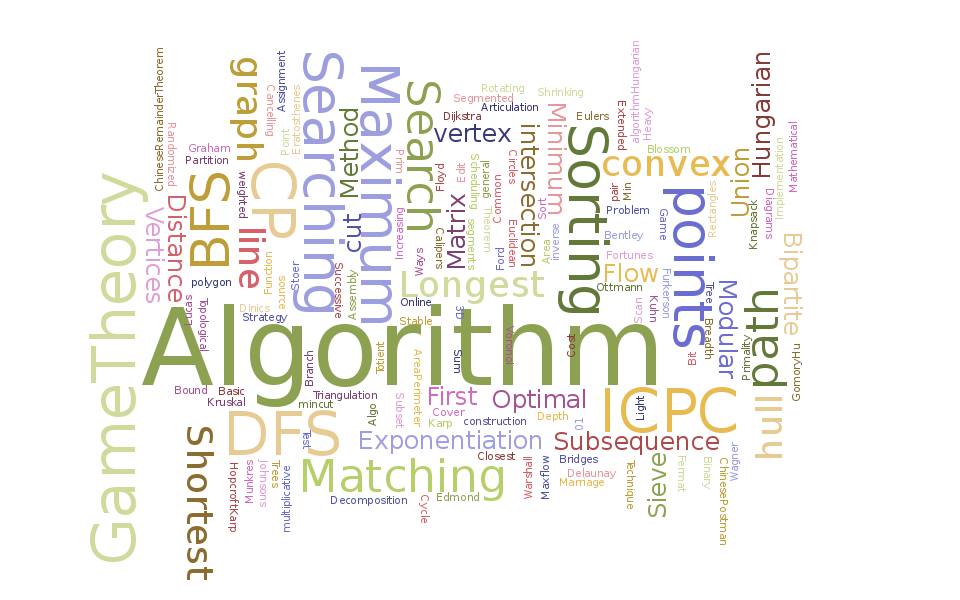
Ø To understand and analyze some fundamental data structures, such as binary search trees, disjoint sets, and
self-adjusting lists.
Ø To understand the implementation and complexity analysis of fundamental algorithms such as RSA, primality
testing, max flow, discrete Fourier transform.
Ø To know about algorithmic issues in a variety of areas, including linear programming and game-theory.
Ø To understand and implement linear and non linear data structures in real time.
Ø To analyze the design of algorithms using various performance metrics.
SUGGESTED LIST OF EXPERIMENTS
1. Polynomial Differentiation.
2. Printing the node details level wise.
3. Searching the given element from N*N matrix using Binary search.
4. Knapsack Problem using Greedy Method.
5. Traveling salesman Problem.
6. Binary Tree Traversal.
7. Implementing RED BLACK Trees.
8. Minimum Spanning Tree using KRUSKAL’S Algorithm.
9. Minimum Spanning Tree using FLOYD – WARSHALL Algorithm.
10. Implementing Splay trees.
11. Implementing quad trees.
- Teacher: Asha P
- Teacher: RAJASHREE S
Category: ME - CSE
COURSE OBJECTIVES
1.To identify the different technologies and different platforms in IoT
2.To understand how to use sensors and actuators for design of IoT.
3.To learn different protocols used in IOT.
4.To learn the concepts of smart city develop

- Teacher: Sivasangari A
- Teacher: Suji Helen L
Category: ODD SEMESTER
COURSE OBJECTIVES
- To explore the aspects of classic and public key cryptography.
- To acquire knowledge on standard algorithms used to provide confidentiality, integrity and authenticity.
- To become aware of system security components.
- To know the technological aspects of security. ÿ To explore the vulnerabilities in any computing system.

- Teacher: NANTHINI N
Category: EVEN SEMESTER
COURSE OBJECTIVES
To understand the various means of communication from Node / Gateway to Cloud Platforms.
To transfer data from IoT devices to various cloud providers and create awareness of various domain specific applications.
To familiarize with the sensors, drive system, control systems and design a robot work cell for
an industrial application.
On Completion of the course, student will be able to
CO1 - Understand general concepts and recognize various devices, sensors and applications.
CO2 - Analyze various M2M and IoT architectures and design issues in IoT applications.
CO3 - Select the appropriate type of tools and grippers for various applications.
CO4 - Design a robotic arm and to bring a controlled movement in the end effectors.
CO5 - Ability to design robot work cell.
CO6 - Develop robots for real life situational problems and think creatively for solutions.

- Teacher: Nivedha R
- Teacher: Naresh Kumar Thapa
Category: EVEN SEMESTER
- Teacher: Umasankari N
Category: CSE - Specialization
- Teacher: NANTHINI N
- Teacher: Umasankari N
Category: SCHOOL OF COMPUTING
SCSB1611 COMPUTATIONAL
INTELLIGENCE
COURSE OBJECTIVES
To study the basic principles of fuzzy logic and fuzzy operators.
To understand the concept of fuzzy logic controller and its applications.
To comprehend the concepts of swarm intelligence algorithms.
To study and analyse various methodologies for training multi-layer network.
To acquire knowledge about SOM and special networks.
To illustrate the concepts of Genetic Algorithms& Evolutionary strategies.
UNIT 1 FUZZY LOGIC INTELLIGENCE 9 Hrs.
Classical set- operations and properties -Fuzzy Set-operations and properties-problems, Classical
Relations-Operations and Properties, Fuzzy Relations-Operations and Properties -Compositions-Maxmin, Max-Product-Problems, Membership function- features of membership functions-types, α cuts,
Linguistic Hedges.
UNIT 2 FUZZY LOGIC CONTROL SYSTEM 9 Hrs.
FLCS- Fuzzy logic control system-Need for FLCS-Assumptions in FLC design. Fuzzification –
Defuzzification. Fuzzy decision making, Fuzzy Rule Based System- Knowledge Base System. Mamdani
and sugeno FLC architectures, Introduction to ANFIS- Architecture. Fuzzy cognitive maps. Applications
- speed control of induction motor, automatic train control.
UNIT 3 SWARM INTELLIGENC 9 Hrs.
Introduction – Particle swarm optimization algorithm – Bat algorithm and its variants – Artificial Fish swarm
optimization algorithm – Cockoo search algorithm and its variants – Firefly algorithm and its variants –
Flower pollination algorithm – Artificial Bee colony optimization algorithm – real world applications of
swarm intelligence algorithms.
UNIT 4 MULTILAYER AND ADAPTIVE ARCHITECTURES 9 Hrs.
BPN-Algorithm, Application, CPN-Training, Applications, Mexican Hat, Kohonan SOM, vector
quantization, - Associate memory - Bidirectional Associative Memory (BAM) - Architecture – Hopfield –
Discrete & Continuous types, Algorithm- Energy function, Adaptive Resonance Theory - ART1, ART2-
training. Probabilistic neural network, Applications - Fault diagnosis, Motion control in robo

- Teacher: Ashok Kumar K
Category: Semester 8
- Teacher: KALAIVANI A
- Teacher: Saravanan D
- Teacher: Sheema D
Category: Semester 2
Category: Semester 4
- Teacher: DAPHINE DESONA CLEMENCY C A
- Teacher: VINOTHINI E
Category: Semester 5

- Teacher: Muthulakshmi A
- Teacher: Dr. Usama Abdur Rahman
- Teacher: GEETHANJALI D
- Teacher: Sonia Jenifer Rayen
- Teacher: BALAPRIYA S
Category: Semester 8
- Teacher: G Kalaiarasi
- Teacher: Selvi M
Category: ME - CSE
This
course enables the students to understand the second and third laws of
thermodynamics and their applications; the concepts and applications of
electromotive force; the kinetics and mechanisms of chemical reactions; about
adsorption, homogeneous and heterogeneous catalysis and the laws and kinetics
of photochemical reactions.
- Teacher: Krithiga T
Category: EVEN SEMESTER