
Search results: 1467
SCYA1102- ENGINEERING CHEMISTRY (CSE SPECIALIZATION,ECE, EEE, MECH, MECHATRONICS, AUTO, AERO, CIVIL)
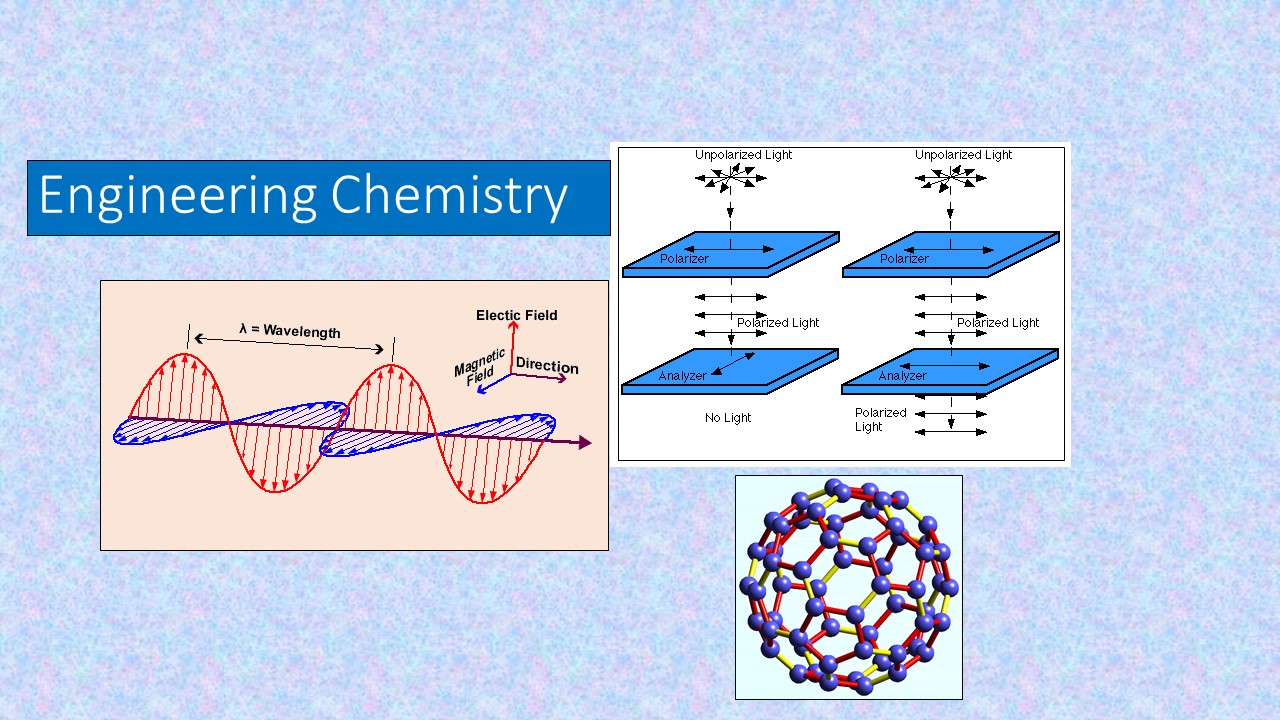
This course is designed for the budding engineers to understand the significance of chemistry which forms the basic foundation of engineering. The course comprises of five units dealing with all the aspects of material science. Bonds to bands explains the fundamentals involved in the bond formation to the band theory of materials which finds significant applications in engineering. Molecular spectroscopy involves the interaction of electromagnetic radiation with materials in order to produce an absorption pattern from which structural or compositional information can be deduced. Functional materials deal with charge transport carriers such as soliton, polaron and bipolaron in conducting polymers that are utilized in engineering molecular devices. Carbon materials emphasize the structure, properties, production of fullerenes, graphene, CNT’s and their applications in the field of health, stealth and energy. Engineering materials covers the importance of Phase rule, Fuels and nanoparticles in the engineering and medicinal field.
- Teacher: K CHENNAKESAVULU
- Teacher: Dr. S Gayathri
- Teacher: Karthikeyan Jayabalan
- Teacher: Anju K
- Teacher: Amrita Pal
- Teacher: Sunitha S
- Teacher: Supriya S
- Teacher: Dr. Y. Sasikumar
- Teacher: Anand T
- Teacher: Krithiga T
- Teacher: Kavitha V
Category: EVEN SEMESTER
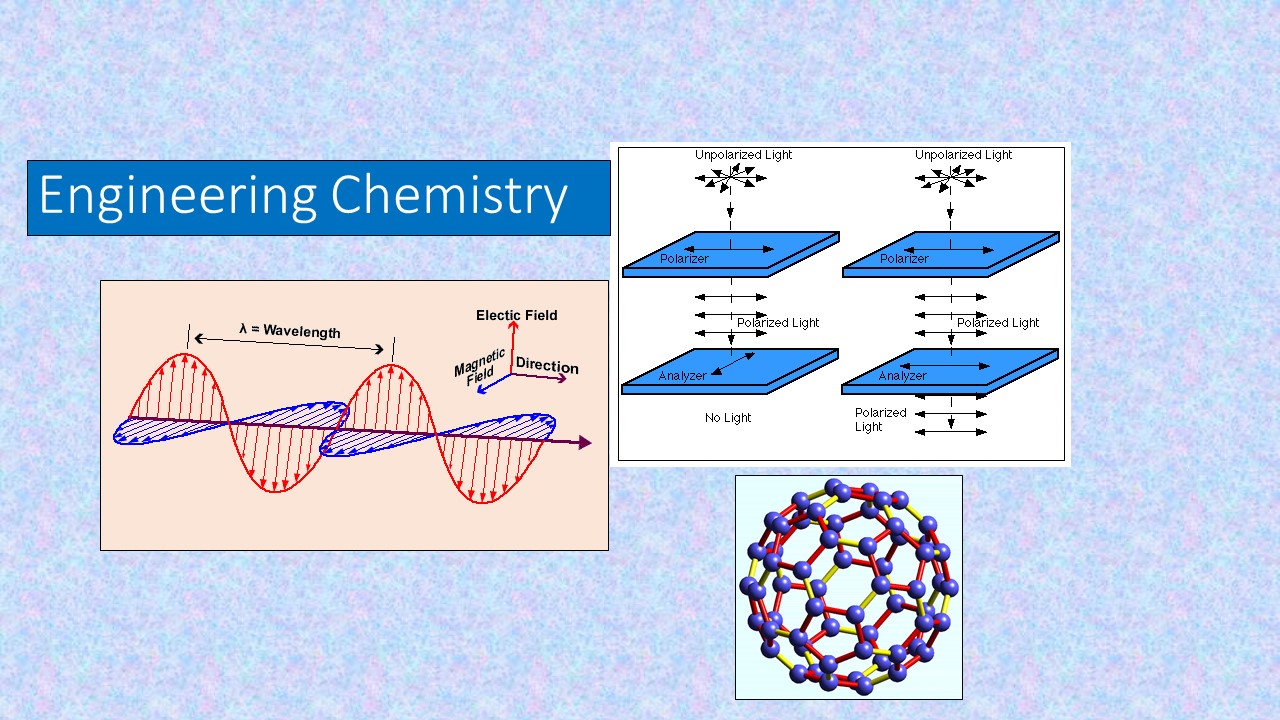
This course is designed for the budding engineers to understand the significance of chemistry which forms the basic foundation of engineering. The course comprises of five units dealing with all the aspects of material science. Bonds to bands explains the fundamentals involved in the bond formation to the band theory of materials which finds significant applications in engineering. Molecular spectroscopy involves the interaction of electromagnetic radiation with materials in order to produce an absorption pattern from which structural or compositional information can be deduced. Functional materials deal with charge transport carriers such as soliton, polaron and bipolaron in conducting polymers that are utilized in engineering molecular devices. Carbon materials emphasize the structure, properties, production of fullerenes, graphene, CNT’s and their applications in the field of health, stealth and energy. Engineering materials covers the importance of Phase rule, Fuels and nanoparticles in the engineering and medicinal field.
- Teacher: K CHENNAKESAVULU
- Teacher: Dr. S Gayathri
- Teacher: Karthikeyan Jayabalan
- Teacher: Amrita Pal
- Teacher: Sunitha S
- Teacher: Supriya S
- Teacher: Dr. Y. Sasikumar
- Teacher: Krithiga T
- Teacher: Kavitha V
Category: EVEN SEMESTER
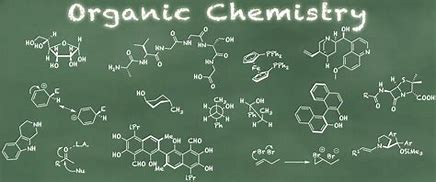
The course is intended for under graduate students in chemistry to give an insight into the general aspects of organic reactions. The students will be able to understand the significance of functional groups, reactivity of the compounds and the types of reactions. On completion of the course, student will be able to:
CO1: Analyze the structure and reactivity of aromatic and polynuclear aromatic hydrocarbon
CO2: Apply the nucleophilic substitution and elimination mechanism of alkyl and aryl halides
CO3: Examine the structure and reactivity of alcohols and phenols
CO4: Examine the physical and chemical properties of ethers and epoxides
CO5: Apply the nucleophilic addition and electrophilic substitution mechanism to carbonyl compounds
CO6: Evaluate the basic concept of chemistry to real world applications
- Teacher: Kavitha V
Category: School of Science and Humanities
The course is intended for undergraduate students in chemistry with an insight into organic compounds preparations and synthesis. The course will provide a platform in understanding the molecular rearrangements which pave way in their industrial applications. At the end of the course, the participants will be able to
To understand the chemistry of heterocyclic compounds containing O, N, S.
To synthesize the carboxylic acids along with their reactivity nature.
To develop the practice of learning molecular rearrangements along with their mechanism.
To discuss the importance of active methylene groups in organic synthesis.
- Teacher: Subhenjit Hazra .
- Teacher: Kavitha V
Category: Semester 6
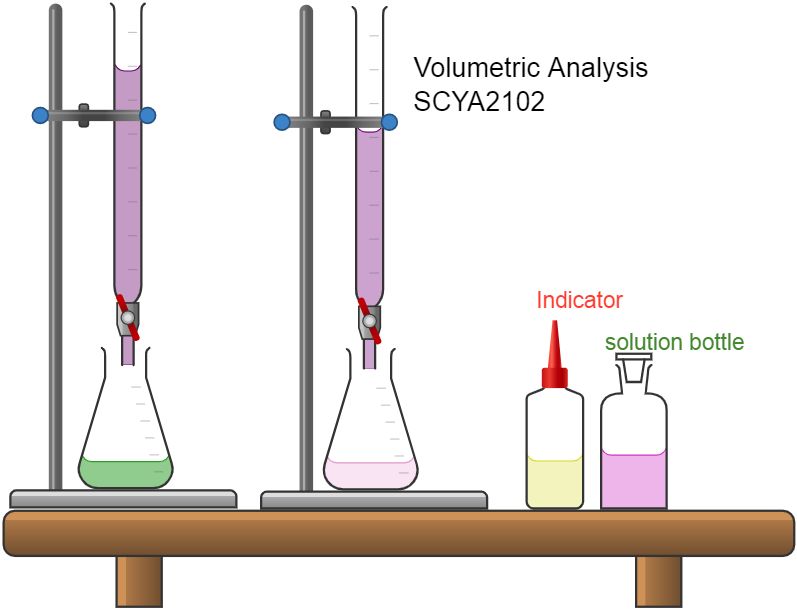
The course is framed for undergraduate chemistry students to bridge the conceptual ideas in analytical chemistry with practical experiment for better understanding. The course will create a platform for the students to undergo hands-on training in preparing the solutions with safe handling of chemicals and glasswares. The course promotes analytical skills among the students in quantitative and qualitative analysis. At the end of the course, the students will be able to
Acquire analytical skills in handling equipments , glassware and chemicals.
Compile, Analyze and interpret the volumetric data for calculation with greater accuracy and precision.
Category: ODD
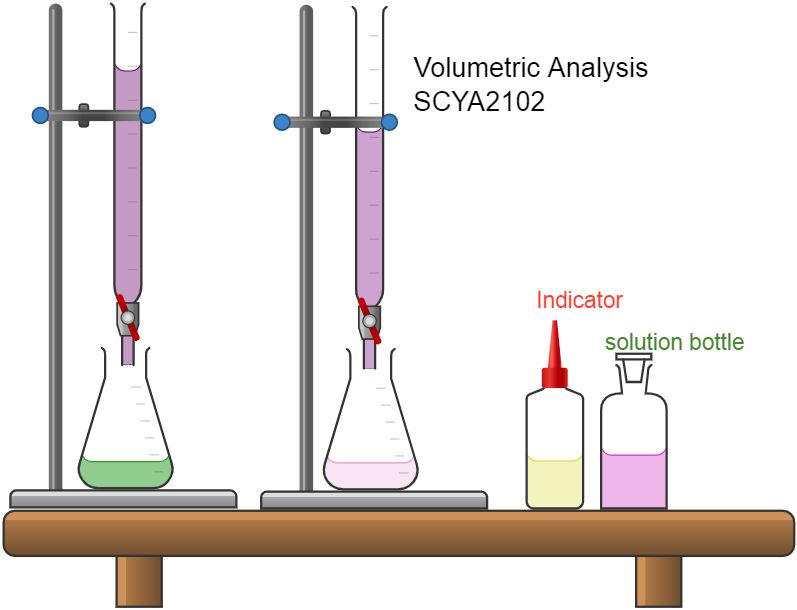
The course is framed for undergraduate chemistry students to bridge the conceptual ideas in analytical chemistry with practical experiment for better understanding. The course will create a platform for the students to undergo hands-on training in preparing the solutions with safe handling of chemicals and glasswares. The course promotes analytical skills among the students in quantitative and qualitative analysis. At the end of the course, the students will be able to
Acquire analytical skills in handling equipments , glassware and chemicals.
Compile, Analyze and interpret the volumetric data for calculation with greater accuracy and precision.
- Teacher: Kavitha V
Category: School of Science and Humanities
- Teacher: K CHENNAKESAVULU
Category: School of Science and Humanities
- Teacher: Amrita Pal
- Teacher: Dr. Y. Sasikumar
Category: ODD
- Teacher: Dr. Y. Sasikumar
Category: EVEN SEMESTER
- Teacher: Jyoti Gahtori
Category: ODD
- Teacher: Anand T
- Teacher: Krithiga T
Category: EVEN SEMESTER
The course is intended for post graduate student s in chemistry to give an insight into the industrial aspects of designing the products. The students will be able to understand the significance of stereo, enantio, regio and chemo selective asymmetric synthesis in aldol formation, hydrogenation, hydroformylation reactions. At the end of the course, the student will be able to
1)Categorize and analyze the mechanism involved in basic organic reactions.
2) Propose and predict a strategic reaction pathway in synthesizing a stereo, regio, enantiomeric chiral product.
3)Choose and predict the organometallic reagents in organic reaction
- Teacher: Ramanjaneya Reddy G
- Teacher: Kavitha V
Category: Semester 6
The course will give an insight in understanding the strategies involved in designing a chemical reaction. and highlights the importance of oxidizing and reducing agents in functional group conversion reactions. It provides an platform in understanding the name reactions and molecular rearrangement in organic chemistry. At the end of the course, the student will be able to
1) Construct a single step retrosynthetic pathway for organic reaction.
2) Interpret and design the products in organic chemical reactions.
3) Formulate and predict the products based on Metal-mediated organic chemical reactions.

- Teacher: Kavitha V
Category: ODD
The course will give an insight in understanding the strategies involved in designing a chemical reaction. and highlights the importance of oxidizing and reducing agents in functional group conversion reactions. It provides an platform in understanding the name reactions and molecular rearrangement in organic chemistry. At the end of the course, the student will be able to
1) Construct a single step retrosynthetic pathway for organic reaction.
2) Interpret and design the products in organic chemical reactions.
3) Formulate and predict the products based on Metal-mediated organic chemical reactions.
- Teacher: Kavitha V
Category: ODD
The course will give an insight in understanding the strategies involved in designing a chemical reaction. and highlights the importance of oxidizing and reducing agents in functional group conversion reactions. It provides an platform in understanding the name reactions and molecular rearrangement in organic chemistry. At the end of the course, the student will be able to
1) Construct a single step retrosynthetic pathway for organic reaction.
2) Interpret and design the products in organic chemical reactions.
3) Formulate and predict the products based on Metal-mediated organic chemical reactions.
- Teacher: Kavitha V
Category: School of Science and Humanities
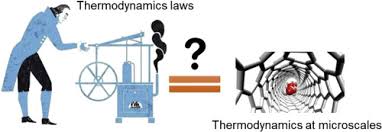
The second law of thermodynamics explains the concept of entropy and Carnot cycle. The determination of fugacity, activity and activity coefficients enables the students to have better understanding in thermodynamics concepts for solutions. The understanding of partition function for distinguishable and indistinguishable molecules make the students to have crystal clear idea about microscopic and macroscopic bodies. The derivation of various statistical approach and free energy functions of mono and diatomic gases leads to the calculation of various energy terms for microscopic bodies. The Onsager theory and applications of irreversible thermodynamics to biological and non-linear systems finds the students to have good conceptual behavior for heat capacity of solids and its applications.
- Teacher: Sunitha S
Category: ODD
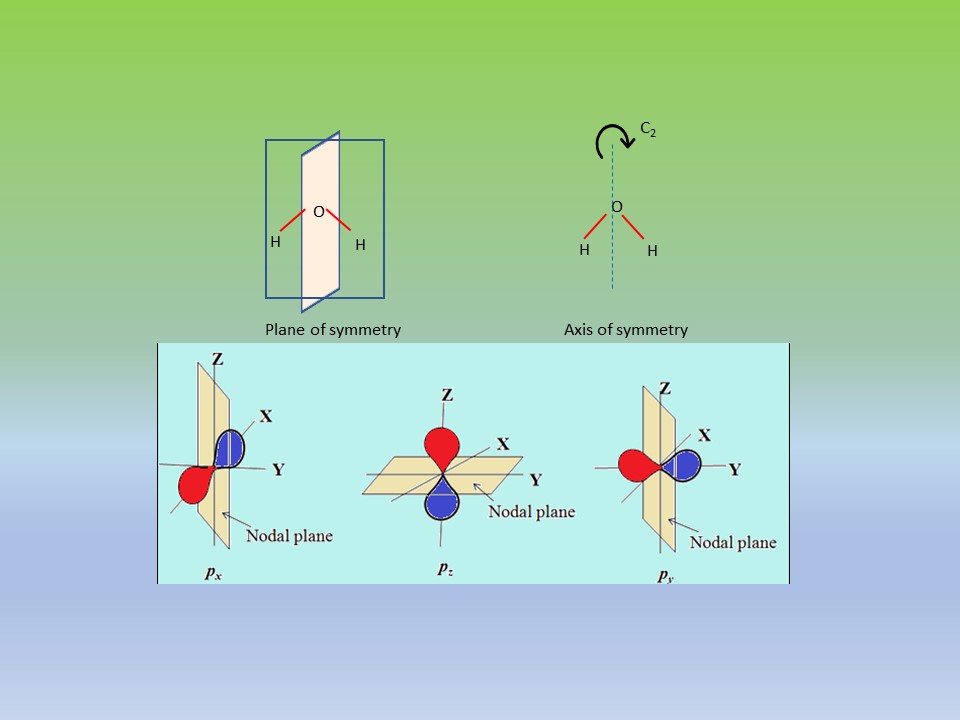
This course deals with the fundamentals of quantum chemistry in sub-atomic level such as wave properties, Uncertainty principle, de-Broglie hypothesis, Schrodinger equation, operators and eigen functions. Applications of quantum chemistry to one-dimensional harmonic oscillator, three-dimensional hydrogen atom, angular momentum and spin angular momentum, quantum numbers, shapes of atomic orbitals are discussed. Approximation methods- Perturbation and variation methods and its application to helium atom is dealt in a simplified manner. The latter part of the course covers the mathematical treatment of symmetry elements and point groups of molecules in predicting the chirality, chemical bonding, polarisability, molecular orbitals and spectroscopic transitions.
- Teacher: Krithiga T
Category: ODD
This course enables the students to elucidate the use of chemical kinetics in understanding reaction mechanisms and kinetics of fast reactions; to understand adsorption phenomena and enable the learners to understand the importance and significance of heterogeneous catalysis and to learn the kinetics of polymerization and experimental methods of determination of molar masses of polymers.
- Teacher: Karthikeyan Jayabalan
Category: EVEN SEMESTER
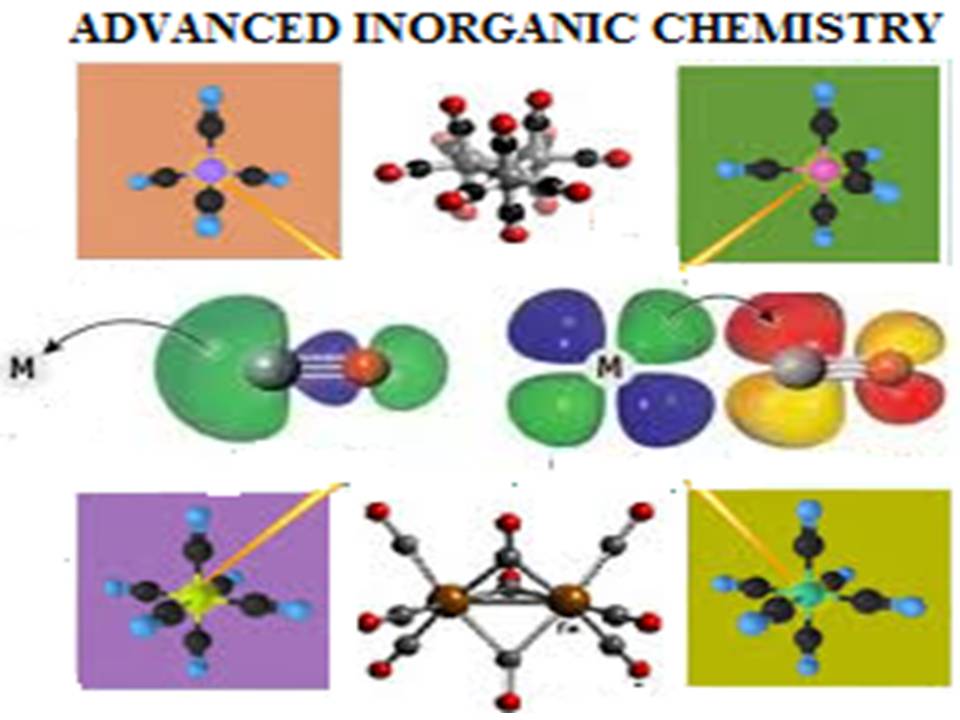
Advanced Inorganic Chemistry consists of five units. The first unit deals with the study of stability of metal complexes based on EAN rule. Interpretation of structure and geometry of metal carbonyls through hybridization enhances the knowledge of synthesis of highly stable organometallic complexes by the selection of ligands for complexation. The second unit discusses the various chemical reactions involving metal carbonyls as reactants. The third unit deals with the various catalytic applications of metal carbonyls in different organic conversion reactions. The fourth unit discusses the involvement and role of transition metal ions in biological molecules and also includes their mechanism of action. The last unit give strong insight to different types of nuclear reactions and the applications of radioisotopes in different fields.
Category: ODD
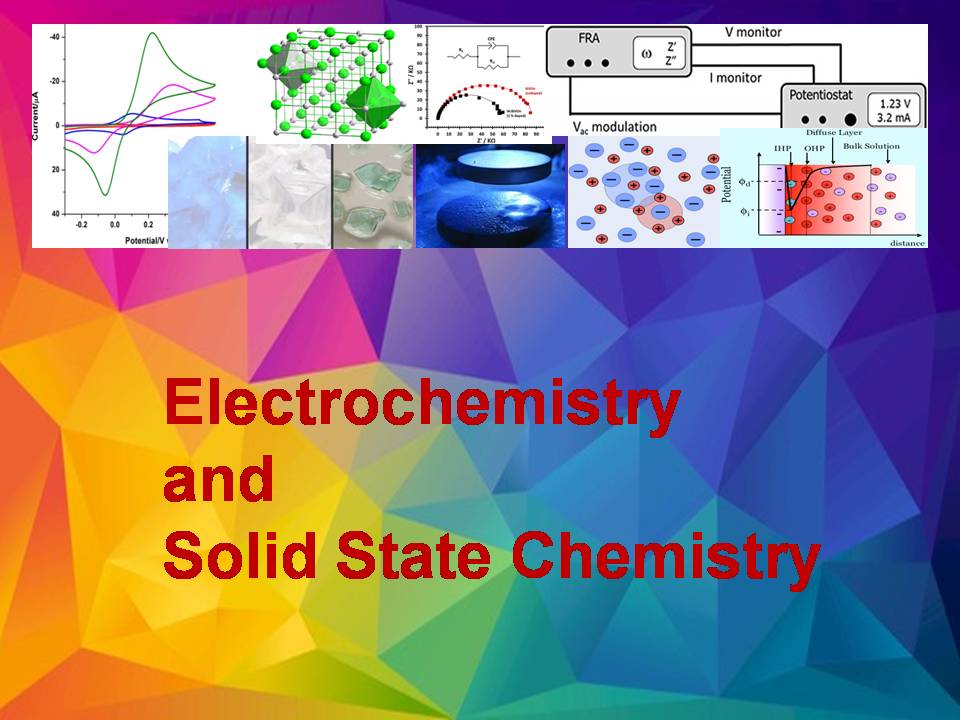
This course will facilitate to explain theories of inter-ionic interactions, the concept of activity coefficient; to derive Butler-Volmer equations; to describe the structure of electrified interface and to explain electrochemical analytical techniques such as cyclic voltammetry, Tafel plots, electrochemical impedance spectroscopy; and also to explain the fascinating area of solid state chemistry; the preparative methods of solids.
- Teacher: Sunitha S
Category: ODD