
Search results: 1467
COURSE OBJECTIVES:
Ø To introduce the building materials and the construction techniques used for the walls and floors.
Ø To comprehend the various types of timber joinery adopted in the movable and fixed barriers in the external walls.
COURSE OUTCOME:
CO1 Gain comprehensive knowledge on various types of masonry walls.
CO2 Design temporary as well as permanent elements for enclosing spaces both physically and visually.
CO3 Explain the treatment of timber the various applications in buildings.
CO4 Demonstrate the types of joinery adopted in doors, windows and furniture
CO5 Classify and understand the different materials for floor finishes in interior design.
CO6 Select and specify flooring materials based on its properties and intended use.
- Teacher: Seetha Visalakshi K
Category: EVEN
- To introduce students to the basic elements of design, its principles, visual aspects, along with preparation, design vocabulary and thereby the application of these in design.
- To strengthen the students understanding of human factors and dimensions while designing interior spaces and accessories.
- To enable students to explore the design process by identifying the design parameters and formulating concepts while emphasizing function and aesthetics.
Category: ODD
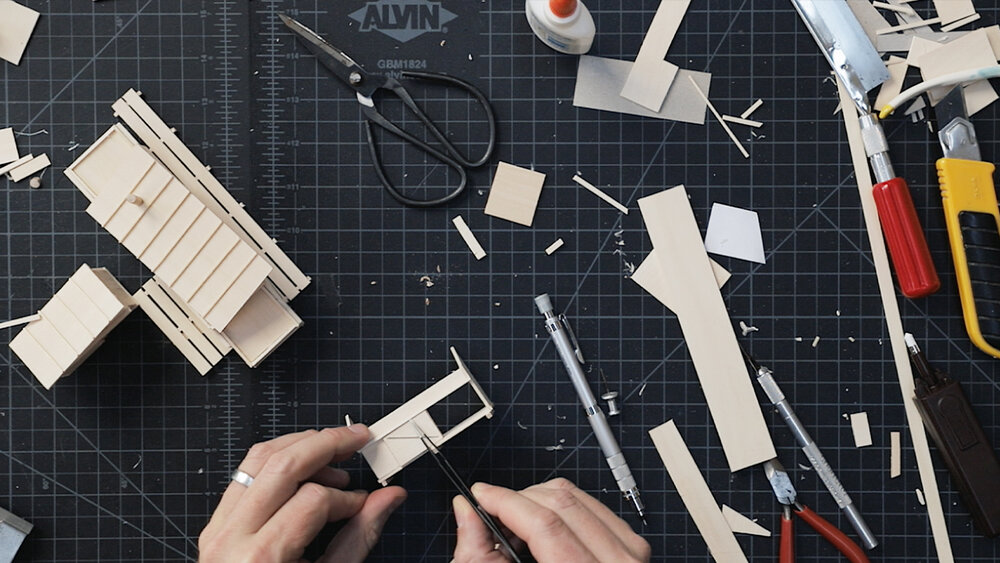
Exercises to Hand-on Product designs through carpentry, glass painting & other model making techniques.3D sculptures involving platonic
solids, wooden sculptures applying different types of carpentry joints, design and execution of POP made objects such as: cornices,
moldings, brackets, etc., Metal and terracotta sculptures.
Category: ODD
COURSE OBJECTIVES:
- To get an insight into various products and accessories used in Interior Spaces.
- To understand relevant products designed according to user’s needs.
- To know about the role of accessories in interiors. Integration of accessories in interior design and stylistic development.
- To learn about the practical aspects of product design processes
COURSE OUTCOMES:
- CO1 Understand the role of product design and designers in our everyday environment.
- CO2 Analyse the various approaches to Product and accessories design for Interior Environments.
- CO3 Apply various human factors in the design of products and accessories.
- CO4 Develop approaches to design keeping practical aspects in mind.
- CO5 Approach towards Product Design in relation with various spaces
- CO6 Distinguish various design trends in the Indian and Global markets.
SYLLABUS
UNIT 1 INTRODUCTION
A brief introduction to Product Designing – Various elements – History of Product Design – Definition of Product Design, understanding of Product Design - Purpose of Product Design – Role of Product Designers. Design approaches in product and lifestyle accessories design with a focus on functionality, ergonomics, aesthetics, multiple usages etc.
UNIT 2 HUMAN FACTORS
Application of human factors data. Human activities, their nature and effects. Human response to climate. Visual, Auditory, Tactual, Olfactory human mechanisms, Physical space and arrangement. Evolving the strategy of design with integration of technical complexities and lifestyle influences. Development of the design of products and accessories to specific interiors and prevailing trends.
UNIT 3 DESIGN APPROACH
Design approach with limited constraints inherent in accessory products. Broad-based approach towards innovative design and application to multi products and multi-materials in manufacturing interior products and lifestyle accessories. Study of materials and processes adopted in accessories design. Stylistic development of interior products from the past to present with insight into technological advances and the influences of social, economic and political factors on their design. Form, Colour, Texture, Symbols, User-specific criteria, Material, Technology and recyclability, Packaging. Multiple Utility oriented approaches to Product Design.
UNIT 4 PRACTICAL ASPECTS
Consumer Motivations Identification of user needs and Driving Factors; Emotional Design, Sensibility, Social Ethics and Concerns; Market Gaps, Market-Oriented Innovation; Business Evolution Product Planning for the future, Disruptive Innovation; Basic understanding of construction principles, modelling, rapid prototyping, with broad orientation to the socio-cultural and historical context of the sector. Orientation to Indian as well as global context of interiors, trends and market.

- Teacher: Yusuf Chiniwala
Category: SCHOOL OF BUILDING AND ENVIRONMENT
COURSE OBJECTIVES
- To acquaint students with the basic elements/principles of design and visual art.
- Understanding the basic characteristics of different techniques, mediums and its practical applications.
- To develop a perspective of artistic and creative expression through experimentation with different tools, techniques and medium in two and three-dimensional visual art forms
UNIT 1 CONCEPT AND MEANING OF VISUAL ARTS
Definition and meaning of Visual Art; Categorization of Visual Art- Fine art, Contemporary arts, Decorative arts and crafts, Applied arts
UNIT 2 ELEMENTS AND PRINCIPLES OF VISUAL ARTS
Elements of Visual Art: color, form, line, shape, space, texture, and value; Principles of Composition of Visual Art: balance, emphasis, harmony, movement, pattern, proportion, repetition, rhythm, unity, and hierarchy.
UNIT 3 2 DIMENSIONAL ARTS AND FORMS
2D Methods & techniques; Drawing and Painting, Still life, Life drawing, Composition, Collage, Print making, Photography, Wall painting, Posters, Folk art forms, etc.
UNIT 4 3 DIMENSIONAL ARTS AND FORMS
3D Methods & techniques; Sculpture, Clay modelling, Terracotta, Carving and relief work, Paper Mache, Mask making, Construction (using waste materials), Pottery, Installations, Folk art forms, etc.
COURSE OUTCOMES
On completion of the course the student will be able to:
CO1: Understand the categorizations of visual art.
CO2: Apply elements (line, shape, form, texture, color, value, and space) and principles (repetition, variety, rhythm, proportion, movement, balance, emphasis, and unity) in work that effectively communicates their ideas.
CO3: Identify and discriminate between types of shape (geometric and organic), colors (primary, secondary, complementary, intermediates, neutrals, tints, tones, shades, and values), lines (characteristics, quality), textures (tactile and visual), and space (background, middle ground, foreground, placement, perspective, overlap, negative, converging lines positive, size, color), and balance (symmetrical, asymmetrical, radial)
CO4: Interpret and analyse the use of proportion, rhythm, variety, repetition, and movement in their work and the works of others.
CO5: Comprehend the various three dimensional art forms.
CO6: Develop and apply skills using a variety of two dimensional and three dimensional media, tools, and processes to create works that communicate personal meaning.
- Teacher: Ramkumar R
Category: ODD
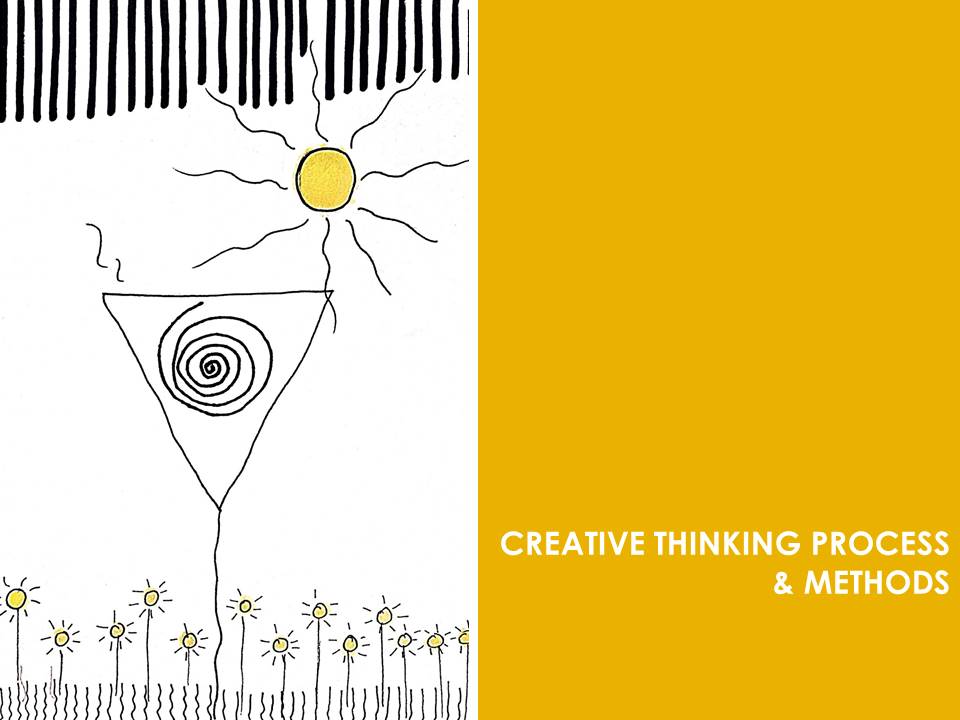
This course is to learn and understand ‘design’ as an integral feature and a product of larger socio-cultural issues and practices. This familiarizes the young minds with the nature of design problems, methodology, creative techniques, and the outcomes. In the process of learning, it will facilitate the students to explore the various channels to creativity
and the directions through which they are expressed in the built form and
the environment.
- Teacher: Deepalakshmi S
Category: ODD
SDE 1106 |
PSYCHOLOGY OF INTERIORS |
L |
T |
P |
Credits |
Total Marks |
2 |
0 |
0 |
2 |
100 |
COURSE OBJECTIVES:
To expose the students to the role of users’ psychology and the relationship in interior design.
To give an overview of psychological impact of colour and lighting in the interior spaces.
To understand the role of space design on the psychology of the human and their behavior.
COURSE OUTCOME:
CO1 |
Understand the various psychological attributes in interiors. |
CO2 |
Articulate the coexistence of more than one psychological aspect and to determine which of the aspects play a dominant role. |
CO3 |
Inculcate the role of colours, patterns and psychological impacts in the interior environment. |
CO4 |
Comprehend the importance of natural and artificial light, their application and perception in interior design. |
CO5 |
Design interiors incorporating the emotions and aesthetic values. |
CO6 |
Apply psychological aspects in their own design. |
- Teacher: MADHU VARSHINI P
- Teacher: VIJENDRANATH R
Category: EVEN
COURSE OBJECTIVES:
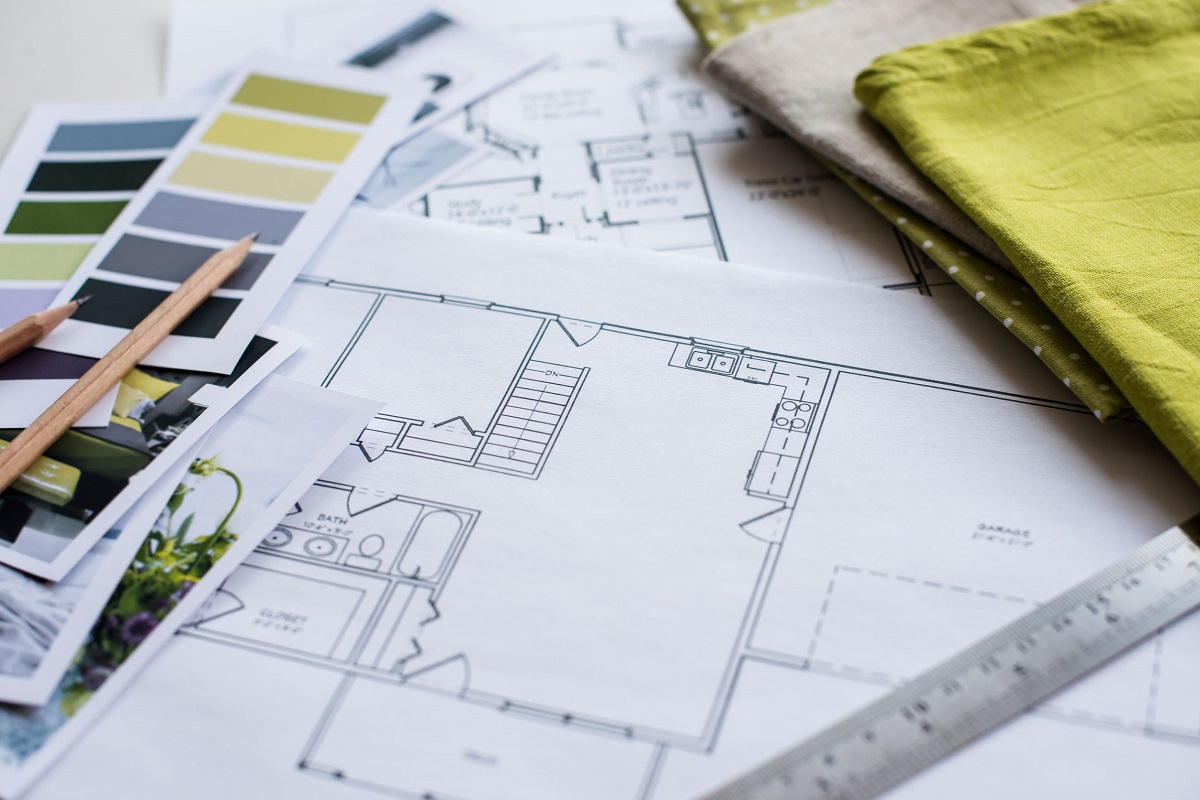
- To enable the students to elarn the concept of space in interior design
- To Understand the importance of space planning and its impact in design.
- To communicate the interior design in accurate and professional grpahics.
- Teacher: Vignaeshwar C
- Teacher: PRIYADHARSHINI S
Category: EVEN
- Teacher: VIJENDRANATH R
Category: Semester 6
COURSE OBJECTIVES
⮚ To provide the student of Interior Design a foundation in the techniques of drafting using a computer as a tool.
⮚ To introduce computer operation principles and explore image editing through a visual composition using graphics.
⮚ To impart training in computer-aided 2D drafting and 3D modelling.
⮚ To expose the students to visual composition using computer tools.
UNIT I INTRODUCTION TO 2D DRAFTING
Understanding on model workspaces –setting up limits – setting drafting units – understanding on drawing tools and objects..
Introduction to scale command – Filter command- Advantages of segregating layers using filter command –Functions of insert
command Revision cloud – Detail drawings. paper setting –plot manager – plot styles setting -layout properties –plot manager –
plot styles – understanding on ctb files – Introduction to presentation techniques. Preparation of drawings using layouts and
viewports. Understanding page setup and Scale in layouts.
UNIT II INTRODUCTION MODIFY AND EDITING COMMANDS
Introduction to layers , layer editing -Line type- Line thickness - line weight –Match properties - Draw order – Trim –move –copy –
rotate –Block - mirror – array commands –Area calculation - Hatching commands . Introduction setting up annotations –
Dimensioning and its properties –match properties - Leader commands. - Introduction to scale command – Filter command-
Introduction to Plot Styles and layout settings. Preparation of drawings using layouts and viewports. Understanding page setup
and Scale in layouts.
UNIT III INTRODUCTION TO 3D MODELLING
Introduction to 3d modelling – Sketch up tool set – understanding on workspace and template settings – unit settings. –Import and
export settings. Introduction to drafting tools – Navigation 3d model – accuracy modelling.-Orbit commands –Insight in modelling
space.
UNIT IV INTRODUCTION TO MATERIAL EDITOR
understanding on material palate – materials editing – define pattern - painting tools and other tools.
UNIT V INTRODUCTION TO PRESENTATION TECHNIQUES 15 Hrs.
Introduction to image editing & plugins – understanding on v-ray – Introduction to render – walkthrough render setting .Introduction
to Adobe Photoshop –Introduction to basic tools used for image editing for presentation.
COURSE OUTCOMES
On completion of the course the student will be able to
CO1: Achieve proficiency in the basic computer skills relevant in the architectural profession
CO2: Construct 2D orthographic projections in CAD
CO3: Visualize design concepts in-the-round and make simple and complex 3D objects
CO4: Retrieve and present drawings and visualizations appropriately for multiple usages across various platforms
CO5: Develop diagrams and visuals to express architectural ideas and concepts.
CO6: Process images and create photo montages for presentation visualizations.
TEXT / REFERENCE BOOKS
1. Introduction to AutoCAD 360 .Beginners 2020 & 2022
2. Introduction to Trimble Sketch up .Beginners 2020 & 2022
3. Introduction to Adobe Photoshop Beginners 2020 & 2022
4. Introduction to V-ray 2022
- Teacher: Yusuf Chiniwala
Category: ODD
- Teacher: R BLESSIE PATHMU
Category: EVEN

- Teacher: Kaavya K
Category: BCOM&BBA ONLINE
- Teacher: Yamuna D
Category: BCOM&BBA ONLINE
- Teacher: Pujaa D
Category: SCHOOL OF MANAGEMENT STUDIES
- Teacher: Sairamya K
Category: SCHOOL OF MANAGEMENT STUDIES
- Teacher: Dr.KARTHIKA J
- Teacher: PRASANNA JEYANTHI M
Category: M.SC - MATHS ONLINE
Analyze the architecture of 8051 microcontroller and its memory organization
Apply the knowledge of Instruction sets to develop the assembly language programs
Analyze the architecture of PIC microcontroller, addressing modes, instruction sets, timers and
interrupts
Comprehend the requirements, trends and applications of Embedded systems
Explain the software development tools in embedded systems
Develop programs using microcontrollers for various applications
- Teacher: Pandian R
Category: EVEN SEMESTER
On completion of this course, students are able to
CO1 Describe the fundamentals of 8085 and 8086
CO2 Apply addressing mode and instruction set to program 8085 microprocessor
CO3 Develop the interfacing concepts of Peripheral IC’s
CO4 Create assembly language programs using 8051 microcontroller
CO5 Examine the applications of microprocessor and microcontroller
CO6 Design and develop microprocessor and microcontroller based systems
- Teacher: EBENEZAR JEBARANI M R
- Teacher: Vijaya Baskar V
Category: EVEN SEMESTER
To impart the knowledge of 8085 and 8086 processor.
To develop assembly language program in 8085/8086 processor.
To introduce the peripheral devices.
To acquire the knowledge of interfacing and hardware implementation.

Category: ODD SEMESTER