
Search results: 1467
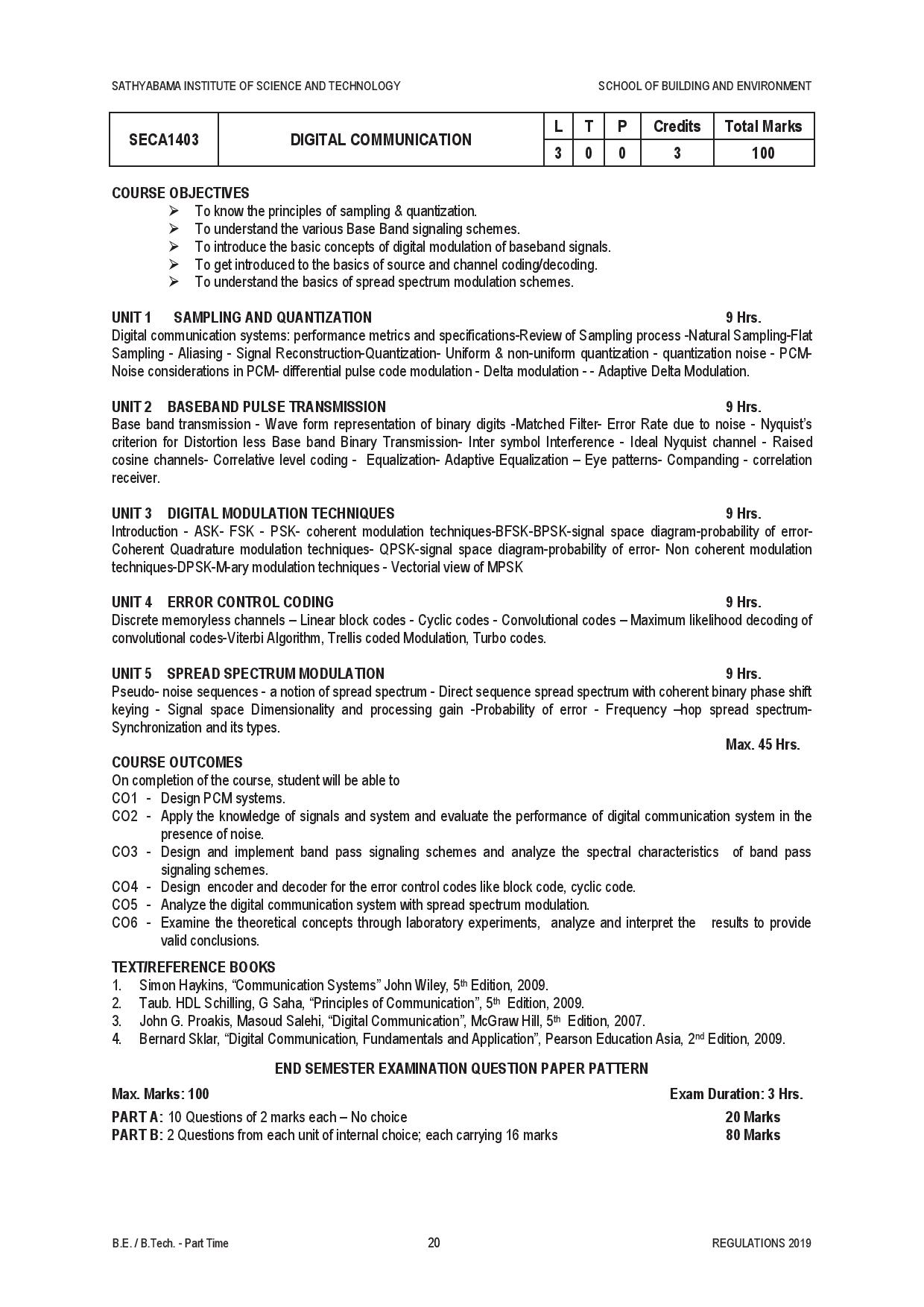
To know the principles of sampling & quantization.
To understand the various Base Band signaling schemes.
To introduce the basic concepts of digital modulation of baseband signals.
To get introduced to the basics of source and channel coding/decoding.
To understand the basics of spread spectrum modulation schemes.
- Teacher: Vijayakumar V
Category: EVEN SEMESTER
COURSE OBJECTIVES
- To know the principles of sampling and quantization
- To understand the various base band signalling schemes
- To introduce the basic concepts of digital modulation of base band signals
- To get introduced to the basics of source and channel coding/decoding
- To understand the basics of spread spectrum modulation schemes
- Teacher: Aranganathan A
Category: EVEN SEMESTER
- To learn the basic antenna parameters.
- To understand the radiation mechanism from the dipole antennas.
- To explore the various antenna arrays and calculate the maxima, minima and half power directions.
- To discuss the characteristics of travelling wave radiators and high frequency antennas.
- To study antenna measurements techniques.
- Teacher: Magthelin Therase
Category: EVEN SEMESTER
The primary objective of this course is to provide a thorough understanding and working
knowledge of design, implementation and analysis DSP systems.
On completion of this course, students are able to
CO1 Apply various transforms for different types of signals
CO2 Design IIR & FIR filter using various filter approximations
CO3 Make use of the concept of finite word length effects and its applications in signal
processing
CO4 Elaborate the concept of Multirate signal processing
CO5 Explain the perception of Multirate signal processing in real time applications
CO6 Develop real time applications with DSP hardwares
- Teacher: Rajalakshmi G
- Teacher: Allan Dino J
- Teacher: Jagan K
- Teacher: SRILATHA K
- Teacher: JEGAN ANTONY MARCILIN L
- Teacher: Krishnamoorthy N R
- Teacher: CHITRA P
- Teacher: KAVIPRIYA P
- Teacher: Krishnaprasanna R
- Teacher: LAKSHMI S
- Teacher: POORNAPUSHPAKALA S
Category: Semester 4
COURSE OBJECTIVES
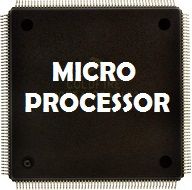
- To impart the knowledge of 8085 and 8086 processor.
- To develop assembly language program in 8085/8086 processor.
- To introduce the peripheral devices.
- To acquire the knowledge of interfacing and hardware implementation.
On completion of the course, student will be able to
CO1 - Have clear understanding on the basics of 8085/8086 microprocessor, working and signals and Familiarize the entire instruction set of 8085/8086 microprocessors.
CO2 - Ability to analyse the computational complexity of the developed algorithms through timing diagrams/T-states
CO3 - Familiarize the peripheral devices.
CO4 - Ability to provide solutions to the problems related to processor program development.
CO5 - Design and develop interfacing circuits for real time applications.
CO6 - Feasibility of developing user defined circuits for the left out flip flops in the flag registers of 8085/8086 processors
- Teacher: Pushpavalli M
Category: EVEN SEMESTER
COURSE OBJECTIVES
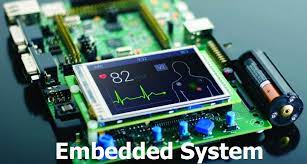
- To study the basics of Embedded System.
- To explain the various development tools in Embedded System.
- To acquire knowledge in Embedded Networking.
- To get a knowledge in Embedded programming.
- To acquire knowledge in embedded system testing and its application.
COURSE OUTCOMES
On completion of the course, student will be able to
CO1 - Understand the fundamentals and areas of applications for the Embedded System.
CO2 - Analyse the various architectures for embedded software development.
CO3 - Classify and analyse the various standards and protocols used for embedded interfaces.
CO4 - Demonstrate the knowledge of programming for embedded system through various high level language.
CO5 - Examine the various types of software unit testing necessary for embedded system design.
CO6 - Develop knowledge and skills necessary to develop a real time embedded system.
- Teacher: Kanchana D
- Teacher: Pandian R
- Teacher: SAKTHI PRABHA R
- Teacher: JOANY R M
- Teacher: karthikeyan S
- Teacher: Vedanarayanan V
Category: EVEN SEMESTER
On completion of the course, student will be able to
Apply the knowledge of basic microwave components and understand the scattering parameters differences between low and high frequency processes.
Analyses the characteristics of various microwave sources and solid state devices.
Classify and analyze the various microwave measurements and EMI/EMC measurements
Demonstrate the qualitative knowledge of optical communication and types of optical fibers, its losses and signal degradation
Become Aware of the latest optical sources, launching and coupling of optical fibers
Examine the theoretical concepts of optical Networks.
- Teacher: JEGAN G
Category: SCHOOL OF ELECTRONICS
COURSE OUTCOMES
On completion of the course, student will be able to
CO1 - Remember the pin details, specifications, register configurations and explain the internal operations of 8051
microcontroller.
CO2 - Explain the addressing modes, Instruction sets and able to write assembly language programs based on 8051
microcontroller.
CO3 - Remember the pin details, specifications and register configurations and explain the internal operations of PIC
16F877A Microcontroller.
CO4 - Categorize and compare the suitability of various interfacing bus devices for applications.
CO5 - Understand the basics of RTOs.
CO6 - Explain the concepts of RTOs in real time embedded system.

Category: ODD SEMESTER
List of Experiments
1.
Verification of KCL
& KVL. 2.
Verification of
Thevenin’s & Norton’s Theorem. 3.
Series and Parallel Resonance. 4.
Constant K filters (both LPF & HPF). 5.
M-Derived filters
(both LPF & HPF). 6.
Attenuators. 7.
Equalizers. 8.
Matching Networks. 9.
Twin T Network as
Notch filter. 10. Verification of reciprocity theorem. 11. Verification of compensation theorem. 12. Study of composite m-derived filters.
- Teacher: Ramya D
Category: ODD SEMESTER
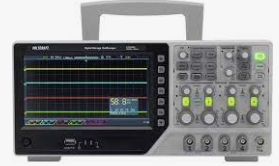
To understand the characteristics of diodes, transistors, LDRs, SCR, DIAC, Triac.
To understand the theorems for electrical circuit analysis.

- Teacher: Krishnamoorthy N R
Category: ODD SEMESTER
COURSE OBJECTIVES
- To provide knowledge for understanding of digital signal processing through hands-on experience that is sufficient to enable them to apply DSP to real-world problems.
- To understand the process of convolution, correlation, DFT, IDFT, Signal smoothing, filtering of long duration signals, and Spectral analysis of signals
CO1 - Understand the handling of discrete signals using MATLAB.
CO2 - Learn to represent real world signals in digital format and understand transform-domain representation of the signals.
CO3 - Analyse the spectral parameters of window functions.
CO4 - Design of IIR and FIR filters using butter worth and chebyshev approximation.
CO5 - Perform the convolution and correlation of two signals.
CO6 - Design the signal processing algorithm using MATLAB.
- Teacher: CHITRA P
Category: SCHOOL OF ELECTRONICS
COURSE OBJECTIVES
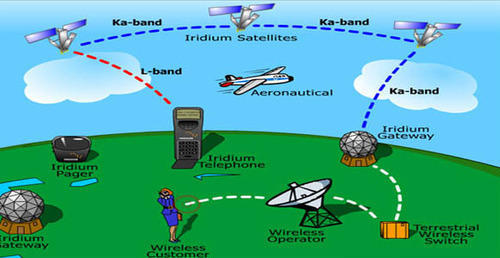
Ø To introduce the history and the terms of telecommunication systems.
Ø To study the various signalling techniques used in the telecommunication system.
Ø To acquire knowledge on traffic in telecommunication systems.
Ø To introduce the service engineering and the protocols used in telecommunication services.
Ø To study the various impairments in telecommunication.
COURSE OUTCOMES:
On completion of the course, student will be able to
CO1 - Tell the history and terminologies of the telecommunication
systems.
CO2 - Explain the classical signaling to the advanced signaling
techniques in telecommunication systems.
CO3 - Choose the Supporting protocols for various applications.
CO4 - Analyze the traffic in the telecommunication networks using
various models.
CO5 - Interpret the importance of Service engineering.
CO6 - Discuss the impairments in telecommunication systems.
- Teacher: Dr. SUMATHI M
Category: EVEN SEMESTER
COURSE OBJECTIVES
To acquaint the students with the architecture, theory and operation of telecommunication systems, issues related to telecommunication systems and the services rendered by the system to the end users.
On completion of this course, the students will,
Acquire basic knowledge on telecommunication and various signaling related to it
Acquire knowledge on traffic in telecommunication systems
Acquire knowledge about QoS and various impairments
- Teacher: Aranganathan A
Category: EVEN SEMESTER
COURSE OBJECTIVES
- To obtain the knowledge about quantum physics and principle.
- To learn about properties of semiconductor and Nano Technology.
- To acquire the knowledge of Nanoscale devices and properties.
On completion of the course, student will be able to
CO1 - Understand the electronic properties of materials at the nanoscale quantum devices and principles.
CO2 - Know the various properties of Nano devices.
CO3 - Design the nanoscale based circuits with simulation tools.
CO4 - Understand the sensors and memory devices.
CO5 - Understand the various types of Nano sensors.
CO6 - Analyse various nanoscale memory devices.
- Teacher: JEGAN ANTONY MARCILIN L
Category: EVEN SEMESTER