
Search results: 1467
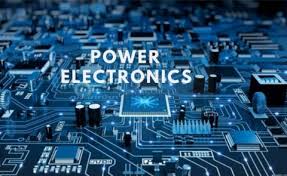
- Power electronics is a technology that deals with the conversion and control of electrical power with high-efficiency switching mode electronic devices for a wide range of applications.
- Power electronics is ushering in a new kind of industrial revolution because of its important role in energy conservation, renewable energy systems, bulk utility energy storage, and electric and hybrid vehicles, in addition to its traditional roles in industrial automation and high-efficiency energy systems.
- Power electronics has recently emerged as a complex and multidisciplinary technology after the last several decades of technology evolution.
- The technology embraces the areas of power semiconductor devices, converter circuits, electrical machines, drives, advanced control techniques, computer-aided design and simulation, and field-programmable gate arrays (FPGAs), as well as artificial intelligence (AI) techniques.
- Teacher: Pushpavalli M
- Teacher: Sivachidambaranathan V
Category: EVEN SEMESTER
COURSE OBJECTIVES
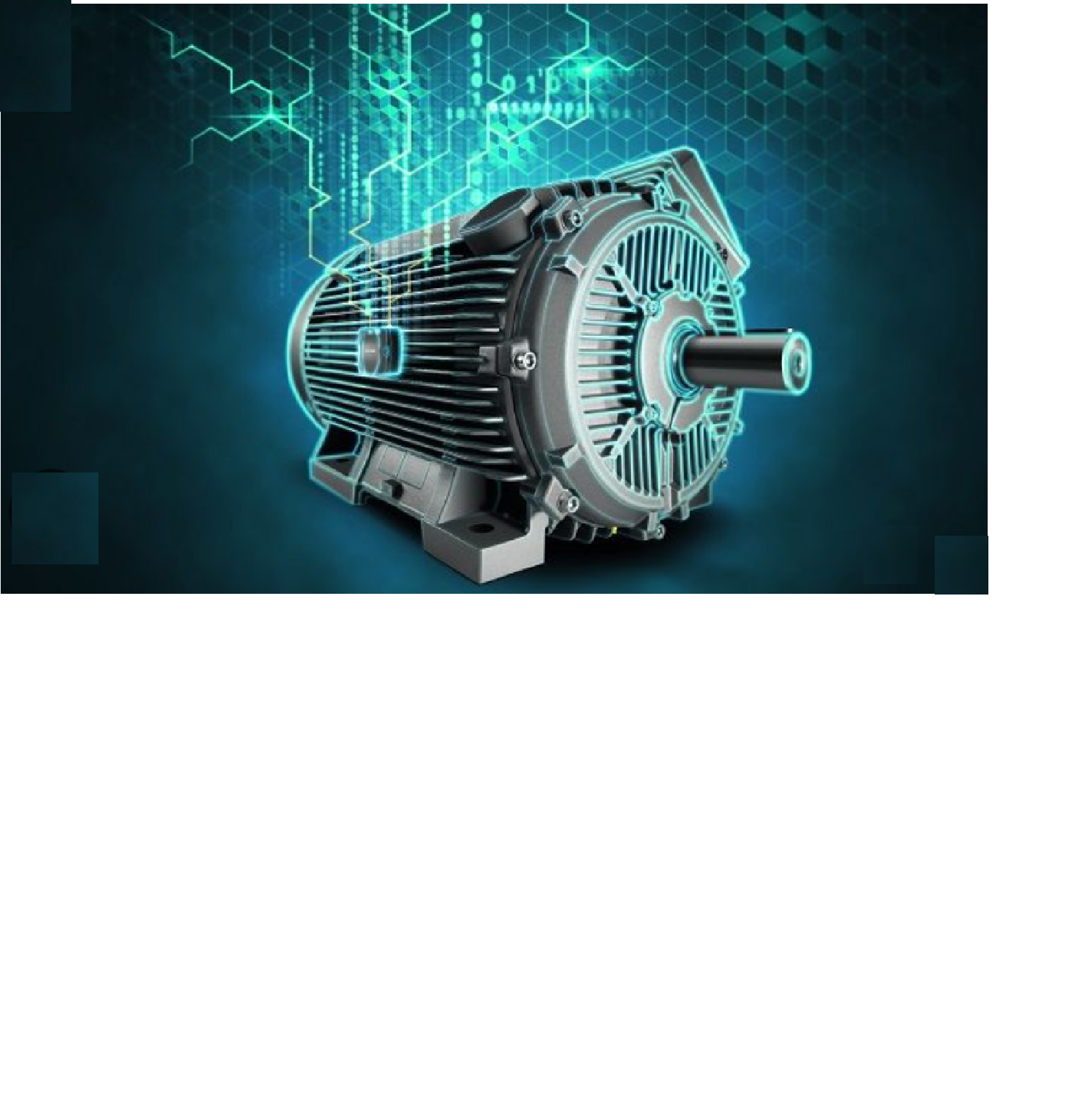
To impart knowledge about engineering materials, calculation of mmf for air and iron path for rotating machines.
To impart knowledge in design of armature and field system of DC machines.
ÿ To impart knowledge in design of core, yoke, windings and cooling systems of transformer.
To impart knowledge in design of stator and rotor of induction machines.
To impart knowledge in design of stator and rotor of synchronous machines
- Teacher: Sivagami P
Category: ODD SEMESTER
COURSE OBJECTIVES
- To gain knowledge in the designing of state space analysis.
- To obtain the state transition matrices and the solution of state equations.
- To design a state observer using the concept of controllability and observability.
- To have a clear understanding in Digital Data Systems.
- To have an exposure in different stability analysis of Nonlinear Systems
- Teacher: Meenakshi V
Category: Semester 6
- Teacher: Jaya Prakash S
Category: ODD SEMESTER

- Teacher: Abitha Memala W
Category: SCHOOL OF ELECTRONICS
- Teacher: Meenakshi V
Category: EVEN SEMESTER
- Teacher: Godwin Immanuel D
- Teacher: Senthil Nayagam V
Category: EVEN SEMESTER
- Teacher: Jaya Prakash S
Category: ODD SEMESTER
COURSE OUTCOMES
On completion of the course, student will be able to
CO1 - Understand the fundamental electrical concepts.CO2 - Analyze simple DC circuits using appropriate techniques.
CO3 - Apply phasor analysis techniques to solve AC circuits.
CO4 - Demonstrate the characteristics of various semi-conductor devices.
CO5 - Analyze characteristics of switched mode power supply.
CO6 - Design power supply unit using regulator IC.

- Teacher: Godwin Immanuel D
Category: ODD SEMESTER
COURSE OBJECTIVES
To analyze the electromechanical system.
To impart knowledge in construction details, principle operation and performance characteristics of DC machines and transformer.
To evaluate the different losses and performance of DC machines and transformer using different testing methods.
To analyze the performance characteristics of DC machines.
To impart knowledge in three phase transformer connection.
COURSE OUTCOMES
On completion of the course, student will be able to
CO1 - Understand the concept of magnetic circuits.
CO2 - Explain the principle, types, effect of armature reaction and commutation of DC generator.
CO3 - Analyze the performance characteristics of DC motor using various testing methods.
CO4 - Understand the principle, equivalent circuit and performance of a single phase transformer.
CO5 - Compare the saving of copper of auto transformer with a two winding transformer.
CO6 - Analyze the various transformer connection for specific application.
- Teacher: Jaya Prakash S
- Teacher: Sundar Singh Jebaseelan S D
Category: Semester 2
COURSE OUTCOMES
On completion of the course, student will be able to
CO1 - Understand the fundamental electrical concepts.CO2 - Analyze simple DC circuits using appropriate techniques.
CO3 - Apply phasor analysis techniques to solve AC circuits.
CO4 - Demonstrate the characteristics of various semi-conductor devices.
CO5 - Analyze characteristics of switched mode power supply.
CO6 - Design power supply unit using regulator IC.

- Teacher: Meenakshi V
Category: SCHOOL OF ELECTRONICS
COURSE OBJECTIVES
To impart knowledge on Construction and principle operation of Asynchronous and Synchronous machines.
To impart knowledge on not self-starting AC machines.
To convey knowledge on speed control of three-phase induction motors.
To analyze performance characteristics of Synchronous and Asynchronous machines.
To convey knowledge on synchronized operation of an Alternator with an Infinite bus bar.
COURSE OUTCOMES
On completion of the course, student will be able to
CO1 - Understand the principle and predetermine the regulation of a Synchronous Generator.
CO2 - Analyze the operation of synchronous motor under various excitation conditions.
CO3 - Explain the principle, characteristics and losses of three phase induction motor.
CO4 - Realize the various methods of starting and testing of three phase induction motor.
CO5 - Explain the principle, types and equivalent circuit of single phase induction motor.
CO6 - Appreciate and select a suitable AC motor for particular application.
- Teacher: Ramesh Babu A
- Teacher: Sivagami P
Category: EVEN SEMESTER
To understand the various applications of electronic devices for conversion and control of the electrical power.
- Teacher: Ramesh Babu A
Category: Semester 4
COURSE OBJECTIVES
i) To impart knowledge about engineering materials, calculation of mmf for air and iron path for rotating machines.
ii) To impart knowledge in design of armature and field system of DC machines.
iii) To impart knowledge in design of core, yoke, windings and cooling systems of transformer.
iv) To impart knowledge in design of stator and rotor of induction machines.
v) To impart knowledge in design of stator and rotor of synchronous machines.
COURSE OUTCOMES
On completion of the course, student will be able to
CO1 - Calculate the MMF for rotating machines based on the major considerations.
CO2 - Learn, understand and apply the design procedure for DC machines.
CO3 - Analyze and apply the design procedure for core, yoke, winding and cooling systems of transformer.
CO4 - Learn, understand and apply the design procedure for stator and rotor of induction machines.
CO5 - Analyze and apply the design procedure for stator and rotor of synchronous machines.
CO6 - Select optimized design based on the requirement.
- Teacher: Sivagami P
Category: Semester 3
On completion of the course, student will be able to
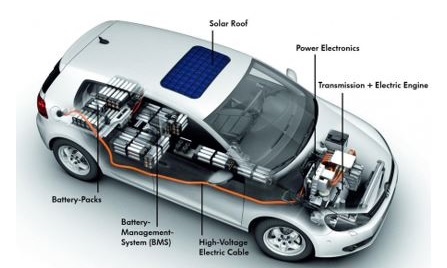
CO1 - Apply Vehicle concept to electric vehicle
CO2 - Analyze the power conversion technique of electric vehicle
CO3 - Examine the performance of different electric drive train
CO4 - Select the appropriate electric motor for electric propulsion system
CO5 - Select a suitable battery for electric vehicle
CO6 - Analyze the recent technique used in modern electric vehicle
- Teacher: Regila Manohari M
- Teacher: Bharathi M L
Category: ODD SEMESTER
- Teacher: Godwin Immanuel D
Category: ODD SEMESTER
COURSE OBJECTIVES
- To provide fundamental background for digital signal processing.
- To understand the basics of discrete time signals, systems and their classifications.
- To analyze the discrete time signals in both time and frequency domain.
- To design IIR filters and FIR filters using windowing techniques.

- Teacher: Krishnamoorthy N R
Category: ODD SEMESTER
COURSE OBJECTIVES
- To study the fundamental concepts of robotics and automation.
- To impart knowledge on various drive system, sensors & machine vision system.
- To learn the various manipulators, grippers as well as the various dynamic process.
- To acquire the concept of kinematics and inverse kinematics.
- To understand the programming and specific industrial applications.

- Teacher: Rajalakshmi G
Category: EVEN SEMESTER