
Search results: 1467


The ability to identify, reflect upon, evaluate and apply different types of information and knowledge to form independent judgments. Analytical, logical thinking and conclusions based on quantitative information will be the main objective of learning this subject.
Category: ODD
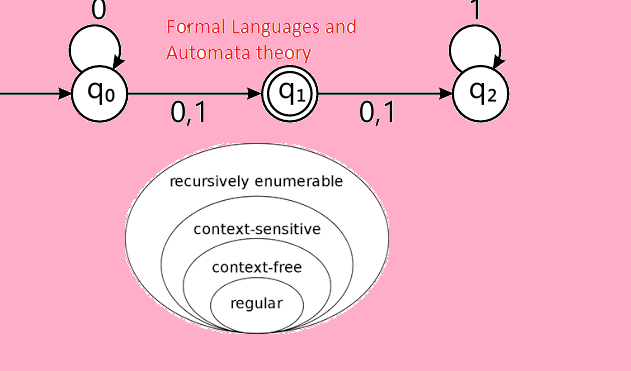
Students can learn the basics of formal languages and Automata Theory and establish some of the properties of such systems. To
familiarize the theories of Mathematics in Computer Science
- Teacher: BHUVANESWARI K
Category: EVEN SEMESTER
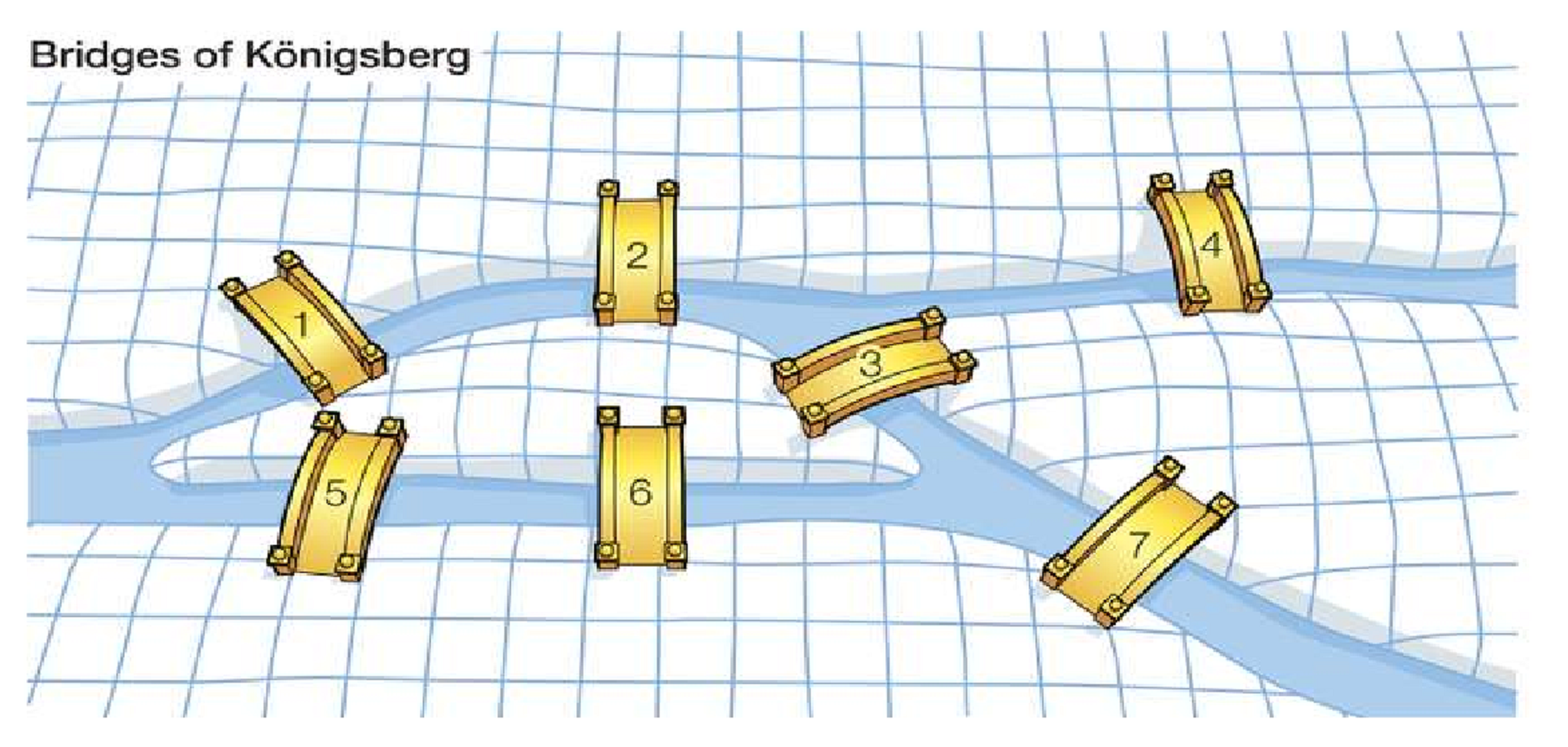
To translate real life situations to diagrammatic representations and develop problem solving skills and thereby solve real life problems.
- Teacher: FRANKLIN THAMIL SELVI M S
Category: ODD
To Provide an understanding for the graduate business student on Statistical concepts to include probability, probability distributions, sampling, estimation, hypothesis testing, regression and correlation analysis and business and economic forecasting.

- Teacher: Subhashini N
Category: ODD
The ability to identify, reflect upon, evaluate
and apply different types of information and knowledge to form independent
judgments. Analytical, logical thinking and conclusions based on quantitative
information will be the main objective of learning this subject.
Category: EVEN SEMESTER
This course is useful in having hands-on experience in doing data analytics by using R programming language. Students will be able to use R as a calculator to evaluate vectors, matrices,etc.

- Teacher: PRIYADARSHINI E
Category: ODD
This course is designed to provide knowledge to identify, reflect upon, evaluate and apply different types of information form independent judgements. The main objective of learning this course is to provide students with analytical, logical thinking and to derive conclusions based on quantitative information. This course in the first semester provides student an understanding of concepts of calculus and how they are applied to solve real life problems. Besides learning the basics of calculus, students completing this course gain a deeper level of learning of differential and integral calculus and its application.
Students successfully completing this course are familiar with the various rules of differentiation and know how to find the nth derivative of functions. They know to construct the circle of curvature, evolutes and envelopes of any curve. Also they know to find the Taylor series, Jacobians of function of two variables and analyze the maxima and minima of functions of several variables. Students are familiar with various integration techniques, evaluation of multiple integrals and know how to use these integration concepts to calculate the surface area and the volume of solids of revolution.
- Teacher: Logeshwari M
- Teacher: NIRMALA M
- Teacher: PRASANNA JEYANTHI M
- Teacher: Subhashini N
Category: ODD
- Teacher: MANOHARAN R
Category: ODD
- Teacher: PRIYADARSHINI E
Category: ODD
The Ability to identify, reflect upon, evaluate and apply different types of information and knowledge to form independent judgements. Analytical, logical thinking and conclusions based on quantitative information will be the main objective of learning this subject.

- Teacher: Anand V W J
Category: EVEN SEMESTER
The ability to identify, reflect upon, evaluate and apply different types of information and knowledge to form independent judgements. Analytical, logical thinking and conclusions based on quantitative information will be the main objective of learning this subject.

- Teacher: PREMKUMAR M
Category: EVEN SEMESTER
- This course provides the knowledge in formation of ordinary differential equations,partial differential equations and also in finding the solution to those equations.
- Numerical approach for solving algebraic equations,system of linear equations, ordinary differential equations and partial differential equations.
- Teacher: GANESH S
Category: ODD
Linear algebra is the most important math skill in machine learning. A dataset is represented as a matrix. Linear algebra is used in data pre-processing, data transformation, and model evaluation.
Objectives:
- Construct, or give examples of, mathematical expressions that involve vectors, matrices, and linear systems of linear equations.
- Evaluate mathematical expressions to compute quantities that deal with linear systems and eigenvalue problems.
- Analyse mathematical statements and expressions (for example, to assess whether a particular statement is accurate, or to describe solutions of systems in terms of existence and uniqueness).
- Write logical progressions of precise mathematical statements to justify and communicate your reasoning.
- Apply linear algebra concepts to model, solve, and analyse real-world situations.
- Teacher: Lenin Sindhu S
Category: EVEN SEMESTER
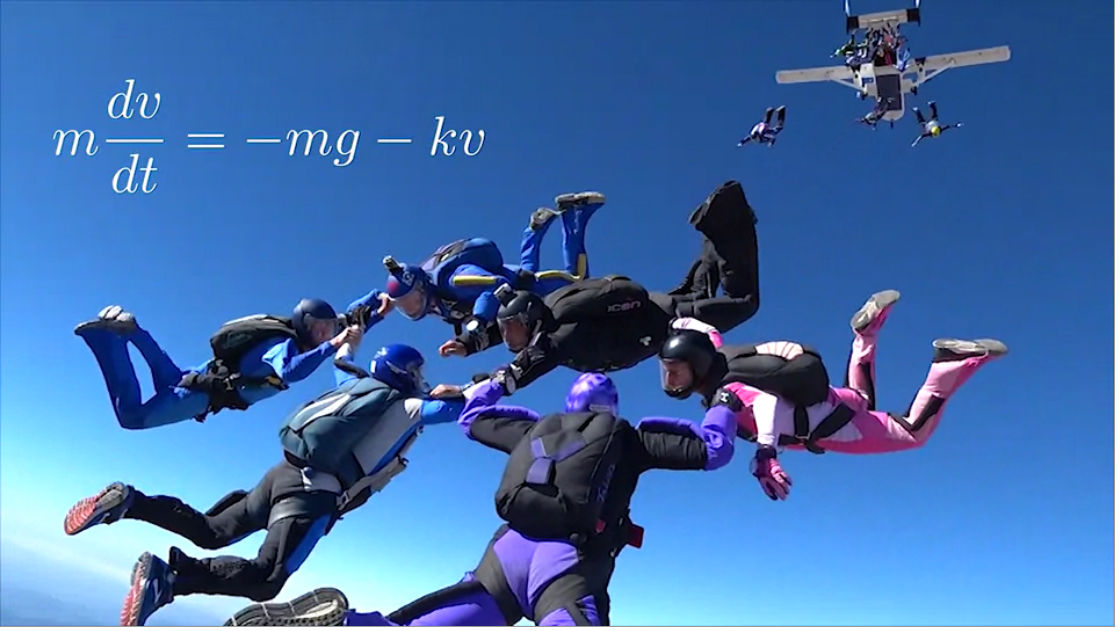
Introduction to ordinary differential equations and their applications. Specific topics include first
order differential equations, linear differential equations with
constant coefficients and solution of partial differential
equations.
COURSE OUTCOMES
- Creating differential equations from word problems/application scenarios.
- Choosing the most appropriate method for solving a specific boundary value or initial value problem from among several different viable techniques.
- Generating general and particular solutions to differential equations using appropriate solving techniques.
- Verifying that an expression or function is actually a solution to a differential equation.
- Interpreting the results of a differential equation solution.
- Teacher: Dr. R. DELHI BABU
Category: ODD
The ability to identify, reflect upon, evaluate and apply different types of information and knowledge to form independent judgments. Analytical, logical thinking and conclusions based on quantity information will be the main objective of learning this subject.
- Teacher: MOHAMED ISMAIL A
Category: Semester 4
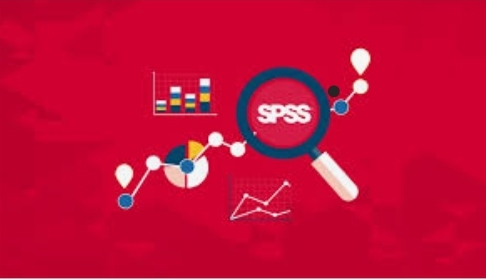
This lab provides online data analysis using the softwares SPSS for various statistical measures.It enhances the students knowledge in the applications of statistics.
- Teacher: PRIYADARSHINI E
Category: ODD