
Search results: 1467
LIST OF EXPERIMENTS
1. To determine the refractive index of the given liquid forming liquid lens by parallax method
2. To determine the focal length and radius of curvatures of a convex lens.
3. To draw i-d curve and to determine the angle of minimum deviation and the angle of the prism from it and hence to calculate the refractive index of the material of the prism.
4. To determine the focal length and radius of curvatures of a concave lens by displacement method.
5. To standardize the diffraction grating and hence to determine the wavelength of mercury spectral lines by normal incidence method using spectrometer.
6. To determine the radius of curvature of a lenst by Newton’s rings method.
7. To determine the refractive index of the prominent spectral lines of mercury by spectrometer.
8. To determine the refractive index of a liquid using hollow prism.
9. To determine the dispersive power of the material of the prism by finding the refractive indices of different pairs of mercury spectral lines.
10. To determine the Cauchy’s Constant of a prism using spectrometer.
Learning Outcomes:
The student will be able to
CO1: Analyze the physical principle involved in the various instruments.
CO2: Analyze the physical principle involved in all related fundamental principles.
CO3: Nurture the students in all branches of Engineering.
CO4: Think innovatively and also improve the creative skills that are essential for engineering.
CO5: Apply for new application.

- Teacher: VIJAI ANAND K
Category: EVEN SEMESTER
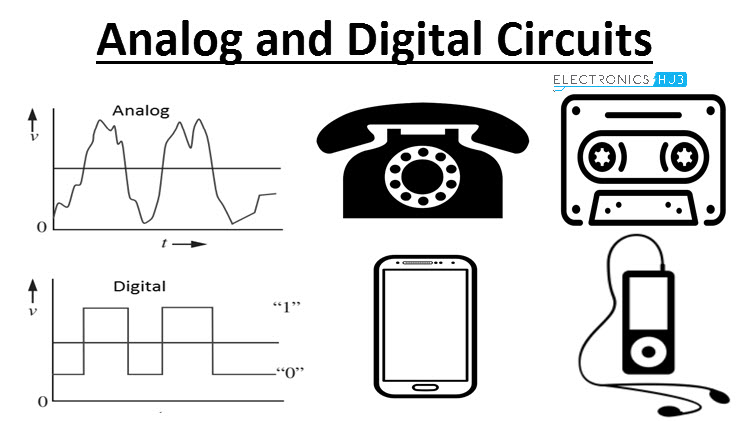
· It introduces to the fundamental and broad range of digital and analog experiments related to amplifiers, oscillators, timers, logic gates, multiplexers and demultiplexers
- Teacher: Anita Lett J
Category: EVEN SEMESTER
Course Objective:
➢ To enable students to understand the description of equations of motion of a system (using Lagrangian,
Hamiltonian mechanics and finally canonical transformation).
Course Outcomes:
Having successfully completed this course, students will be able to demonstrate knowledge and understanding of
CO1: Derivation of Lagrange equation from D’Alembert principle
CO2: Apply the Lagrange equation to study the motion under central force problems
CO3: Apply the Lagrange equation to study the motion of rigid bodies.
CO4: Derivation of Hamilton equation of motion and apply the same for systems such as relativistic particles
and light rays.
CO5: Use of canonical transformation to find the constants of motion according to Hamilton-Jacobi theory
- Teacher: VIJAI ANAND K
- Teacher: Ravichandran S
Category: ODD
COURSE OBJECTIVE
Ø To demonstrate how to differentiate a function of two variables.
Ø To describe smooth distribution of energy
Ø To understand the properties of a particle in universe.
Ø To introduce fourier series and its applications to the solution of partial differential equation.
Ø To describe differential equation through Frobenius Method and Integrals using Beta and Gamma functions.
Unit 1 Calculus of functions of more than one variable 9 Hrs
Partial derivatives, exact and inexact differentials. Integrating factor, with simple illustration. Constrained Maximization using Lagrange Multipliers.
Unit 2 Dirac Delta function and its properties: 9 Hrs
Definition of Dirac delta function.Representation as limit of a Gaussian function and rectangular function. Properties of Dirac delta function.
Unit 3 Orthogonal Curvilinear Coordinates: 9 Hrs
Orthogonal Curvilinear Coordinates.Derivation of Gradient, Divergence, Curl and Laplacian in Cartesian, Spherical and Cylindrical Coordinate Systems. Comparison of velocity and acceleration in cylindrical and spherical coordinate system.
Unit 4 Fourier Series 9 Hrs
Periodic functions. Orthogonality of sine and cosine functions, Dirichlet Conditions (Statement only).Expansion of periodic functions in a series of sine and cosine functions and determination of Fourier coefficients.Expansion of functions with arbitrary period.Expansion of non-periodic functions over an interval.Even and odd functions and their Fourier expansions.Application.Summing of Infinite Series.
Unit 5 Frobenius Method and Some Special Integrals 9 Hrs
Singular Points of Second Order Linear Differential Equations and their importance.Frobenius method and its applications to differential equations.Beta and Gamma Functions and Relation between them.Expression of Integrals in terms of Gamma Functions. Error Function (Probability Integral).
Max. 45 Hours
Learning Outcomes:
Upon successful completion of this course, students should be able to:
CO1: Know how to recognise and differentiate a function of two variables
CO2: Know distribution energy of the particles or materials.
CO3: Know the properties of a particle in universe using Orthogonal Curvilinear Coordinates
CO4: Know Fourier series representation of function of one variable to find solution of wave, diffusion and Laplace equations
CO5: Know how to handle differentiation using Frobenius Method and Integrals using Beta and Gamma functions.
TEXT / REFERENCE BOOKS
- Mathematical Methods for Physicists, G.B. Arfken, H.J. Weber, F.E. Harris, 2013,7thEdn., Elsevier.
2. Fourier analysis by M.R. Spiegel, 2004, Tata McGraw-Hill.
3. Mathematics for Physicists, Susan M. Lea, 2004, Thomson Brooks/Cole.
4. Mathematical Tools for Physics, James Nearing, 2010, Dover Publications.
5. Differential Equations, George F. Simmons, 2006, Tata McGraw-Hill.
6. Essential Mathematical Methods, K.F. Riley and M.P. Hobson, 2011, Cambridge University Press
7. Mathematical methods for Scientists and Engineers, D.A. McQuarrie, 2003, Viva Books.
8. Mathematical Method for Physical Sciences -- M. L. Boas (Wiley India) 2006.
END SEMESTER EXAM QUESTION PAPER PATTERN
Max. Marks: 100 Exam Duration: 3 Hrs.
PART A: 10 Questions of 2 mark each - No choice. 20 Marks
PART B: 2 Questions from each unit of internal choice, each carrying 16 marks. 80 Marks
- Teacher: Sowbakkiyavathi E S
- Teacher: DAKSHANA MURUGAN
Category: EVEN SEMESTER
- Teacher: Malliga P
Category: School of Science and Humanities
- Teacher: Anita Lett J
Category: School of Science and Humanities
- Teacher: Jayalakshmi D.S
Category: School of Science and Humanities
Category: ODD
COURSE OBJECTIVES:
Ø To acquire basic understanding of laboratory techniques.
Ø To educate the basics of instrumentation, data acquisition and interpretation of results.
Ø To educate and motivate the students in the field of science.
Ø To allow the students to have a deep knowledge of fundamentals of optics.
LIST OF EXPERIMENTS
1. Determination of Young’s Modulus- Uniform bending Method.
2. Determination of Young’s Modulus- Non Uniform bending Method.
3. Determination of Rigidity Modulus of a wire – Torsional pendulum.
4. Determination of thermal conductivity of a bad conductor using Lee’s disc method.
5. Calibration of Voltmeter using potentiometer.
6. Calibration of Ammeter using potentiometer.
7. Determination of magnetic susceptibility using Quincke’s Method.
8. Determination of dispersive power of a prism using spectrometer.
9. Determination of Cauchy’s constant using spectrometer.
10. Determination of co-efficient of viscosity of a liquid by stokes method.
TEXT BOOKS
1. C.H. Bernard and C.D. Epp, John, Laboratory Experiments in College Physics
Wiley and Sons, Inc., 1995.
2. M.N. Srinivasan, A Textbook of Practical Physics, Sultan Chand & Sons, 1994.
REFERENCES
1. G. L. Squires, Practical Physics, 4th Edition, Cambridge University Press, 2001.
2. Geeta Sanon, B. Sc., Practical Physics, 1stEdition, S. Chand & Co, 2007.
3. Benenson, Walter, and Horst Stöcker, Handbook of Physics, Springer, 2002.
4. Chattopadhyay, Rakshit and Saha, An Advanced Course in Practical Physics, 8th
Edition, Books & Allied Ltd., 2007.
5. Indu Prakash and Ramakrishna, A Text Book of Practical Physics, 11th Edition, Kitab Mahal, 2011.
- S. MURUGESAN: Murugesan S
Category: ODD
To study the thermal properties of materials by different methods.
To explain of the properties of macroscopic system.
Providing definitions of thermodynamic quantities and derivations of the laws of thermodynamics from the laws of quantum mechanics.
- Teacher: Murugesan S
Category: EVEN SEMESTER
COURSE OBJECTIVE
- To study the various types of communication techniques and their analysis based on Fourier transform and to provide fundamental knowledge of pulse modulation techniques and their types.
UNIT 1 SIGNAL ANALYSIS
Fourier transform of gate functions, delta functions at the origin – Two delta function and periodic delta function – properties of Fourier transform – Frequency shifting – Time shifting – Convolution theorem – Frequency convolution theorem – Sampling theorem.
UNIT 2 PULSE MODULATION AND COMMUNICATION
Pulse amplitude modulation – Natural sampling -Instantaneous sampling Transmission of PAM signals – Pulse width modulation – Time division multiplexing and frequency division multiplexing – Band width requirements for PAM signals – Pulse code modulation – Principles of PCU – Quantizing noise – Generation and demodulation of PCM – Effects of noise – Advantages and application of PCM – Differential PCM (DPCM) – Delta modulation.
UNIT 3 BROAD BAND COMMUNICATION
Coaxial cable circuit -Parallel wire line circuit – Computer communication – Digital data communication – Modems – Microwave communication links – LOS links – Tropospheric scatter microwave links – Integrated Service Digital Network (ISDN) – Architecture – Broadband ISDN – Local Area Network (LAN) – LAN topologies – Private Branch Exchange (PBX).
UNIT 4 SATELLITE COMMUNICATION
Introduction – Communication satellite systems – Transmitting and receiving earth station – Satellite orbits – Satellite frequency bands – Satellite multiple access formats – FDMA – CDMA – Satellite channel, Power flow – Polarization antenna gain – Parabolic dish antenna – Power loss – Rainfall effect – Receiver noise –satellite system power budget: EIRP, received power Carrier to noise ratio, G/T ratio. – Satellite link analysis – Up link – Down link – Cross link – Direct Home TV broadcasting – Satellite transponders.
UNIT 5 RADAR SYSTEMS AND OPTICAL FIBER
Introduction, Basic Radar systems, Radar systems – Radar range – Pulsed radar system – A Scope – Plan Position Indicator (PPI) – Search Radar – Tracking Radar – Moving Target Indicator (MTI) – Doppler Effect – MTI principle – Digital MTI – Radar Beacons. Optical Fiber: Introduction to light, optical fiber and fiber cables, optical fiber characteristics and classification, losses, Fiber optic components and systems, Installation, testing and repair.
Course Outcomes:
By the end of this course students will be able to
CO1: Design, operation, and troubleshoot of electronic systems
CO2: Solve electronic devices and systems using mathematical concepts.
CO3: Analyze electronics devices and circuits using computer simulations.
CO4: Analyze components associated with digital and analog electronic/communication systems.
CO5: Analyze basic wireless and communication circuits using computer simulations
- Teacher: JOANY R M
Category: ODD
Category: ODD
Course Objectives:
Ø The aim and objective of the course on Radiation Physics is to expose the students of M.Sc. class to the relatively advanced topics Radiation Physics and nuclear reactions.
Ø They understand the details of the underlying aspects and can use the techniques if they decide to be radiation or nuclear physicists in their career.
UNIT 1 INTERACTION OF ELECTROMAGNETIC RADIATIONS WITH MATTER 12 Hrs.
Different photon interaction processes viz. photoelectric effect, Compton scattering and pair production. Minor interaction processes, Energy and Z dependence of partial photon interaction processes. Attenuation coefficients, Broad and narrow beam geometries. Multiple scattering.
UNIT 2 INTERACTION OF CHARGED PARTICLES WITH MATTER 12 Hrs.
Elastic and inelastic collisions with electrons and atomic nucleus. Energy loss of heavy charged particles. Range-energy relationships, Straggling. Radiative collisions of electrons with atomic nucleus.
UNIT 3 NUCLEAR DETECTORS AND SPECTROSCOPY 12 Hrs.
General characteristics of detectors, Gas filled detectors, Organic and inorganic scintillation detectors, Semi-conductor detectors [Si(Li), Ge(Li) HPGe]. Room temperature detectors, Gamma ray spectrometers. Gamma ray spectrometry with NaI(Tl) scintillation and semiconductor detectors.
UNIT 4 NUCLEAR SPECTROMETRY AND APPLICATIONS 12 Hrs.
Analysis of nuclear spectrometric data, Measurements of nuclear energy levels, spins, parities, moments, internal conversion coefficients, Angular correlation, Perturbed angular correlation, Measurement of g-factors and hyperfine fields.
UNIT 5 ANALYTICAL TECHNIQUES 12 Hrs.
Principle, instrumentation and spectrum analysis of XRF, PIXE and neutron activation analysis (NAA) techniques. Theory, instrumentation and applications of electron spin resonance spectroscopy (ESR). Experimental techniques and applications of Mossbauer Effect, Rutherford backscattering. Applications of elemental analysis, Diagnostic nuclear medicine, Therapeutic nuclear medicine.
Max. 60 Hours
COURSE OUTCOMES:
CO1: Understand various modes of interaction of electromagnetic radiations and charged particles with matter.
CO2: Distinguish various types of radiations based on their interaction with matter.
CO3: Learn and understand about different detectors and their use for spectroscopy.
CO4: Use different analytical technique such as XRF, PIXE, neutron activation analysis and electron spin resonance spectroscopy.
CO5: Understand various analysis techniques and way to apply the materials in suitable manner
TEXT/REFERENCE BOOKS:
1. The Atomic Nucleus: R.D. Evans, Tata Mc Graw Hill, New Delhi.
2. Nuclear Radiation Detectors: S. S. Kapoor and V. S. Ramamurthy, New Age, International, New Delhi.
3. Radiation Detection and Measurements: G. F. Knoll, Wiley & Sons, New Delhi.
4. Introductory Nuclear Physics: K. S. Krane, Wiley & Sons, New Delhi.
5. An Introduction to X-ray Spectrometry: Ron Jenkin, Wiley.
6. Techniques for Nuclear and Particle Physics Experiments: W. R. Leo, Narosa Publishing House, New Delhi.
7. Introduction to experimental Nuclear Physics: R.M. Singru, Wiley & Sons, New Delhi
- Teacher: Helen Merina Albert
- Teacher: Murugesan S
- Teacher: Dr. GOWTHAMARAJU SHANMUGAM
Category: EVEN SEMESTER
COURSE OBJECTIVES
- To calculate youngs modulus of a materials
- To measure the thermal conductivity of a good and bad conductor.
- To understand the nature of waves
- Teacher: PARASURAMAN K
Category: School of Science and Humanities

Course Description for SPHB1104 – Physics
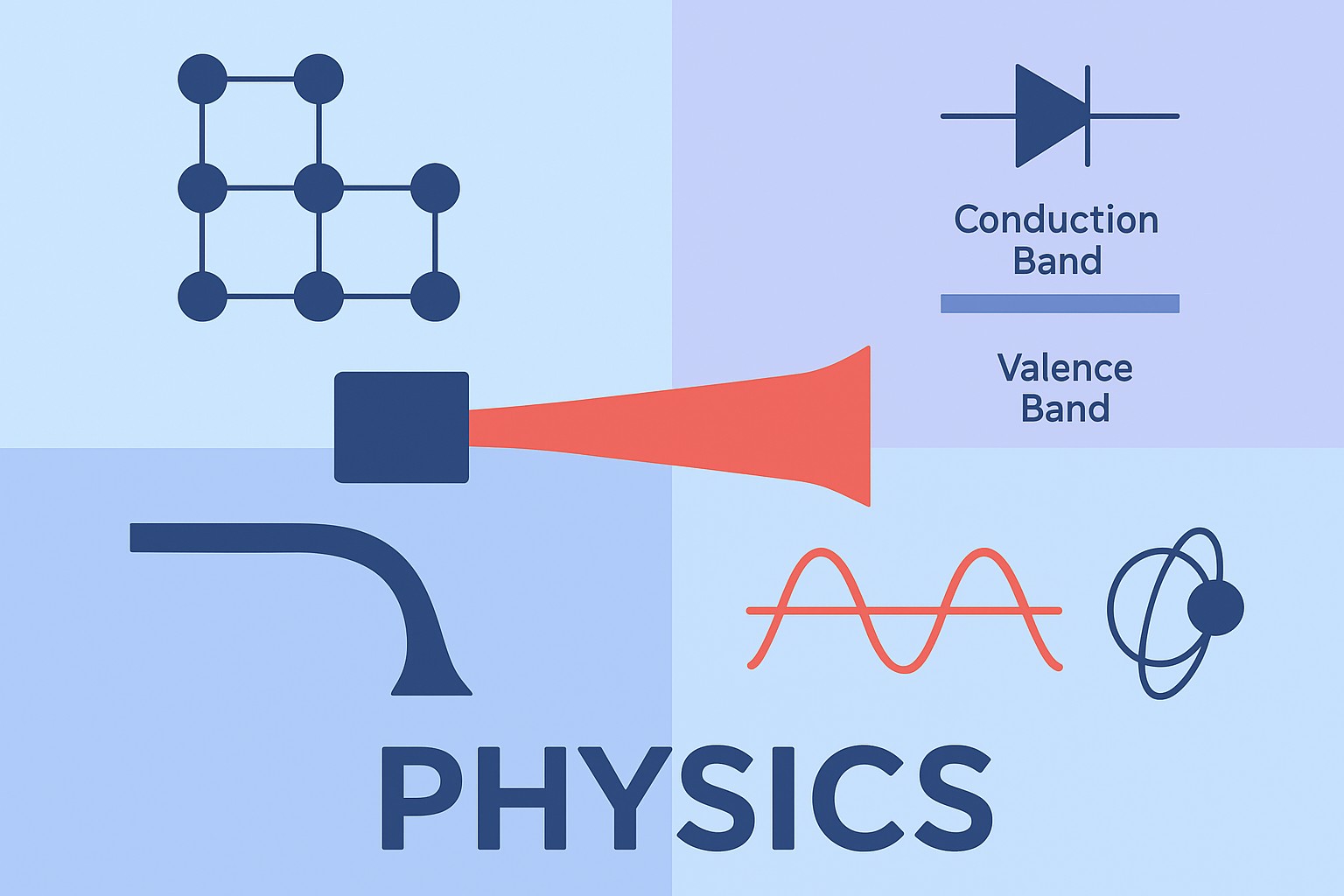
This course introduces engineering students to the fundamental principles of applied physics necessary for understanding materials, devices, and modern technologies. The curriculum covers:
-
Properties of Matter: Elasticity, stress–strain relations, bending of beams, and torsional oscillations.
-
Crystal Physics: Crystal systems, Bravais lattices, Miller indices, packing factors, and crystal growth techniques.
-
Semiconductors & Magnetism: Band theory, p–n junction devices, breakdown mechanisms, and classification of magnetic materials.
-
Quantum Mechanics: Wave–particle duality, Schrödinger’s equation, uncertainty principle, and applications like tunneling and STM.
-
Lasers & Applications: Principles of laser action, diode lasers, quantum cascade lasers, and applications in engineering and medicine.
The associated Physics Laboratory enables hands-on experience in optics, semiconductors, elasticity, fiber optics, and modern physics experiments. Students will gain skills in measurement, data analysis, and application of physical principles to engineering systems.
Learning Outcomes:
By the end of this course, students will be able to:
-
Analyze the elastic properties of solids and determine material constants experimentally.
-
Interpret crystal structures, planes, and defects.
-
Explain semiconductor physics and magnetic materials with device-level applications.
-
Solve fundamental quantum mechanics problems and apply concepts to nanoscale systems.
-
Understand laser principles and evaluate their engineering/medical applications.
- Teacher: Anita Lett J
- Teacher: Murugesan S
Category: ODD