
Search results: 1466
- This course is to enable learners to understand the language of cinema and make them to recognize significant film movements and theories as well as filmmakers who have shaped the course of world cinema, along with a reading of key cinematic texts. It also covers the topics on recent trends and turning points in cinema. The course will motivate learners to approach and appreciate cinema in an academic way with the components of cinema.

- Teacher: YUVARAJ J
Category: Semester 4
Social media advertising is a type of digital marketing that involves using paid ads on social media platforms to reach a target audience. It's a key component of a social media marketing strategy, along with social media marketing (SMM)
 Social-media-advertising-and-design-tips.jpg
- Teacher: Dr. A R VIMAL RAJ
Category: ODD
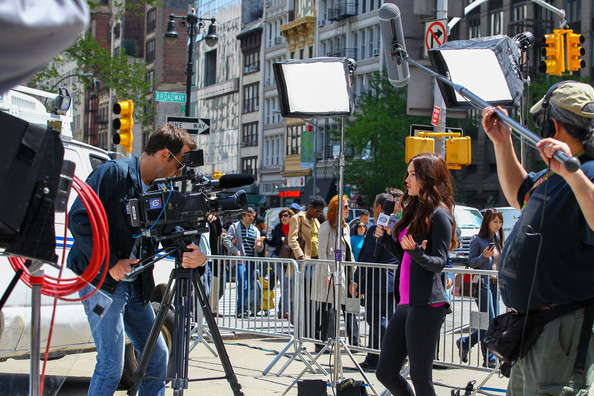
Electronic field production (EFP) is a television industry term referring to a video production which takes place in the field, outside of a formal television studio, in a practical location or special venue. Zettl defines EFP as using "both ENG (electronic news gathering) and studio techniques. From ENG it borrows its mobility and flexiblity; from the studio it borrows its production care and quality control. EFP takes place on location (which may include shooting in someone's living room) and has to adapt to the location conditions... Good lighting and audio are always difficult to achieve in EFP, regardless of whether you are outdoors or indoors. Compared to ENG, in which you simply respond to a situation, EFP needs careful planning.
- Teacher: Dr. A R VIMAL RAJ
Category: ODD

- Teacher: SHETTY DEEPA THANGAM GEETA
Category: SCHOOL OF MANAGEMENT STUDIES
Category: SCHOOL OF MANAGEMENT STUDIES
TEXTILE PROCESSING
COURSE OBJECTIVES:
- To enable the students to learn the preparatory steps of Textile wet processing
- To impart knowledge on various dyeing techniques.
- To provide the details printing and textile finishing.
UNIT I
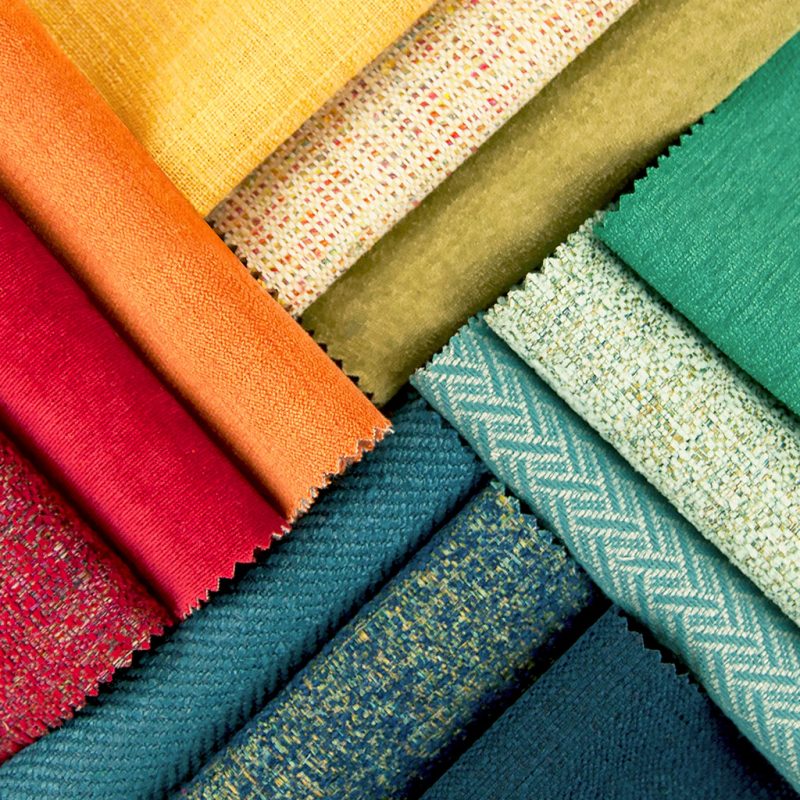
Introduction - Wet processing- Areas and importance Production sequence of textile fabrics- flowchart. Process of removing impurities from fabrics – Singeing, Desizing, Scouring, Bleaching, Mercerizing.
UNIT II
Dyeing - Classification of dyes -Stages of dyeing - Different methods - Fiber dyeing - Stock Dyeing - Top Dyeing Yarn Dyeing - Methods – Skein Dyeing, Package dyeing, Warp beam Dyeing.Fabric Dyeing - Open Width Dyeing, Rope form Dyeing.Garment Dyeing - Methods – Exhaust Process, Continuous process.Colorfastness- Special dyeing effects cross dyeing- Union -Dyeing - tone on tone- Imperfections in dyeing.
Textile printing – Introduction - Method of printing - Block, Stencil, Hand -Screen, automatic Screen – Rotary- Screen, Roller, Ink -jet and Heat transfer Printing. Styles of printing - Direct Printing, Discharge Printing Resist Printing. Blotch Printing, Warp Printing - Burn- out Printing – Duplex Printing - Engineered print.
UNIT-IV
Fabric Printing - Fabric printing through vegetable blocks- Fabric resist-dyeing techniques. Silk painting using wax- urea and rock salt resists- Tie & Dye- Batik. Handmade Flock printing- Quilting by Hand, Imperfection in Printing. Fabric performance testing - Fabric test- Surface friction test- Appearance test- Functional test- Colorfastness.
UNIT V
Textile finishing - Classification of finishes- Aesthetic finishes and Functional finishes - Wrinkle-free finishes, Water repellent, Soil release finish, Special purpose finish, Anti-bacterial finish, Silicon finish, Denim finish. Fabric Care Labeling - Environmental Issues.
- Teacher: Savithiri S
Category: EVEN
- The studio aims at widening the avenues of creativity and allows inquiring more on lateral thinking.
- The emphasis is on understanding the process of design as a proactive and analytical tool toward generating alternatives which forms the foundation for future design by designing a meaningful space.
Category: ODD
SKILL ENHANCEMENT COURSE – I
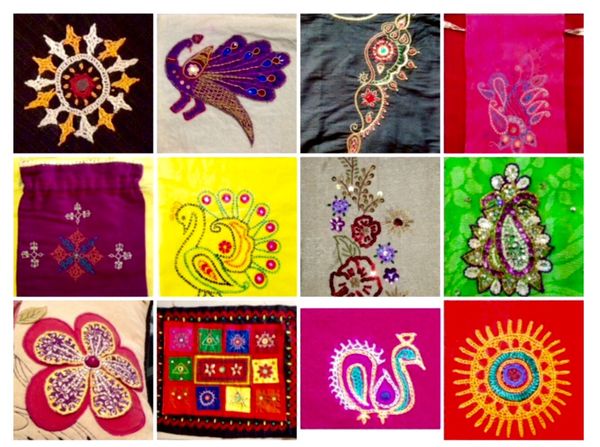
TRADITIONAL SURFACE ORNAMENTATIONEmbroidery is an art of decorating cloth with needlework using different types of thread to create fascinating designs. Embroidery can also be defined as an art of using stitches as an adorning feature by embellishing fabric or other material with designs, stitches in strands of threads on yarn using a needle. Embroidery may also include other materials like pearls, beads, sequins, etc. Embroidery is a craft of enhancing fabric with motifs, abstract design, patterns. Embroidery varies according to its underlying foundation fabric and whether the design is stitched on the top or through the base fabric.
Indian embroidery includes a wide variety of regional embroidery styles varying by different regions and materials used. Embroidery is India’s persistent eloquent tradition. Every state and region in India enjoys its own style. Needlework is not the only means of decorating the fabric but the fabrics are also embellished by stories of the community, with motifs emerging from natural surroundings, religious inscriptions, economic state, etc.
COURSE OBJECTIVES:
· To impart basic skills in hand embroider techniques, surface designing and other ornamentation techniques.
· To introduce the students to various traditional embroidery techniques of India.
· To create awareness on heritage of traditional embroideries of Indian culture.
LIST OF EXERCISES:
1. Hand embroidery – Outline stitches, Filling Stitches, Decorative Stitches.
2. Embroidery of North India – Chamba Rumal of Himachal Pradesh, Kashidha of Kashmir, Phulkari of Punjab.
3. Embroidery of Southern India - Kasuti of Karnataka.
4. Embroidery of Central India - Chikankari of Uttar Pradesh.
5. Embroidery of Eastern India- Kantha of West Bengal, Sujani of Bihar, Pipli appliqué of Orissa.
6. Embroidery of Western India- Kutch of Gujarat, Mirror work of Rajasthan.
7. Embroidery of Tribal India – Toda Embroidery of Tamilnadu .
COURSE OUTCOMES
Handmade items are recaptured as new personification and the manifestation of luxury. Many ancient embroidery styles are being reclaimed and popularized. These embroidery styles are not only gaining its acceptance among the Indian designers but are also very popular with the International labels. Mumbai is a trade hub for many luxury brands chasing Indian embroidery.
On successful completion of the course, the students will able to
CO1: Identification of regional embroideries developed by various communities
CO2: Understand the origin of technique and design with reference to colours, motifs, layouts of different
embroidered textiles.
CO3: Appreciate the finer nuances of embroideries.
CO4: learn about the evolution of embroidered textiles over a period of time
- Teacher: Krithika S
Category: ODD
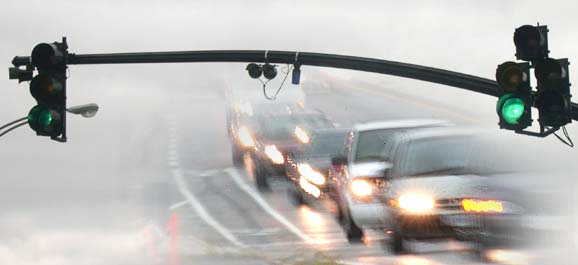
Traffic Characteristics and Forecasting
Traffic Surveys
Traffic Regulatory Measures
Traffic Safety and Environment
Traffic Management
- Teacher: Dr.V.Sampathkumar .
Category: SCHOOL OF BUILDING AND ENVIRONMENT

COURSE OBJECTIVES
To develop a holistic perspective based on self-exploration about themselves (human being), family, society and nature/existence
To understand (or developing clarity) the harmony in the human being, family, society and nature/existence
To strengthen self-reflection
To develop commitment and courage to act
Category: ODD
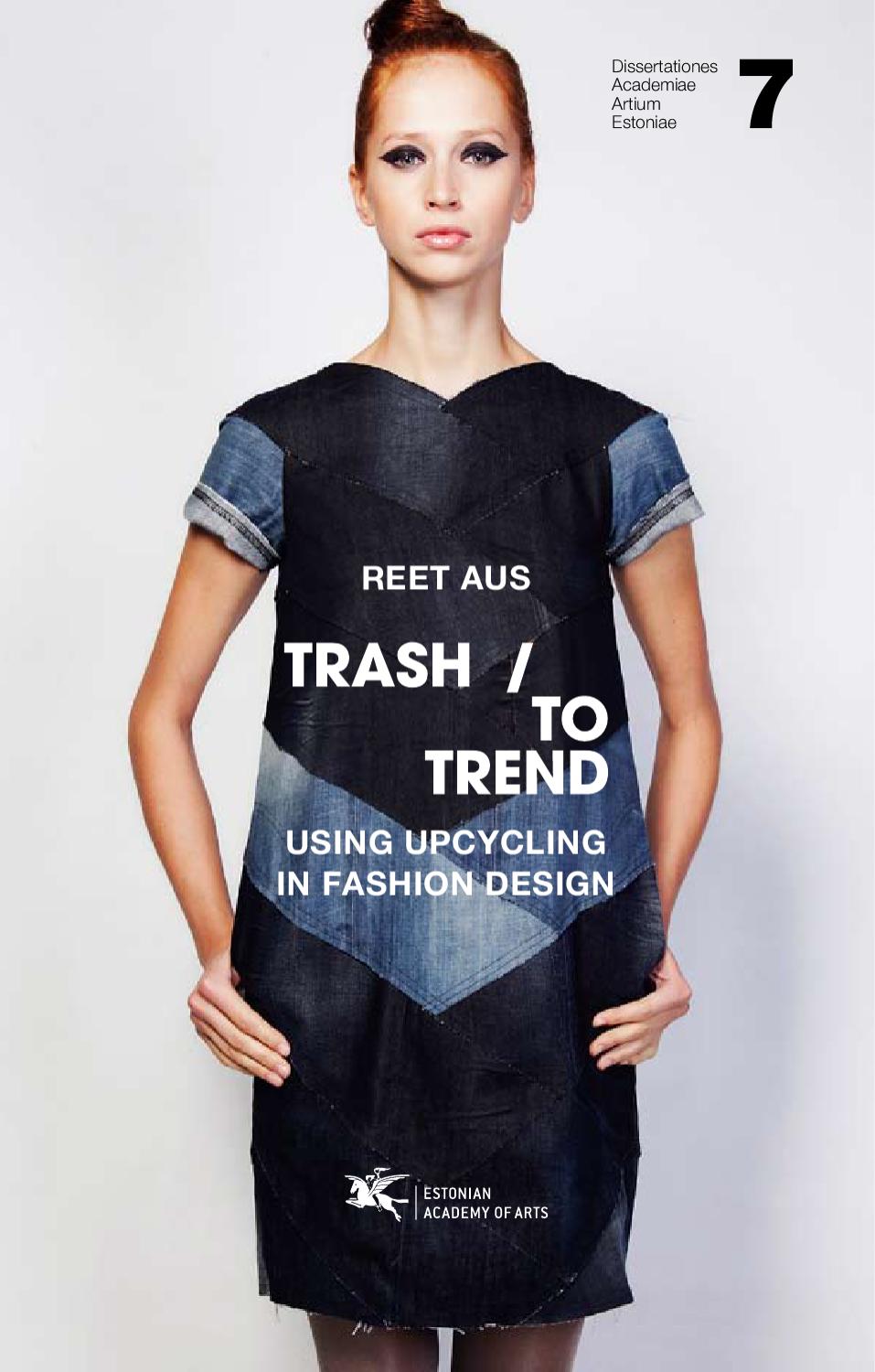
Upcycling stops adding stuff to a world that is already overwhelmed with material things. It also reuses materials that may otherwise end up in the landfill in creative and innovative ways - producing original often one-of-a-kind items from what many consider to be waste.
Category: EVEN
OBJECTIVE: To expose the basic concepts/theories of psychology relevant to architecture and the relationship between man and the environment.
UNIT 1 INTRODUCTION
Different perspectives on Urban Society - The concept of community, function and types. History of Urban Communities, Development, The fall of Urban Society. Introduction to environmental psychology, its importance in the field of architecture, understanding the principles of psychology, the roots and edges of environmental psychology, theories and approaches in environmental psychology.
UNIT 2 URBAN METROPOLITAN SOCIETY
Development of Urban Metropolitan Society, Projections of Urban population, Growth of Urban Areas, Dynamics of Metropolitan population growth, Contemporary Urban location theories, Lifestyle in city and suburbs, Urban Politics. The city, urban morphology, movement as motivating factor in design, monuments and dwelling, genius loci, street and square, urban conservation, responsive environments, pedestrian spaces and plazas, the social life of small urban spaces, new urbanism, landscape urbanism, sustainable urban form.
UNIT 3 COMMUNAL FUNCTIONS - HOUSING, TRANSPORTATION AND HEALTH
Housing Need, Different Housing types, Supply, Demand. The problem of Slums and squatter settlements. The urban transportation system. Health of Urban Population. Water Pollution, Air Pollution, Garbage and solid waste management. Concept of perception, visual perception, theories on environmental perception-environmental perception and design. Concepts of cognition. Environmental cognition and design. Environment and human response in relation to different environmental variables.
UNIT 4 PHYSICAL ENVIRONMENT AND HUMAN BEHAVIOUR
Concept of personal spaces, personal space and human behaviour. Personal space and environmental design.
Concept of territoriality, territoriality and human behaviour & territoriality and environmental design. Residential environment. Concept of Home. Neighbourhood concept & Neighborhood satisfaction. Place attachment theory, Workplace environment
and behaviour. Application of the knowledge in the design of a residence, community neighbourhood and other built
environments.
- Teacher: Yusuf Chiniwala
Category: ODD
- Teacher: Michael Rahul Soosai
Category: ODD SEMESTER
- Teacher: Venkatesan D
- Teacher: Sathish S
Category: ODD SEMESTER
- Teacher: oviya R.P
Category: EVEN SEMESTER
COURSE OBJECTIVE
To develop knowledge in design of vehicle body to give maximum comfort for the passengers
To develop skills in the areas of car body design, bus body design, active and passive safety.
To understand different types of bodies and ergonomics of the vehicle
COURSE OUTCOMES
On completion of the course, student will be able to
CO1 - Discuss the different types of car body design and its safety features.
CO2 - Select a suitable body optimization techniques to minimize drag and able to describe the wind tunnel testing procedure.
CO3 - Classify the various types of bus body construction and able to identify the body layout.
CO4 - Describe the different types of commercial vehicles and its design.
CO5 - Explain the various types of materials and painting techniques used in automobiles.
CO6 - Acquire knowledge about the corrosion coating methods
Category: ODD SEMESTER
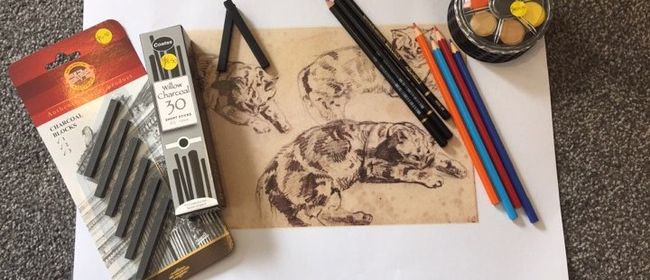
Drawing from Observation is an all levels course focused on developing drawing skills in black and white. This course will help to get familiar with drawing tools and techniques while developing visual literacy by drawing from life.
- Teacher: Krithika S
- Teacher: Savithiri S
Category: ODD