Search results: 1466
COURSE OUTCOMES:
On completion of the course the student will be able to
CO1 Assess the site and surroundings and its relationship with the activity, space for the given architectural program.
CO2 Analyze and evaluate a design of given space by dissecting the case studies and evolve inferences.
CO3 Application of anthropology and spatial data for arriving at requirements of the given space.
CO4 Apply the knowledge on climate responsive building design and implement appropriate design strategies.
CO5 Build a Process for Design evolution and communicate through drawings – plan, elevation and sections and final presentation with renderings.
CO6 Evaluation of the design through creation of miniature models and experimentation of space design and 3D through the explored models.
- Teacher: Selvendiran S.G
Category: ODD
COURSE OBJECTIVES:
⮚ The studio aims at widening the avenues of creativity and allows inquiring more on lateral thinking.
⮚ The emphasis is on understanding the process of design as a proactive and analytical tool towards generating alternatives which forms the foundation for future design
⮚ To introduce students to various ideas and techniques of creative thinking and communication; To provide students
with a foundation in design through the comprehension of elements and principles of composition;

- Teacher: Arulmalar Ramaraj
Category: ODD
With an intention meet the aforementioned objectives, ‘ANEW Residence’ is introduced as the design problem with five stages in the third semester. The thrust area of the Design Studio is on the ‘Materials and Construction Studio I (SARA2202) that has been offered in semester II and the theory courses offered in the current semester ‘Climatology (SARA1303) and ‘Principles of site planning (SARA1304)’. The design problem framed in the current semester will focus on incorporating the knowledge already gained as part of the Materials and Construction Studio I as well as the information that will be comprehended through the courses ‘Climatology’ and ‘Principles of site planning’ in the current semester.

- Teacher: Selvendiran S.G
- Teacher: EVELYN JENY V
Category: ODD
Fashion Design II will focus on generating garment details to enable better
understanding of comfort and function and garment detail as design feature
culminating in Men’s wear garment. It aims to train students to see proportion
and shape in relation to human form while developing basic skills and
knowledge in fashion material and processes and technical areas of garment
manufacturing In Design - design process with a focus on detailing- functional & commercial
aspects of Design. Subject will start with a simple detailing concept and explore
it to the maximum and create workable ideas to generate a range of Men’s wear
garments – presentation through sketches- paper- models- photography- notes
of reference

Category: ODD
Design-II (Men's Wear)
COURSE OBJECTIVES
- To understand the basic principles of research and learn various methods available for collecting and analyzing data.
- To develop the ability to understand design strategies and plan design activities for women’s wear.
- To understand the application of various tools to fashion forecasting in Indian markets
- To comprehend fashion forecasting as a tool to understand consumer behavior in the Indian scenario.
Fashion Design Process for Women’s Wear
- Inspiration Board - Collects different inspirational images, words, and objects (fabric, colour, textures, trims, paint chips, packaging, etc.) in the form of a paper poster, a bulletin board, a digital graphic, or a video.
- Research –- Exploring, Conceptualizing and visualizing information generated by observation and investigation. Record the all research information’s and creates a rich visual archive used to inspire designs from theme to final detail.
- Trend forecast for the desirable season.
- Market Research
- Mood Board - To create the theme for the range or collection with based on the trends of color, trims, fabrics, etc.
- Doodling - Sequential doodling, design concepts are developed through a process in which perceptually and conceptually proceeds by processing information.
- Form and Design development - Develop the concept and appearance of the fashion item Sketches & diagrams are develop Patterns & samples.
- Range development and design selection.
- Fashion illustration
- Flat drawing (Technical Drawing)
- Material exploration
- Photoshoot

- Teacher: gayathri N
Category: EVEN
COURSE OBJECTIVES
This course is meant to give them a broad exposure to the understanding of various concepts of Linux Kernel and Device Driver Programming.
The course will provide the students with
(i) The core concepts of operating systems
(ii) the knowledge of Linux Kernel architecture and device driver framework,
(iii) the methodology to write Programs for chosen embedded devices, and
(iv) the skill to use basic techniques for debugging in Linux device drivers and
(v) basic understanding of Linux based embedded system design.
Experiments will run in synchronism with the lectures to support the methods and techniques taught in the lectures. Through the experiments, the students will
(i) learn how to setup environment for developing and debugging device drivers,
(ii) gain confidence to write/customise Linux device drivers, debug and test them using a target platform.
Learning Outcome of students are
(i) Understanding of complex Linux Kernel framework and extending this knowledge to understand any type of operating system
(ii) Writing device drivers for simple embedded devices
(iii) Basic scripting to building the Linux Kernel and Device Drivers
(iv) Demonstrate end-end data flow from device to application
(v) Demonstrate various debugging techniques when the system crashes due to a malfunctioning Kernel or Device Driver
(vi) Plan and execute simple device driver development projects.

- Teacher: SUGADEV M
Category: ODD SEMESTER
- Teacher: Shanthi Thangam M
Category: EVEN SEMESTER

After the completion of this course, Students will be able...
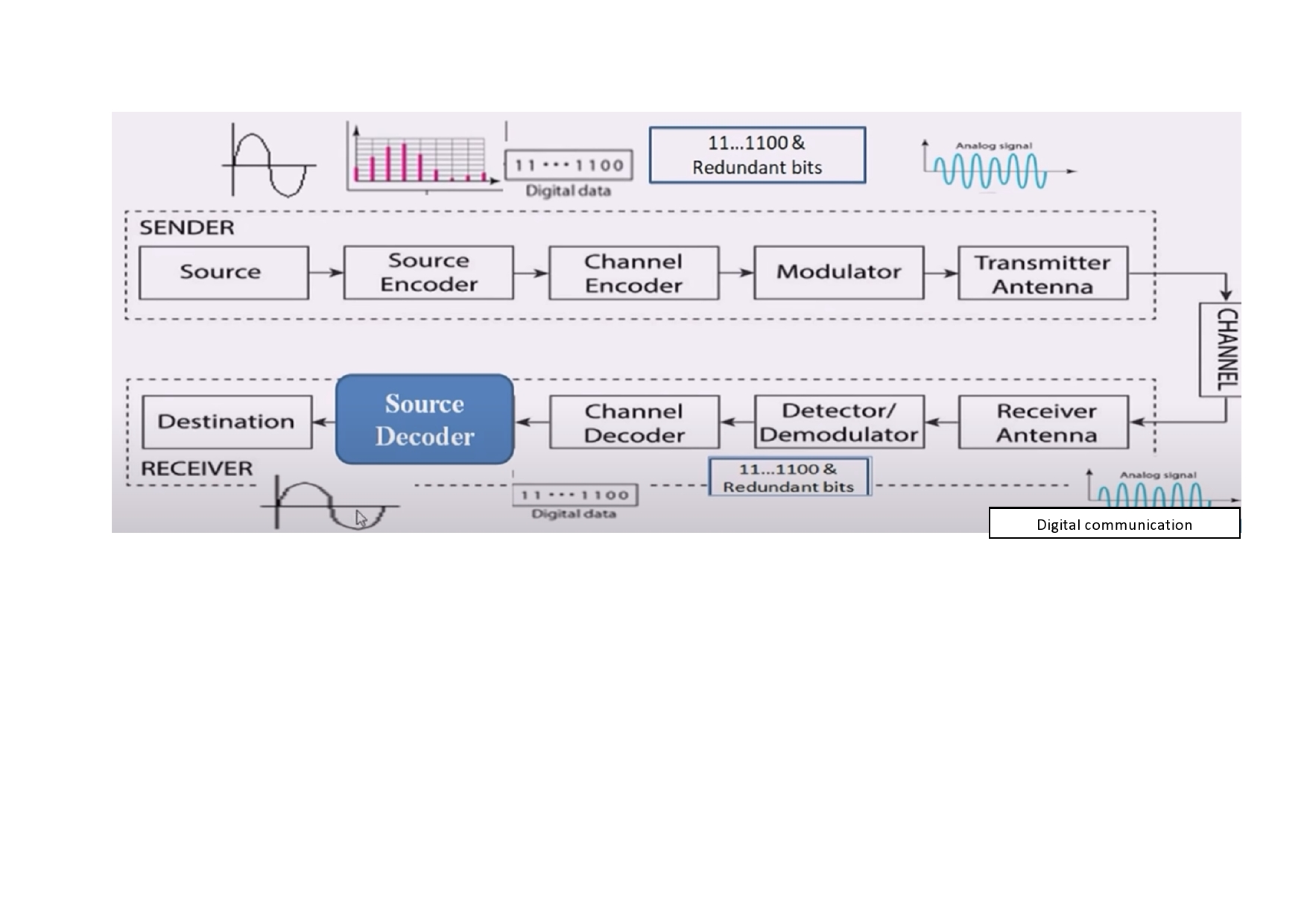
To know the principles of formatting (sampling , quantization and encoding)
To analyze the various Base Band signaling schemes.
To analyze various digital modulation techniques and compare with analog modulation techniques
To under stand the basics of source and channel coding/decoding.
To review the basics of spread spectrum modulation schemes

- Teacher: JEGAN G
Category: EVEN SEMESTER
COURSE OBJECTIVES
To know the principles of sampling & quantization.
To understand the various Base Band signaling schemes.
To introduce the basic concepts of digital modulation of baseband signals.
To get introduced to the basics of source and channel coding/decoding.
To understand the basics of spread spectrum modulation schemes.
COURSE OUTCOMES
On completion of the course, student will be able to
CO1 - Design PCM systems.
CO2 - Apply the knowledge of signals and system and evaluate the performance of digital communication system in the presence of noise.
CO3 - Design and implement band pass signaling schemes and analyze the spectral characteristics of band pass signaling schemes.
CO4 - Design encoder and decoder for the error control codes like block code, cyclic code. CO5 - Analyze the digital communication system with spread spectrum modulation.
CO6 - Examine the theoretical concepts through laboratory experiments, analyze and interpret the results to provide valid
conclusions.
- Teacher: JEGAN G
Category: SCHOOL OF ELECTRONICS

- Teacher: Meenakshi V
Category: ODD SEMESTER
Define
truth table; Construct truth table of the compound statements, list equivalent Propositions, Evaluate problems on implication and Equivalence laws, Distinguish PCNF and PDNF, Solve
problems on Inference theory for Propositional Calculus and Predicate Calculus. Identify semigroup and Monoid, Analyze properties of semigroups and monoids. Understand Equivalence Relation and partially ordered relation, List basic properties of Lattices and Boolean algebra. Analyze Lattices as Algebraic
system. Develop
supremum and infimum in Boolean function.
- Teacher: Srividhya S
Category: ODD
The Main Objective of this Course is to improve the Analytical, logical thinking of the Students which in turn improves their ability of giving conclusions based on quantitative information , model the engineering problems and obtain its solutions mathematically. On completion of this course, students will be able to understand science, engineering and computer science problems analytically and logically
This topic deals with Logic-Set theory-Graph theory -Group theory- Numerical methods to solve the equations and Numerical interpolation ,differentiation and integration.

- Teacher: PRIYA SHIRLEY MULLER
Category: School of Science and Humanities
Drug Store and Business Management is a study maintenance of Drug store as per norms, Sales Promotions, Recruitment and Training of Pharmacist and accountancy(Trial Balance and Balance sheet).

- Teacher: ARUN SUNDAR M
- Teacher: Shanmugapandiyan P
Category: SCHOOL OF PHARMACY
- Teacher: CHITRA P
Category: EVEN SEMESTER
COURSE OBJECTIVES
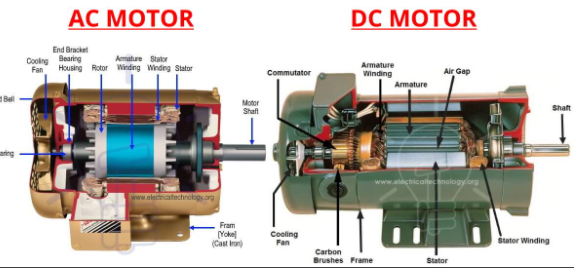
ÿ To Give a Introduction to Electrical machines.
ÿ To explain how electrical power is converted in to mechanical Power.
ÿ To explain how Mechanical power is converted in to Electrical Power.
ÿ To explain the importance of load test on the electrical machines.

- Teacher: Bharathi M L
Category: ODD SEMESTER
- Teacher: Bhuvaneswari C
- Teacher: Barnabas Paul Glady J
- Teacher: Kavitha M
- Teacher: Jaya Prakash S
- Teacher: Sundar Singh Jebaseelan S D
- Teacher: Meenakshi V
Category: EVEN SEMESTER