
Search results: 1466
COURSE OBJECTIVES
To construct the amplifier circuits.
To design the oscillator circuits.
To design the feedback amplifier circuits.
To design the importance of digital circuits. ÿ To design the importance of PSPICE.
Category: ODD SEMESTER
- Teacher: SUGADEV M
Category: EVEN SEMESTER
- Teacher: Dr.R Narmadha
Category: SCHOOL OF ELECTRONICS
- Teacher: Ravichandran S
Category: EVEN SEMESTER
COURSE OBJECTIVE:
To understand the concepts of combinational and sequential circuits and to design combinational logic circuits using digital IC’s.Course Outcomes:
By the end of this course students will be able to
CO1: Design the amplifier circuit for given specification and analyze them discuss oscillator principles, oscillator types and frequency stability as it relates to its operation.
CO2: Analyze and Design the different types of Oscillators. Discuss ideal and practical operational amplifier (op amp)their electrical parameters, need for op amp.
CO3: Explain and design different application circuits using op amp.
CO4: Construct the basic block of communication system. State the principles of modulation and explain the different modulation techniques.
CO5: Describe the theory and operation of radio systems and super-heterodyne receivers. Solve simple examples.
To understand the concepts of combinational and sequential circuits and to design combinational logic circuits using digital IC’s.Course Outcomes:
By the end of this course students will be able to
CO1: Design the amplifier circuit for given specification and analyze them discuss oscillator principles, oscillator types and frequency stability as it relates to its operation.
CO2: Analyze and Design the different types of Oscillators. Discuss ideal and practical operational amplifier (op amp)their electrical parameters, need for op amp.
CO3: Explain and design different application circuits using op amp.
CO4: Construct the basic block of communication system. State the principles of modulation and explain the different modulation techniques.
CO5: Describe the theory and operation of radio systems and super-heterodyne receivers. Solve simple examples.
- Teacher: Vijayakumar V
Category: ODD SEMESTER
ELEMENTS OF TEXTILES
Course Code -SFD1103
ObjectiveElements of Textiles is to understand the important characteristic of different fabrics used Commercially. Students will learn to identify various fabrics textile by their look, appearance and feel. The knowledge gained through this subject will enable to select the right fabric for a particular end-use. They will be introduced to Basic surface ornamentation like Embroidery .
UNIT I
Introduction to Fibers - Classification of Textile fibers - Natural and Manmade fibers. Primary and secondary characteristics
of textile fibers. Swatch file collection with different types of fibers - Cotton, Linen, Wool, Synthetic.
UNIT II
Manufacturing process, properties and uses of natural fibers and Manmade fibers. Natural Fibers – cotton, linen, jute, silk,
wool, and hair fibers. Manmade fibers – Rayon and its types, nylon, polyester and acrylic.
UNIT III
Spinning - Introduction, Spinning methods - Chemical Spinning and Mechanical Spinning. Chemical spinning – Wet, Melt &
Dry spinning of filament yarns. Mechanical Spinning – cotton system - sequence of process, objectives of blow room,
carding, drawing, combing, roving and ring spinning.
UNIT IV
Yarn – definition. Properties of Yarn - Yarn numbering systems – Direct and indirect system of yarn count. Yarn twist.
Classification of yarns – Simple yarn, Single yarn, Ply yarn, Novelty Yarns.
UNIT V
Basic fabric formation methods – Woven, Knitted and Nonwoven fabrics. Manmade Weaving process - Basic weaves used
in commercial fabric - End use of fabrics - different type of weaves. Introduction to knitting, Types of Knitting, Applications of
knitwear. Fabric Sourcing and market awareness - Fabric Analysis - Swatch file collection with various types of weaves and
fabrics.
COURSE OUTCOMES:
On successful completion of the course, the students will be able to:
CO1: Classify the various sources of fibers and
CO2: Elaborate the manufacturing process of fibers
CO3: Understand the process of spinning sequences.
CO4: Classify yarns and analyze its attributes.
CO5: Understand the different types of fabric formation methods
TEXT / REFERENCE BOOKS
1. Textiles, Sara J. Kadolph, Pearson publication, 2009.
2. Fabric Science -5th edition, Joseph J Pizzuto, Fairchild Publications, Newyork ,1980.
3. Handbook of Nonwovens- Edited by R J Russell, Woodhead Publishing Ltd, England, 2007.
4. Knitting Technology- B.Ajgoankar, Universal Publishing Corporation, Mumbai, 1998.
5. Fibre to Fabric, Bernard P Corbman, (6th edition), Tata McGraw - Hill Education, 2003

Category: ODD
This course would help to understand the underlying principles of embedded operating systems and
develop device drivers for various I/O modules.

- Teacher: SUGADEV M
Category: EVEN SEMESTER
- In this course, students learn about hardware and software aspects of embedded systems.
- The course focus on 8-bit and 32 bit microcontrollers, introducing advanced topics including communication interfaces, advanced IO devices and other peripherals.
- The course will provide a hands-on experience in designing and programming an embedded system using a microcontroller-based development platform.

Category: ODD SEMESTER
COURSE OBJECTIVES ÿ
To understand the programming of ARM processor.
ÿ To teach to interface ARM processor with other peripherals and system design using ARM processor.
ÿ To apply the programming concepts related to TMS320C24X processor.
ÿ To teach interfacing of DSP processor with other peripherals.
ÿ To design DSP controller for speed control of DC motor.
EMBEDDED LAB USING ARM CONTROLLER
1. Arithmetic operations manipulation and logical operations
2. Interfacing of Switch
3. Interfacing of LED
4. Interfacing of LCD
5. Interfacing of DC Motor.
DSP LAB EXPERIMENTS USING 2407 & ASSOCIATED PERIPHERALS
1. Perform 16 bit Addition, subtraction & multiplication.
2. Study on PWM generation using Timer 1,2,3.
3. Study of two PWM generation using full compare unit.
4. Study of six pulse PWM generation using full compare unit with dead band timer.
5. Perform Analog to Digital conversion for an Analog input.
6. Perform variable speed of DC Motor using TMS 320C2407
- Teacher: Ravi Kumar D N S
Category: SCHOOL OF ELECTRONICS
COURSE OBJECTIVES
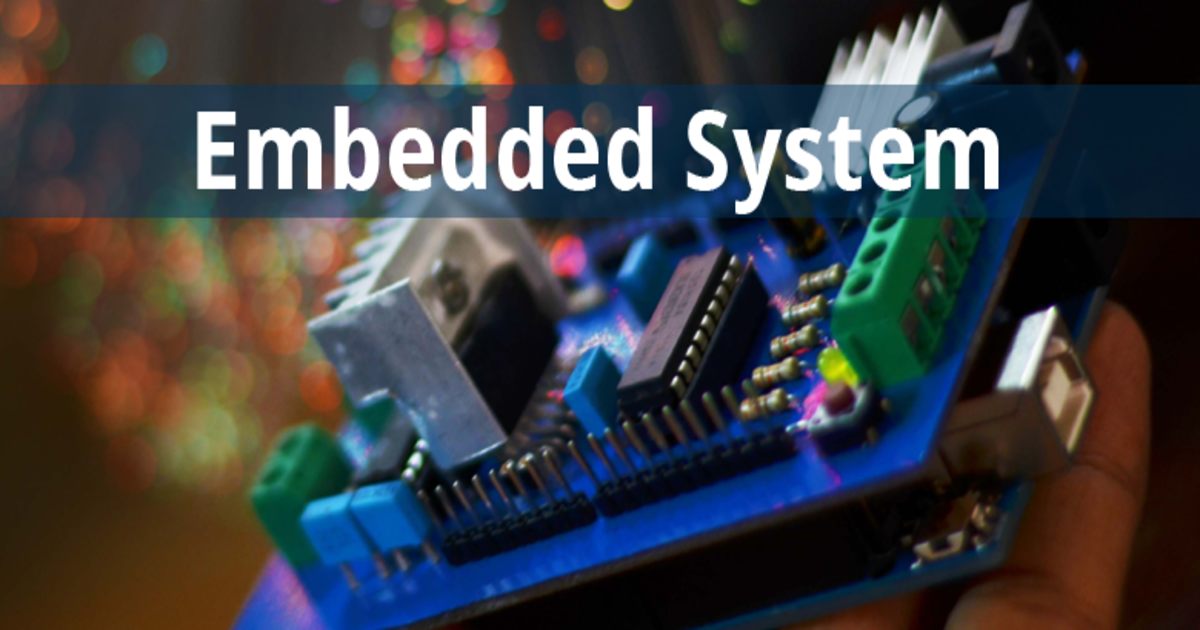
- To study the basics of Embedded System.
- To explain the various development tools in embedded System.
- To get a knowledge in embedded programming and acquire a knowledge in embedded system application
- Teacher: karthikeyan S
- Teacher: Balamurugan Velan
Category: EVEN SEMESTER
- Teacher: Dr. Bethanney Janney J
- Teacher: Dr. P Grace Kanmani Prince
- Teacher: Pandian R
Category: EVEN SEMESTER
COURSE OUTCOMES: At the end of the course,
the students will be able to
· Get knowledge on Technology and Digital Literacy
· Apply online tools and strategies and enjoy working in an online environment
· Write, create and complete the assignments online
· Create accounts in various social networks and to handle the common platform carefully.
· Create PPT, Blogs, HTML pages and upload in the website.

Category: ODD
- Teacher: Vigneshwari S
Category: SCHOOL OF COMPUTING
- Teacher: Yazhini Kuppusamy
Category: EVEN SEMESTER

|
SPYA1202 |
Professional Elective II Environmental Psychology |
L |
T |
P |
Credits |
Total Marks |
|
3 |
1 |
0 |
4 |
100 |
UNIT I(15 hours)
Environmental Psychology: History – Scope - Research Methods: Questionnaire studies - Laboratory experiments - Computer simulation studies - Field studies -Case studies- Overconsumption: Our Ecological Footprint – Energy – Water – Food -Material Goods.
UNIT II(15 hours)
Climate Change as a Unique Environmental Problem: Public Understanding of Climate Change - Assessing the Risk of Climate Change - Environmental Stress: Conceptualizations of Stress - Effects of Environmental Stress
UNIT III (15 hours)
Measuring Environmental Behaviour Values and Pro - Environmental Behaviour -Theory of Planned Behaviour - Protection Motivation Theory - The Norm Activation Model - The Value‐Belief‐Norm Theory of Environmentalism - Goal‐Framing Theory
UNIT IV (15 hours)
Social Norms and Pro - Environmental Behaviour, Emotions and Pro - Environmental Behaviour, Symbolic Aspects of Environmental Behaviour-Restorative Environments Research: Stress Recovery Theory - Attention Restoration Theory
UNIT V (15 hours)
Informational Strategies to Promote Pro- Environmental Behaviour: Changing Knowledge, Awareness, and Attitudes - Encouraging Pro Environmental Behaviour with Rewards and Penalties - Persuasive Technology to Promote Pro - Environmental Behaviour
- Teacher: SATHISH KUMAR S
Category: EVEN SEMESTER
This course introduces you to the study of human-environment interactions from a geographic perspective, with a special emphasis on agriculture. ... These themes include: human population growth, consumption, biodiversity, climate change, and environmental health.

- Teacher: Priyadarshini R
- Teacher: Krithika S
Category: EVEN