
Search results: 406
COURSE OBJECTIVE
Developing of general understanding how physical laws govern biological processes.
Acquire basic knowledge about how physical methods can be applied to understand biological processesCOURSE
OUTCOMES On completion
of the course, student will be able to CO 1: Understand the fundamental principles and
thermodynamics that drive biomolecules. CO:2: Emphasize profound knowledge on cell
structure, function and dynamics of inter-intra cellular processes. CO 3:
Explore various basic and advanced sophisticated biochemical and biophysical
techniques for analyzing macromolecules CO 4: Comprehend clear understanding on various
cellular metabolic pathway mechanism and its applications in biological system. CO 5. The application of mathematical tools to
calculate thermodynamic. CO 6: The students familiar about the inorganic
halogen compounds, coordination compounds and transition elements.
- Teacher: Ramesh kumar V
Category: ODD SEMESTER
COURSE OBJECTIVE
Ø To know the fundamentals of innate and acquired immunity. To understand how the immune system fights and combats infection and diseases. To get an insight into the principle mechanism of immunity.
COURSE OUTCOMES
On completion of the course, the student will be able to
CO1 – develop knowledge on how human immune cells combat an infection
CO2 – evaluate the role of different immune cells
CO3 – analyze how human immune cells combat an infection.
CO4 – apply the methods to detect an immune reaction.
CO5 – have a strong understanding of the mechanism behind allergy and hypersensitivity
CO6 – outline the concepts of immunity and its significance in fighting a disease
- Teacher: RoselinJenifer D
Category: EVEN SEMESTER
Dental Anatomy, Oral Histology, Oral Physiology and Embryology
DENTAL ANATOMY, EMBRYOLOGY, ORAL HISTOLOGY
Dental Anatomy including Embryology and Oral Histology - a composite of basic Dental Sciences & their clinical applications
SKILLS
The student should acquire basic skills in :
1. Carving of crowns of permanent teeth in wax.
2. Microscopic study of Oral tissues.
3. Identification of Deciduous & Permanent teeth.
4. Age estimation by patterns of teeth eruption from plaster casts of different age groups.
OBJECTIVES
After a course on Dental Anatomy including Embryology and Oral Histology,
1. The student is expected to appreciate the normal development, morphology, structure & functions of oral tissues & variations in different pathological/non-pathological states.
2. The student should understand the histological basis of various dental treatment procedures and physiologic ageing process in the dental tissues.
3. The students must know the basic knowledge of various research methodologies.
I. TOOTH MORPHOLOGY (31hrs)
1. Introduction to tooth morphology: (5hrs)
♦ Human dentition, types of teeth, & functions, Palmer's & Binomial notation systems, tooth surfaces, their junctions - line angles & point angles, definition of terms used in dental morphology, geometric concepts in tooth morphology, contact areas & embrasures - Clinical significance.
2. Morphology of permanent teeth : (17hrs)
• Description of individual teeth, along with their endodontic anatomy & including a note on their chronology of development, differences between similar class of teeth & identification of individual teeth.
• Variations & Anomalies commonly seen in individual teeth.
3. Morphology of Deciduous teeth : (8hrs)
♦ Generalized differences between Deciduous & Permanent teeth.
♦ Description of individual deciduous teeth, including their chronology of development, endodontic anatomy, differences between similar class of teeth & identification of individual teeth.
4. Occlusion : (2hrs)
♦ Definition, factors influencing occlusion - basal bone, arch, individual teeth, external & internal forces & sequence of eruption.
♦ Inclination of individual teeth - compensatory curves.
♦ Centric relation & Centric occlusion - protrusive, retrusive & lateral occlusion.
♦ Clinical significance of normal occlusion.
♦ Introduction to & Classification of Malocclusion.
II. ORAL EMBRYOLOGY (12hrs)
1. Brief review of development of face, jaws, lip, palate & tongue, with applied aspects. (4hrs)
2. Development of teeth : (4hrs)
♦ Epithelial mesenchymal interaction, detailed study of different stages of development of crown, root & supporting tissues of tooth & detailed study of formation of calcified tissues.
♦ Applied aspects of disorders in development of teeth.
3. Eruption of deciduous & Permanent teeth : (2hrs)
♦ Mechanisms in tooth eruption, different theories & histology of eruption, formation of dentogingival junction, role of gubernacular cord in eruption of permanent teeth.
♦ Clinical or Applied aspects of disorders of eruption.
4. Shedding of teeth : (2hrs)
♦ Factors & mechanisms of shedding of deciduous teeth.
♦ Complications of shedding.
III. ORAL HISTOLOGY (48hrs)
1. Detailed microscopic study of Enamel, Dentine, Cementum & Pulp tissue. Age changes & Applied aspects (Clinical and forensic significance) of histological considerations - Fluoride applications, transparent dentine, dentine hypersensitivity, reaction of pulp tissue to varying insults to exposed dentine ; Pulp calcifications & Hypercementosis. (16hrs)
2. Detailed microscopic study of Periodontal ligament & alveolar bone, age changes, histological changes in periodontal ligament & bone in normal & orthodontic tooth movement, applied aspects of alveolar bone resorption. (9hrs)
3. Detailed microscopic study of Oral Mucosa, variation in structure in relation to functional requirements, mechanisms of keratinization, clinical parts of gingiva, Dentogingival & Mucocutaneous junctions & lingual papillae. Age changes & clinical considerations. (8hrs)
4. Salivary Glands : (4hrs)
♦ Detailed microscopic study of acini & ductal system.
♦ Age changes& clinical considerations.
5. TM Joint : (3hrs)
♦ Review of basic anatomical aspects & microscopiuc study & clinical considerations.
6. Maxillary Sinus : (3hrs)
♦ Microscopic study, anatomical variations, functions & clinical relevance of maxillary sinus in dental practice.
7. Processing of Hard & soft tissues for microscopic study : (2hrs)
♦ Ground sections, decalcified sections & routine staining procedures.
8. Basic histochemical staining patterns of oral tissues. (3hrs)
IV. ORAL PHYSIOLOGY (14hrs)
1. Saliva : (2hrs)
♦ Composition of saliva - variations, formation of saliva & mechanisms of secretion, salivary reflexes, brief review of secretomotor pathway, functions, role of saliva in dental caries & applied aspects of hyper & hypo salivation.
2. Mastication : (2hrs)
♦ Masticatory force & its measurement - need for mastication, peculiarities of masticatory muscles, masticatory cycle, masticatory reflexes & neural control of mastication.
3. Deglutition : (2hrs)
♦ Review of the steps in deglutition, swallowing in infants, neural control of deglutition & dysphagia.
4. Calcium, Phosphorous & fluoride metabolism : (2hrs)
♦ Source, requirements, absorption, distribution, functions & excretion, clinical considerations, hypo & hypercalcemia & hyper & hypo phosphatemia & fluorosis.
5. Theories of Mineralization : (1hr)
♦ Definition, mechanisms, theories & their drawbacks.
♦ Applied aspects of physiology of mineralization, pathological considerations - calculus formation.
6. Physiology of Taste : (1hr)
♦ Innervation of taste buds & taste pathway, physiologic basis of taste sensation, age changes & applied aspects - taste disorders.
7. Physiology of Speech : ( 2hr)
♦ Review of basic anatomy of larynx & vocal cords.
♦ Voice production, resonators, production of vowels & different consonants - Role of palate, teeth & tongue.
♦ Effects of dental prosthesis & appliances on speech & basic speech disorders.
PRACTICALS (250HRS)
1. Carving of crowns of permanent teeth in wax. (140hrs)
2. Microscopic study of Oral tissues. (80hrs)
3. Identification of Deciduous & Permanent teeth. (20hrs)
4. Age estimation by patterns of teeth eruption from plaster casts of different age groups. (10hrs)
RECOMMENDED TEXT BOOKS
1. Orban's Oral Histology & Embryology - S.N.Bhaskar
2. Oral Development & Histology - James & Avery
3. Wheeler's Dental Anatomy, Physiology & Occlusion - Major.M.Ash
4. Dental Anatomy - its relevance to dentistry - Woelfel & Scheid
5. Applied Physiology of the mouth - Lavelle
6. Physiology & Biochemistry of the mouth - Jenkins
- Teacher: Murali Balasubramaniam Arunachalakannan
- Teacher: ANUSHA M.N
- Teacher: Saranya Ramsridhar
- Teacher: Indu Bharkavi S K
- Teacher: Rajkumari Sriraman
Category: SCHOOL OF DENTAL SCIENCES
General and Dental Pharmacology and Therapeutics
Practicals in Dispensing Pharmacy are being taught to BDS students during their II year
Subject deals
- Study of various drugs that acts on the different systems of the body
- Mechanism of action of drugs
- Therapeutic uses
- Adverse effects
Practical on dispensing pharmacy makes students familiar to the preparation of mouthwashes, tooth paste, powders, solutions and paints useful in the field of dentistry.
- Teacher: Revathy Rajendran
- Teacher: Priya Sathish
Category: SCHOOL OF DENTAL SCIENCES
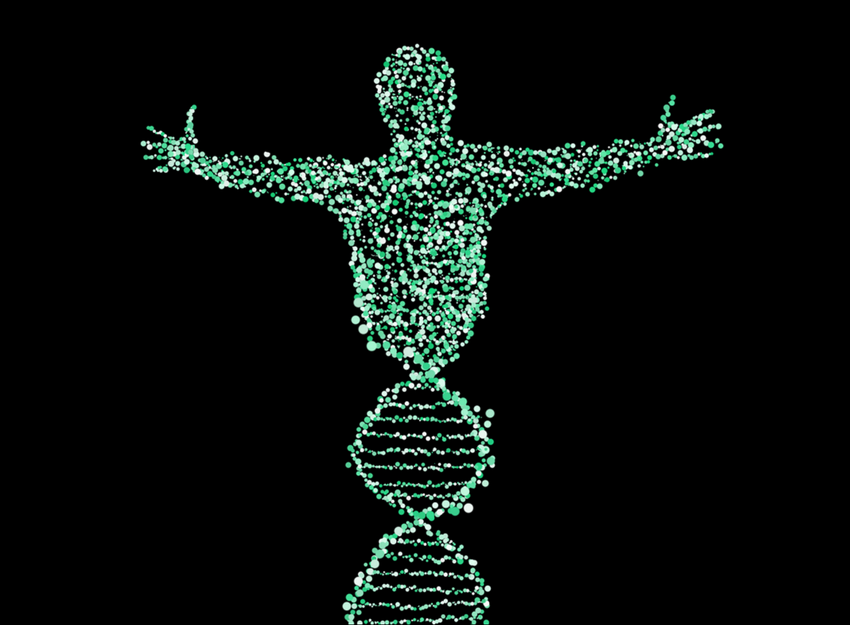
The branches of science known informally as omics are various disciplines in biology whose names end in the suffix -omics, such as genomics, proteomics, metabolomics, metagenomics and transcriptomics. Omics aims at the collective characterization and quantification of pools of biological molecules that translate into the structure, function, and dynamics of an organism or organisms.
- Teacher: Alex Anand D
Category: EVEN SEMESTER
To enable the student to understand the modelling methods, such as supervised classification and clustering along with the application of probabilistic graphical models for knowledge discovery, as well as deterministic and stochastic heuristics for optimization.
- Teacher: Alex Anand D
Category: SCHOOL OF BIO AND CHEMICAL
To enable the student to understand the modelling methods, such as supervised classification and clustering along with the application of probabilistic graphical models for knowledge discovery, as well as deterministic and stochastic heuristics for optimization.
- Teacher: Dr. Mahalakshmi R
Category: SCHOOL OF COMPUTING
Course Objectives
· The course is designed to provide a brief and basic knowledge to understand musculoskeletal, neuromuscular, sensory disorders, prosthetics and orthotics and their applications
· The main aim is to provide the basic concept so that students can implement their knowledge for higher studies in developing innovative and effective rehabilitation and assistive technologies
Course Outcomes
On completion of the course, students are able to
CO1: Apply the various principles involved in rehabilitation.
CO2: Support rehab engineers in designing orthotic and prosthetic devices.
CO3: Compare the types of wheelchairs and assist disabled persons
CO4: Discover new augmentation and substitution devices for visual and hearing impaired.
CO5: Assess the merits of support aids designed for the disabled.
CO6: Develop and design rehabilitation devices cost effectively and purposefully.
- Teacher: Sindu Divakaran
- Teacher: Dr. Bethanney Janney J
Category: ODD SEMESTER
To understand the engineering of genetic material and thereby utilize DNA effectively.
CONTENTS
1. Isolation of genomic DNA from leaf samples - CTAB Precipitation method
2. Estimation of DNA / RNA by UV spectrophotometry
3. Restriction digestion of DNA
4. Construction of restriction map - plasmids
5. DNA ligation
6. Polymerase Chain Reaction - Amplification of DNA of interest/ RAPD
7. Purification of PCR products
8. Southern blotting / Western blotting / northern blotting
9. Cloning of PCR products (competent cell preparation, CaCl2 transformation, blue - white screening of transformants)
- Teacher: Krishnakumar S
Category: ODD SEMESTER
SBSA3009- NETWORK SECURITY
This network security course covers advanced topics such as Public Key Encryption (with a focus on the RSA algorithm), authentication methods such as message encryption and MACs, intrusion detection techniques such as statistical anomaly and rule-based detection, password management strategies, and virus, worm, and other malware protection. Furthermore, it delves into firewall design ideas, characteristics, and configurations for optimal network security.

- Teacher: Ancy A
- Teacher: Saranya P
- Teacher: Rajeshwary S
Category: ODD SEMESTER
SBSA3009- NETWORK SECURITY
This network security course covers advanced topics such as Public Key Encryption (with a focus on the RSA algorithm), authentication methods such as message encryption and MACs, intrusion detection techniques such as statistical anomaly and rule-based detection, password management strategies, and virus, worm, and other malware protection. Furthermore, it delves into firewall design ideas, characteristics, and configurations for optimal network security.

- Teacher: Saranya P
Category: School of Science and Humanities
COURSE OUTCOMES
1. To understand about the basic classification and biological significance of carbohydrates.
2. To have insight on structure, classification and properties of aminoacids and to study their impact on organizing the structure of proteins.
3. To recite the categorization, structure and various functions of lipids and nucleic acids.
4. To understand the functional mechanism of interaction between enzyme and substrate.
5. To know the mechanism of enzyme kinetics.
6. To know the vital role of vitamins and minerals
- Dr.L.INBATHAMIZH: Inbathamizh L
Category: ODD
COURSE OBJECTIVES
To understand biosafety and the importance of bioethics.
To be able to distinguish the different IPR and biotechnological patent
UNIT 1 INTRODUCTION TO BIOSAFETY 9 Hrs.
Biosafety – definition, need, importance, applications, levels of biosafety and criteria for biosafety levels. NIH guidelines for
biosafety. Regulations specific to biotechnology companies and research institutions. Biosafety guidelines in India. Role of
institutional biosafety committee.
UNIT 2 IMPLICATIONS OF BIOSAFETY 9 Hrs. Guidelines for research with transgenic organisms. Environmental impact of genetically modified organisms (beneficial and hazardous impact), Field trials with GMO, Containment levels. Biosafety protocol, Cartagena Biosafety protocol, Mechanism of implementation of biosafety guidelines. Biosafety and politics. Biosafety database.
UNIT 3 INTRODUCTION TO BIOETHICS 9 Hrs.
Bioethics – need, applications. Impact of bioethics to the environment and society. Bioethical issues pertaining to various
aspects of Biotechnology. Bioengineering ethics, responsible researchers, research ethics, ethical decision making.
Biowarfare and biopiracy.
UNIT 4 INTELLECTUAL PROPERTY RIGHTS 9 Hrs. Forms of Intellectual property – patent, copyright, trademark, design, trade secret, domain name and geographical indications. WTO treaties, GATT articles, main features of TRIPS agreement, practical aspects of WIPO. IPR related legislatures in India.
UNIT 5 PATENT 9 Hrs. History of Indian patent system and law. Patenting authority. Different types of patent. Requirements and procedure for patenting. Patentable and Non-patentable things. Patent search and patent co-operation treaty (PCT). Farmer’s right and plant breeders right. Importance, social consequences and controversies on biotechnology patents. Max.45 Hrs.
COURSE OUTCOMES
On completion of course, student will able to
CO1 - Define biosafety, bioethics and intellectual property rights.
CO2 - Discuss the different regulations pertaining to biosafety.
CO3 - Categorize the various forms of IPR.
CO4 - Appraise the importance of bioethics in biotechnology.
CO5 - Elaborate the different patents and the process of patenting.
CO6 - Interpret biotechnological novelty as patents.
TEXT / REFERENCE BOOKS
1. Sateesh M.K., Bioethics and Biosafety, I.K. International Publishing House Pvt. Ltd., 2013.
2. Fleming D.O. and Hunt D.L., Biological Safety: Principles and Practices, ASM Press, 2006. 3. Goel D. and Parashar S., IPR Biosafety and Bioethics, Pearson Education India, 2013.
4. Pandey N. and Dharni K., Intellectual Property Rights, PHI Learning, 2014.
5. Singh K.K., Biotechnology and Intellectual Property Rights: Legal and Social Implications, Springer India, 2014.
6. Young T.R., Policy I. and Group G.C., Genetically Modified Organisms and Biosafety: A Background Paper for Decision-makers and Others to Assist in Consideration of GMO Issues. IUCN, 2004.
END SEMESTER EXAMINATION QUESTION PAPER PATTERN
Max. Marks: 100 Exam Duration: 3 Hrs.
Part A: 10 Questions of 2 marks each - No choice 20 Marks
Part B: 2 Questions from each unit of internal choice, each carrying 16 marks 80 Mar
|
DAY |
9-10 |
10-11 |
11.15-12.15 |
LUNCH BREAK |
1.15-2.15 |
2.15-3.15 |
|
Monday |
|
|
BBIPR |
|
|
|
|
Tuesday |
|
|
|
|
|
|
|
Wednesday |
BBIPR |
|
|
|
|
|
|
Thursday |
|
|
|
|
|
|
|
Friday |
|
|
BBIPR |
|
|
|
|
Saturday |
BBIPR |
|
|
|
BBIPR |
|
- Teacher: BALASANKAR KARAVADI
- Teacher: oviya R.P
Category: EVEN SEMESTER
COURSE OBJECTIVES
To apply bioinformatics tools in designing novel drugs
COURSE OUTCOMES
On completion of course, student will able to
CO1 - Provide an overview of the basic concepts of molecular modelling and analyse on the different types of input provided to generate 3D models along with the stability of a model based on the energy of the system
CO2 - Enumerate on the various force fields responsible for the energy of a system and assess the significance of energy minimisation for the stability of a system
CO3 - List out the different aspects of drugs like soft drugs and pro drugs and comprehend the various parameters involved in the solubility of the drugs
CO4 - Summarise the steps involved in the development of drugs and ponder on the important aspects of pharmacophore analysis and lead molecule identification in the process of drug design
CO5 - Describe the docking mechanism and analyse its importance in the development of drugs and thereby understand the nuances involved in the development of drugs
CO6 - Look into the various databases of molecules and analyse them by giving the appropriate input system like
SMILES notation and analyse the three dimensional structures of molecules
- Teacher: Inbathamizh L
Category: EVEN SEMESTER
COURSE OBJECTIVES
The course provided a deep insight on to the various techniques involved in manipulation of DNA for its
exhaustive use in the field of gene characterization, modification, cloning and transgenesis.
COURSE OUTCOMES
On completion of the course, student will be able to CO1 - Review the methods for analyses of gene expression at different levels CO2 - Evaluate the pros and cons of the different gene mapping techniques CO3 - Describe the methods for silencing the gene expression CO4 - Summarize the application of genetic engineering techniques in the field of medicine and transgenesis CO5 - Comment on the controversies on the use of GMO in Bioremediation, medicine, agriculture etc. CO6 - Examine and evaluate the biosafety regulations and legal issues on the use of GMO
Category: EVEN SEMESTER
COURSE OBJECTIVE
- Exposing to the techniques and capabilities in MATLAB will enhance your ability to use computing tools and
languages to solve engineering problems

- Teacher: Rajalakshmi G
- Teacher: Krishnamoorthy N R
Category: ODD SEMESTER
This subject gives an introduction about Chemical Engineering
- Teacher: Prabu Deivasigamani
Category: ODD SEMESTER
Objective: The course will · Promote the application of membrane science
and technology to improve processing technologies, reduce energy
utilization and waste treatment techniques. This course will offer scope
of research and development that can lead to next generation of products.
- Teacher: Venkatesan D
- Teacher: Prabu Deivasigamani
- Teacher: Karthikeyan M
- Teacher: Dr. Y. Sasikumar
Category: EVEN SEMESTER
The main focus of the course is on Bio-Chemical and environmental science. Students in this course will analyze various energy forms, including forces, thermodynamics, fluid dynamics, kinetic energy, energy efficiency and renewable energy.

- Teacher: Karthikeyan M
Category: ODD SEMESTER
Materials science is an interdisciplinary field involving the properties of matter and its applications to various areas of science and engineering. It includes elements of applied physics and chemistry, as well as chemical, mechanical, civil and electrical engineering.
- Teacher: Prabu Deivasigamani
- Teacher: Michael Rahul Soosai
Category: ODD SEMESTER