
Search results: 1466
- Teacher: Dr. Gayathri P
Category: Year 3

Goal
To diagnose, prevent and treat carious and non-carious tooth defects, pulpal and periapical pathologies, while restoring normal tooth form, function and esthetics, where indicated.
Objectives
Knowledge
§ The graduate should acquire the following knowledge during the period of training.
§ To diagnose carious and non-carious lesions and treat with simple restorative work.
§ To gain knowledge about aesthetic restorative material and to translate the same to patient’s needs.
§ To gain the knowledge about endodontic treatment on the basis of scientific foundation.
§ To carry out simple endodontic treatment.
§ To diagnose and manage traumatic injuries and to provide emergency endodontic treatment.
Skills
The student should attain following skills necessary for practice of dentistry
§ To use medium and high speed hand pieces to carry out restorative work.
§ Possess the skills to use and familiarize endodontic instruments and materials needed for carrying out simple endodontic treatment.
§ To achieve the skills to translate patients esthetic needs along with function.
Attitudes
§ Maintain a high standard of professional ethics and conduct and apply these in all aspects of professional life.
§ Willingness to participate in CDE program to update the knowledge and professional skill from time to time.
§ To help and participate in the implementation of the national oral health policy.
§ Should be able to motivate the patient for proper dental treatment and at the same time propermaintenance of oral hygiene should be emphasized which will help to maintain the restorative work and prevent future damage.
Competencies
At the completion of the undergraduate training program the graduates shall be competent in the following:
§ Competent to diagnose all carious lesions.
§ Competent to perform Class I and Class II cavities and their restoration with amalgam
§ Restore class V and Class III cavities with glass ionomer cement
§ Able to diagnose and appropriately treat pulpally involved teeth (pulp capping procedures)
§ Able to perform RCT for anterior teeth
§ Competent to carry out small composite restorations
§ Understand the principles of aesthetic dental procedures
- Teacher: S Aravinthan
- Teacher: SATHYANARAYANAN K
- Teacher: Krithika Krithika
- Teacher: Mirnalini Mirnalini
- Teacher: Megavarnan R
- Teacher: Dr.Murali Sivakumar
Category: SCHOOL OF DENTAL SCIENCES
History of profession of Pharmacy in India
Packaging materials
Pharmaceutical aids
Unit operations - Size reduction, Size separation, Mixing, Filtration, Drying, Extraction
Pharmaceutical manufacturing plants
Novel Drug Delivery Systems

Category: SCHOOL OF PHARMACY
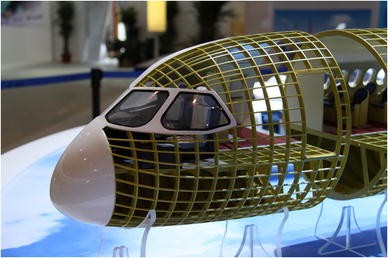
UNIT 1 CONCEPTOF SIMPLE STRESSES AND STRAINS 9 Hrs. Concept of stress and strain, Hooke's law-Tension, Compression, and Shear, stress-strain diagram-Poisson's ratio, elastic constants and their relationship- Deformation of simple and compound bars. Principal plane, principal stress, maximum shearing stress - Uniaxial, biaxial state of stress-Mohr's circle for plane stresses.
UNIT 2 ANALYSIS OF BEAMS 9 Hrs. Types of beams and loads-shear force and bending moment diagrams for cantilevers, simply supported and overhanging beams. Theory of pure bending- assumptions in the simple bending theory, Flexure formula: its application to beams of rectangular, circular and channel, I&T Sections,: Combined direct and bending stresses in fore mentioned sections.
UNIT 3 DEFLECTION OF BEAMS 9 Hrs. Differential Equation of the Elastic Axis-Deflection and slope of beams-Double Integration, Area Moment and Macaulay’s methods for simply supported, Cantilever and overhanging beams.
UNIT 4 STRESSES IN SHAFTS, HELICAL SPRINGS AND THIN PRESSURE VESSELS 9 Hrs. Torsion of Circular Shafts–Shear Stresses and Twist in Solid and Hollow Shafts. Close and open Coil Helical springs. Stresses in Thin Walled Pressure Vessels.
UNIT 5 COLUMNS AND FAILURE THEORIES 9 Hrs. Columns- Member subjected to combined bending and axial loads, Euler's theory, Crippling load, Rankine's theory. Failure theories - Maximum Stress theory – Maximum Strain Theory – Maximum Shear Stress Theory – Distortion Theory – Maximum Strain energy theory. Max.45 Hrs.
COURSE OUTCOMES On completion of the course, student will be able to CO1 - Analysis of different types of stresses and strains. CO2 - Analysis of different types of beams and loads acting on it. CO3 - Analysis of deflections in beams. CO4 - Analysis of stresses in shafts, helical springs and pressure vessels. CO5 - Analysis of Column structure and understanding of failure theories.
TEXT / REFERENCE BOOKS
1. Malhotra,D.R.andGupta,H.C. ,“The Strength of Materials”, Satya PrakasanTech.India Publications, New Delhi, 2011.
2. Kazimi.S.M.A., “Solid Mechanics”, TataMcGrawHill,1976. Dym.C.L.and Shames I.H., Solid Mechanics”, McGraw hill,
Kogakusha, Tokyo, 2012.
3. Timoshenko.S.,Young,"Elements of Strength of Material", Vol. I & II, T.Van Nostrand CoInc, Princeton, N.J. 2012.
4. Ferdinand P.Beer, and Rusel l Johnston, E .,”Mechanics of Materials”, SI Metric Edition, McGrawHill, 2011.
5. Rajput. R.K.,”Strength of materials”, Fourth Edition,S.ChandLimited,2007
Category: ODD SEMESTER

Category: ODD
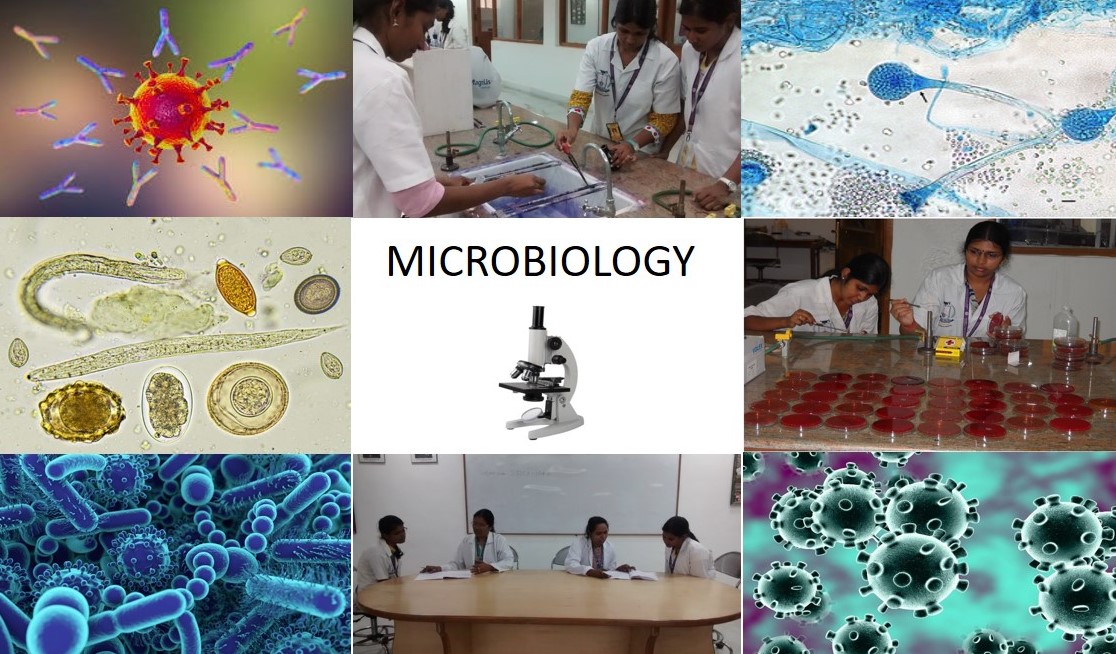
The Course objective is to introduce the students to the exciting world of microbes and to provide an understanding of various branches of Microbiology, in order to deal with the etiology, pathogenesis, laboratory diagnosis, treatment, control and prevention of infections in dental practice.
- Teacher: MALATHY BALARAMAN RAVINDRRAN
- Teacher: Dr.PRATHIBA GNANASEKARAN
Category: SCHOOL OF DENTAL SCIENCES
Ø To understand the concepts of thermodynamics.
Ø To understand the concepts and applications of electrolytic conductance.
Ø To study the rate the order of reactions.
Ø To study the phase rule and its application to different system.
- Teacher: Karthikeyan Jayabalan
Category: ODD
- Teacher: ANU BARATHI
- Teacher: Dr T Prem Jacob
- Teacher: Dhanalakshmi K
Category: ODD SEMESTER
- Teacher: Padmapriya R
Category: SCHOOL OF BUILDING AND ENVIRONMENT
The aim of this course is to make the students understand the relationship between spaces and built form of given low rise, multi-room space program by generating solutions that are semantic with socio-cultural context, choice of material and the psychological requirements of the end-user.

- Teacher: Vignaeshwar C
- Teacher: Dr. Devyani Gangopadhyay
- Teacher: Deepalakshmi S
Category: ODD

COURSE OBJECTIVES
➢ To learn the fundamentals of Software-Defined Networks.
➢ To understand the separation of the data plane and the control plane.
➢ To study about SDN Programming.
➢ To study the various applications of SDN
➢ To learn the e- SDN Framework.
UNIT 1 INTRODUCTION 9 Hrs.
How SDN Works – History and Evolution of Software Defined Networking (SDN)-Separation of Control Plane and Data Plane, IETF Forces, Active Networking.
UNIT 2 OPEN FLOW AND SDN CONTROLLERS 9 Hrs.
Open Flow Specification – Drawbacks of Open SDN, SDN via APIs, and SDN via Hypervisor-Based Overlays – SDN via Opening up the Device – SDN Controllers – General Concepts
UNIT 3 DATA CENTERS 9 Hrs.
Multitenant and Virtualized Multitenant Data Center – SDN Solutions for the Data Center Network – VLANs – EVPN – VxLAN – NVGRE. Network Virtualization: Concepts, Applications, Existing Network Virtualization Framework (VMWare and others), and Mininet based examples.
UNIT 4 SDN PROGRAMMING 9 Hrs.
Programming SDNs: Northbound Application Programming Interface, Current Languages and Tools, Composition of SDNs – Network Functions Virtualization (NFV) and Software Defined Networks: Concepts, Implementation and Applications.
UNIT 5 SDN 9 Hrs. Juniper SDN Framework – IETF SDN Framework – Open Daylight Controller – Floodlight Controller – Bandwidth Calendaring – Data Centre Orchestration.
Max. 45 Hrs.
COURSE OUTCOMES
On completion of the course, student will be able to
CO1 - Analyse the evolution of software defined networks.
CO2 - Express the various components of SDN and their uses.
CO3 - Explain the use of SDN in the current networking scenario.
CO4 - Design and develop various applications of SDN.
CO5 - Understand and explain SDN Programming.
CO6 - An Ability to understand the SDN Frame work.
TEXT / REFERENCE BOOKS
1. Paul Goransson and Chuck Black, ―Software Defined Networks: A Comprehensive Approach, 1 st Edition, Morgan Kaufmann, 2014.
2. Thomas D. Nadeau, Ken Gray, ―SDN: Software Defined Networks, O’Reilly Media, 2013.
3. Siamak Azodolmolky, ―Software Defined Networking with Open Flow, Packet Publishing, 2013.
4. Vivek Tiwari, ―SDN and Open Flow for Beginners, Amazon Digital Services, Inc., 2013.
5. Fei Hu, Editor, ―Network Innovation through Open Flow and SDN: Principles and Design, CRC Press, 2014.
END SEMESTER EXAMINATION QUESTION PAPER PATTERN Max. Marks: 100 Exam Duration: 3 Hrs.
PART A: 10 Questions of 2 marks each-No choice 20 Marks
PART B: 2 Questions from each unit with internal choice, each carrying 16 marks 80 M
Category: EVEN SEMESTER
- Teacher: Karthikeyan Jayabalan
- Teacher: Dr. Y. Sasikumar
Category: School of Science and Humanities

On completion of the course, student will be able to
CO1 - Apply Vehicle concept to electric vehicle
CO2 - Analyze the power conversion technique of electric vehicle
CO3 - Examine the performance of different electric drive train
CO4 - Select the appropriate electric motor for electric propulsion system
CO5 - Select a suitable battery for electric vehicle
CO6 - Analyze the recent technique used in modern electric vehicle

- Teacher: Ramesh Babu A
Category: Semester 6
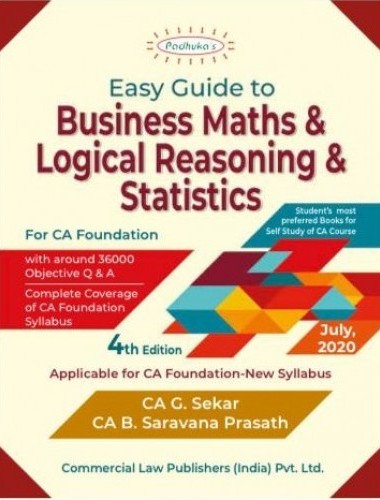
Business Mathematics ,Logical Reasoning and Statistics integrated with Syllabus of CA Foundation.
Category: ODD
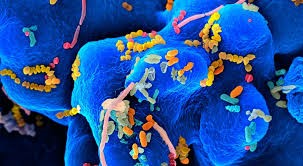
The broad goal of the teaching of undergraduate students in microbiology is to provide an understanding of the natural history of infectious diseases in order to deal with the etiology, pathogenesis, laboratory diagnosis, treatment and control of infections in the community.
Microbiology is the study of microscopic organisms, those being unicellular (single cell), multicellular (cell colony), or acellular (lacking cells). .Bacteria, fungi, viruses, protozoa, and algae are the major groups of microorganisms.
- Teacher: Prakash P
Category: ODD SEMESTER
COURSE OBJECTIVE:
- The ability to identify reflects upon, evaluate and apply different types of information and knowledge to form independent judgements.
- Analytical, logical thinking and conclusions based on quantitative information will be the main objective of learning this subject
COURSE OUTCOME:
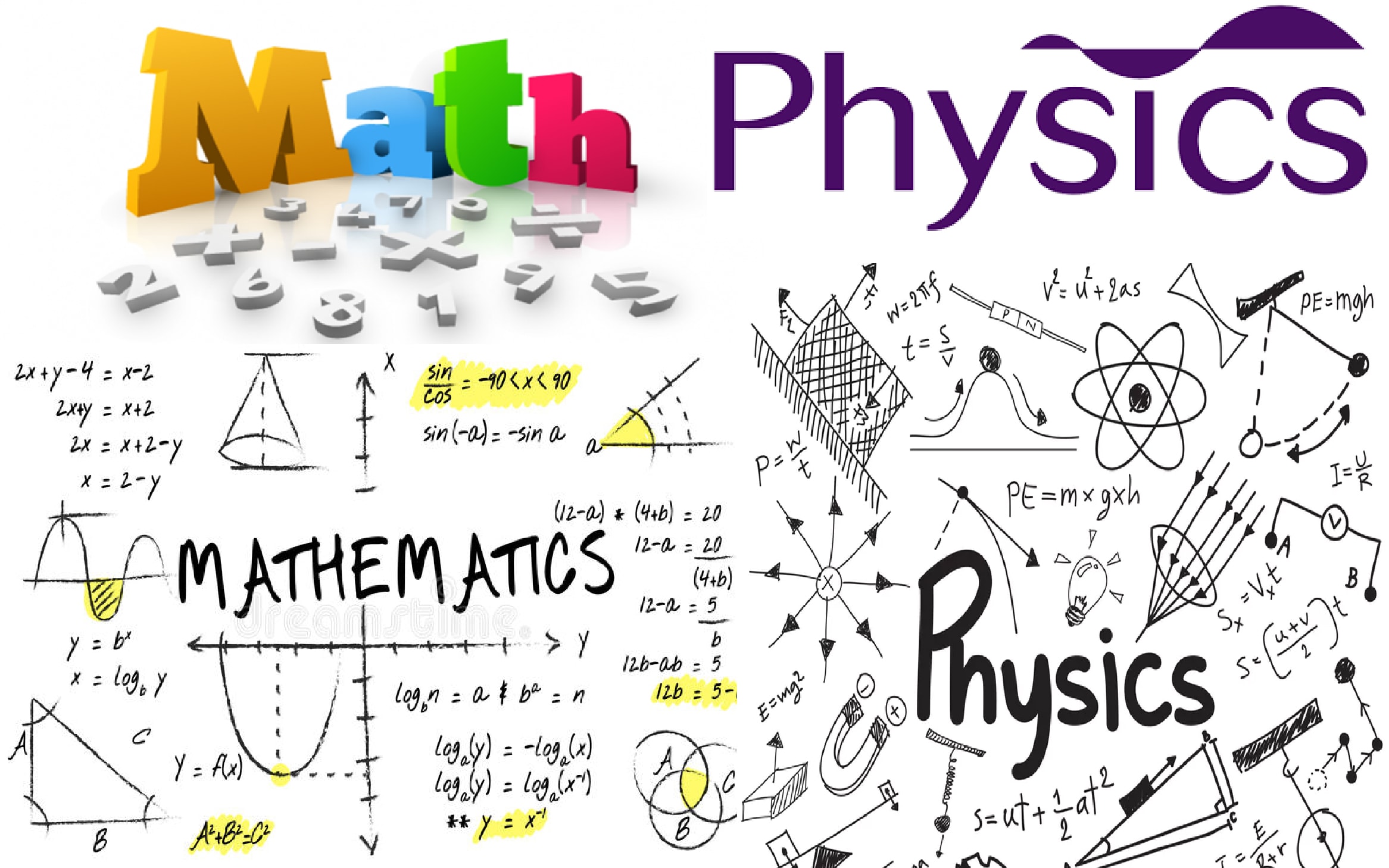
· CO1: Apply laws of mechanics to determine efficiency of simple machines with consideration of friction.
· CO2: Understand interference of sound waves and longitudinal standing waves
· CO3: Describe basic definition and conception of materials and physical properties of materials
· CO4: Understand the nature of thermodynamic properties of matter like internal energy, enthalpy, entropy, temperature, pressure and specific volume
· CO5: Understand the properties of light like reflection, refraction, interference, diffraction etc
- Teacher: VIJAI ANAND K
Category: ODD