
Search results: 1467
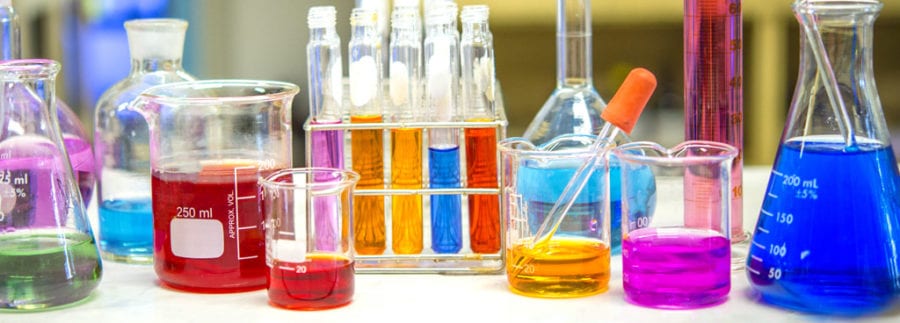
This is an Organic Qualitative Analysis lab in which the students will identify the various functional groups including nitrogen and non-nitrogen substances. And also perform the various preliminary test as well as confirmation test to identify the nature of the functional group. Students will also prepare derivative and melting point for the corresponding functional group.
- Teacher: Sunitha S
- Teacher: Krithiga T
Category: EVEN SEMESTER
This course is aims to give a fundamentals of polymer characteristics and classification involved in a polymer reaction.This course is elaborated what are the types of polymerization reaction,mechanisms and properties. moulding process of polymers.
- Teacher: Dr. Y. Sasikumar
Category: ODD
OUTCOMES OF THE COURSE
On completion of the course, the student will be able to
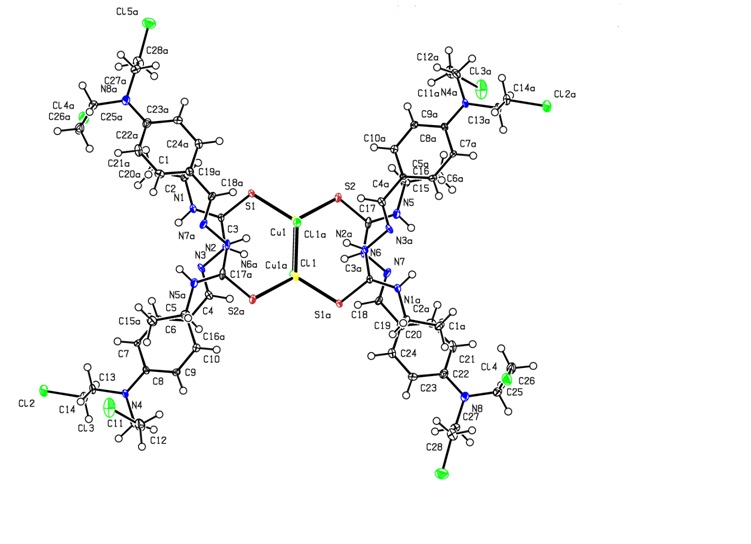
CO1 - Understand the structure, isomerism, and bonding in coordination complexes.
CO2 - Deduce the crystal field splitting diagram for different geometries.
CO3 - Characterize the electronic spectra of metal complexes based on correlation diagrams.
CO4 - Evaluate the mechanistic pathway of metal complexes.
CO5 - Determine the stability of metal complexes using conventional methods. CO6 - Interpret the spectrum of different metal complexes with different geometries.
On completion of the course, the student will be able to
CO1 - Understand the structure, isomerism, and bonding in coordination complexes.
CO2 - Deduce the crystal field splitting diagram for different geometries.
CO3 - Characterize the electronic spectra of metal complexes based on correlation diagrams.
CO4 - Evaluate the mechanistic pathway of metal complexes.
CO5 - Determine the stability of metal complexes using conventional methods. CO6 - Interpret the spectrum of different metal complexes with different geometries.
- Teacher: Karthikeyan Jayabalan
- Teacher: Anju K
Category: ODD
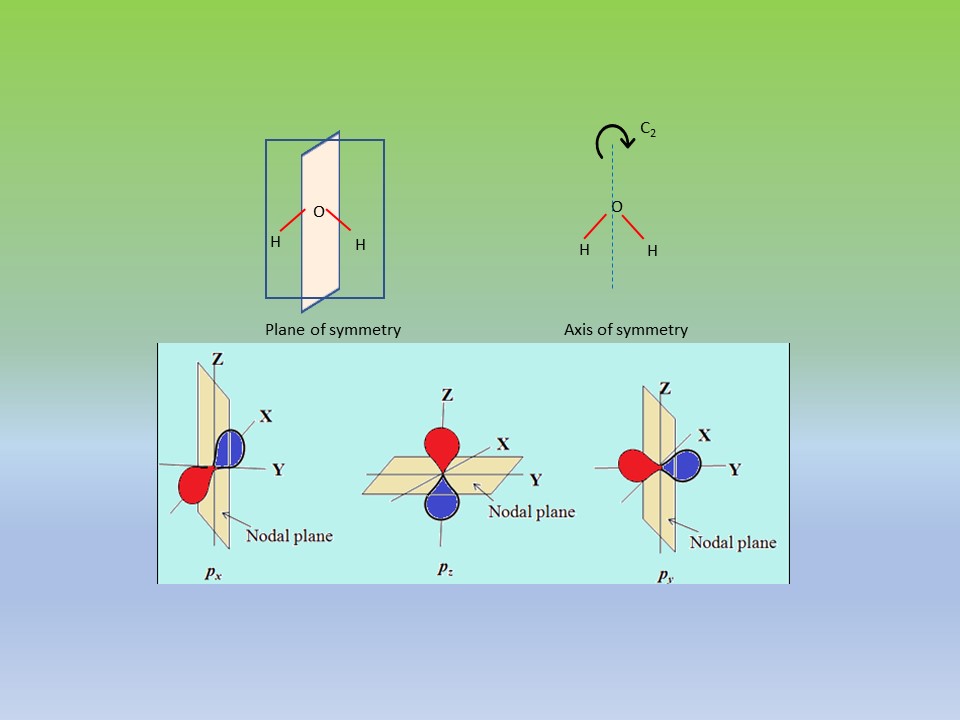
This course deals with the fundamentals of quantum chemistry in sub-atomic level such as wave properties, Uncertainty principle, de-Broglie hypothesis, Schrodinger equation, operators and eigen functions. Applications of quantum chemistry to one-dimensional harmonic oscillator, three-dimensional hydrogen atom, angular momentum and spin angular momentum, quantum numbers, shapes of atomic orbitals are discussed. Approximation methods- Perturbation and variation methods and its application to helium atom is dealt in a simplified manner. The latter part of the course covers the mathematical treatment of symmetry elements and point groups of molecules in predicting the chirality, chemical bonding, polarisability, molecular orbitals and spectroscopic transitions.
- Teacher: Krithiga T
Category: ODD
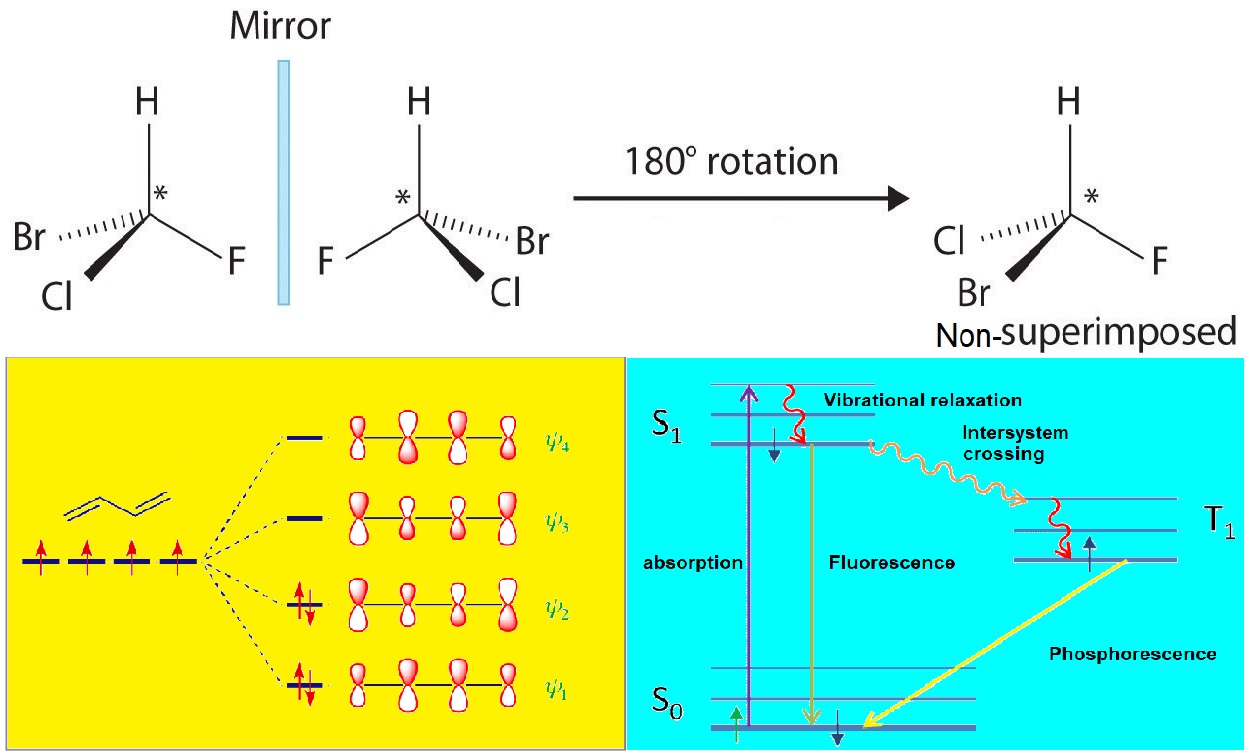
This course deals with the fundamentals of Stereochemistry such as elements of symmetry, chirality, projection formula, optical purity, racemization, resolution, conformational analysis etc. The stereo, enantio, regio and chemo selective reactions such as Hydrogenation, Reduction of ketones, Epoxidation of Allylic alcohols, Dihydroxylation of alkenes, hydroboration etc are discussed. The latter part of the course covers the Asymmetric Synthetic principles and selective reactions such as Asymmetric Oxidations: Asymmetric Epoxidation of Allylic Alcohols: Sharpless Epoxidation - Selective opening of 2, 3 epoxy alcohols by metallic hydride and organometallic reagents - Asymmetric Diels Alder Reaction: Intramolecular and Retro Diels Alder Reaction etc. are detailed with suitable examples.
- Teacher: Krithiga T
Category: EVEN SEMESTER
- Teacher: Sayantani Bhattacharya
Category: ODD
- Teacher: K CHENNAKESAVULU
Category: ODD
The course is designed for postgraduate students in chemistry to understand the organic reactions in natural systems and bio systems. At the end of the course, the student will be able to
- Analyze the mechanism involved in basic organic reactions
- Elaborate on structural elucidation and chemical synthesis of alkaloids, terpenoids
- Understand the role of Supramolecules and their significance.
- Assess the importance of proteins and enzymes.
- Examine the action of drugs.
- Propose the structural activity for natural products.
- Teacher: Kavitha V
Category: ODD
- To introduce various concepts related to the study of society and culture.
- To develop an understanding of art, craft, and design in a variety of contexts with respect to space, function, and climate.
- To expose the students to the principles of Vastushastra and Feng shui and their applications in interior design.
- Teacher: Deepalakshmi S
Category: EVEN
COURSE OBJECTIVES:
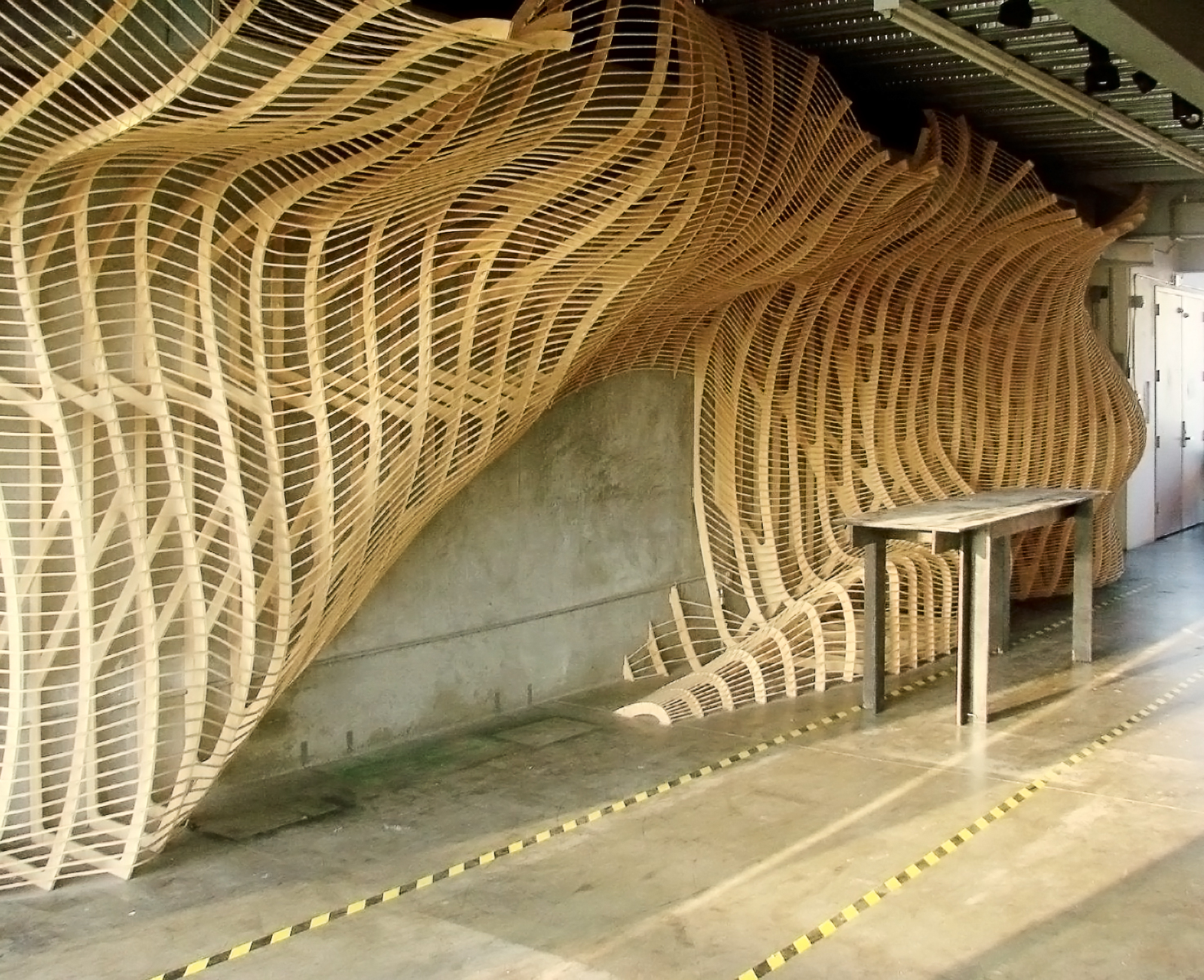
To understand the process of evolution from program and conditions to concept, design and graphical representation of the process.
To comprehend the fundamentals of small functional spaces understanding the anthropology as well as sensitivity to materials- Teacher: Vignaeshwar C
- Teacher: Mohana Gopiraj N
Category: EVEN
COURSE OBJECTIVES:
- To reinforce the concepts of 3D modelling.
- To enable them to experiment with forms, mapping, rendering and presentation techniques.
- To prepare the student for mass production of furniture for various classes of people with the parameters of economy and culture
SYLLABUS:
UNIT 1 MATERIAL AND PROCESSES IN DESIGN
Material Deposition Processes Laser Deposition, Micro-Plasma Powder Deposition, Chemical vapour Deposition, Micro Welding, Powder Casting Metal 3D Printing, Powder Deposition 3D printing;
UNIT 2 SUBTRACTIVE MANUFACTURING
Subtractive Processes Electrochemical machining, Electro-Discharge machining, Ultrasonic Machining, Laser Beam Machining, Water jet machining, Abrasive Jet Machining, Plasma Arc machining; Cutting and Removal Water Jet Cutting, Plasma Cutting, Laser Cutting, Electro-Discharge Wire Cutting; Abrasive Jet Cutting
UNIT 3 ADDITIVE MANUFACTURING
Additive Extrusion Processes Extruded Filament 3D printing, Clay 3D printing, Stereo lithography; Special Purpose Manufacturing processes- Rot molding, Layer Compression, Sheet contouring, Friction Welding
UNIT 4 SURFACE TREATMENT PROCESSES
Surface Treatment Processes Laser Etching, Acid/Base Etching, Electro Chemical Etching, Sand Blast Etching, Ultraviolet Etching, Photochemical Machining Electro Chemical Polishing
UNIT 5 CONSTRUCTIVE ASSIGNMENTS
Demonstrate comprehensive understanding through accompanying assignments, group discussions, and site visits.
COURSE OUTCOME:
- Understand the various subtractive manufacturing processes frequently used in Interior and furniture design.
- Compare the various new technologies being incorporated into manufacturing processes
- Comprehend the various subtractive manufacturing processes frequently used in Interior and furniture design.
- Discuss the various additive manufacturing processes frequently used in Interior and furniture design.
- Analyse the various surface treatment processes in the manufacturing of interior design elements.
- Develop systematic design approach and space planning through manufactured furniture as elements of design.
- Teacher: Yusuf Chiniwala
Category: Semester 4
COURSE OBJECTIVES:
To introduce students to the basic elements of design, its principles, visual aspects, along with preparation, design vocabulary
and thereby the application of these in design.
To strengthen the students understanding of human factors and dimensions while designing interior spaces and accessories.
To enable students to explore the design process by identifying the design parameters and formulating concepts while
emphasizing function and aesthetics.
Category: ODD
COURSE OBJECTIVES:
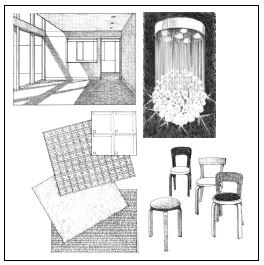
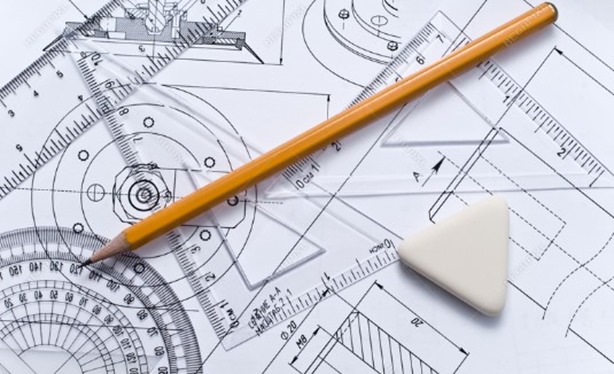
⮚ To outline the basic principles of drafting and rendering techniques.
⮚ To understand plane and solid geometry, isometric and axonometric view.
⮚ To familiarize with simple objects and building components through measured drawing.
COURSE OUTCOME:
CO1 Understand the concepts and fundamentals of architectural drawing.
CO2 Develop representation skills and to generate geometrical forms and its projections.
CO3 Ability to represent various solids and its sectional projection.
CO4 Measure real objects and represent them graphically.
CO5 Create three-dimensional solids and combination of solids
CO6 Develop graphical skill to represent real time objects.
Category: ODD
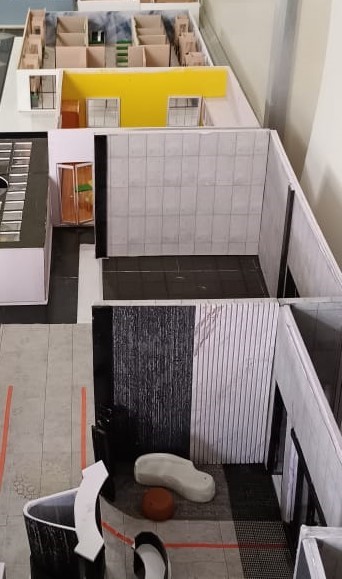
The aim of this course is to make the students understand the relationship between INTERIORS and the built form. They will be introduced to various concepts and principles to design spaces of two different scales.
- Teacher: Esther Kiruba J C
- Teacher: Deepalakshmi S
Category: ODD
To develop a sensitivity to design the interiors of public spaces incorporating services and the principles of place making.
- Teacher: Catherine S
Category: ODD
The aim of this course is to make the students understand the relationship between INTERIORS and the built form. They will be introduced to various concepts and principles to design office interiors.
- Teacher: Deepalakshmi S
- Teacher: Juvilasri Vignesh
Category: ODD
COURSE OBJECTIVES:
➢ To understand the tradition and culture of various region of India and their adaptation in interiors.
➢ To develop an insight into the evolution of interiors in Chinese, Japanese and Islamic culture.
➢ To introduce the evolution of interiors in Nordic culture.
➢ To impart the design practices of the contemporary interiors.
- Teacher: Vignaeshwar C
Category: EVEN
COURSE OBJECTIVES:
- To develop methods for critical thinking and analysis.
- To help the students develop opinions on various design-related topics.
- To develop new platforms and formats for their writing.\
- To examine how space is conceived and conceptualised
- To evaluate texts
- To investigate “visual language”, symbolism, and some of the pictorial devices, materials, and techniques employed by designers to tell stories visually
COURSE OUTCOMES:
- CO1 Explore innovative ways of researching and writing about contemporary design and culture.
- CO2 Create valid arguments and to argue for and against ideas
- CO3 Analyse structure of oral and written arguments
- CO4 Critically evaluate design ideas.
- CO5 Understand and apply various spatial representations for their own designs.
- CO6 Produce a booklet of the ideas and themes discussed.
SYLLABUS:
UNIT 1 COMMUNICATION PRINCIPLES
Process of Communication. Transmission of ideas, facts & figures from one person to another. Kinds of Communication: Oral and Written, Verbal and Non-Verbal. Levels of Communication: Intrapersonal, Interpersonal, Group, Mass Communication.
UNIT 2 READING DESIGN
Reading skills: Model of reading to learning, reading tactics and strategies, reading purposes – associated apprehensions, reading for meaning, reading outcomes; Reading Space and its qualities; Presentations and writings of great design theorists
UNIT 3 DESIGN STORYTELLING AND NARRATIVES
Elements of a good story: facts, situation, characters, plot and resolution of a design project; Building context in the design process: Emotional, Environmental, Social context; Organising ideas- Personas, storyboards, and flowcharts; Documenting processes through writing
UNIT 4 REPRESENTATION OF SPACE
Innovation with orthographic drawings- beyond the plan, elevation, section; Perspectives and Montages; Maps and Models; Interior space and its occupation, experience and perception; Constructing and interpreting layers of meaning within interior spaces.
- Teacher: Yusuf Chiniwala
Category: SCHOOL OF BUILDING AND ENVIRONMENT
COURSE OBJECTIVES:
Ø To identify the components of a building including the structural systems.
Ø To understand the properties and uses of varied natural, synthetic materials and the internal service elements.
Ø To introduce the fundamentals and components of plumbing and electrical systems.
COURSE OUTCOME:
CO1 Understand the properties and uses of natural materials like wood and fabrics, synthetic materials like glass and plastics and their appropriate application techniques.
CO2 Select and specify materials based on the its properties and requirements
CO3 Understand the components of a building and methods of construction including foundation, plinth, superstructure, floorings, openings, roofs and finishes.
CO4 Get familiarized with the varied forms of roofs and the types of roofing systems.
CO5 Able to design interior elements that go with the existing architectural and structural components
CO6 Have an overview of the plumbing and electrical systems in a building.
- Teacher: Vignaeshwar C
- Teacher: VIJENDRANATH R
Category: ODD